Elon Musk has drawn a surprisingly sharp line through Tesla’s next generation of AI hardware.
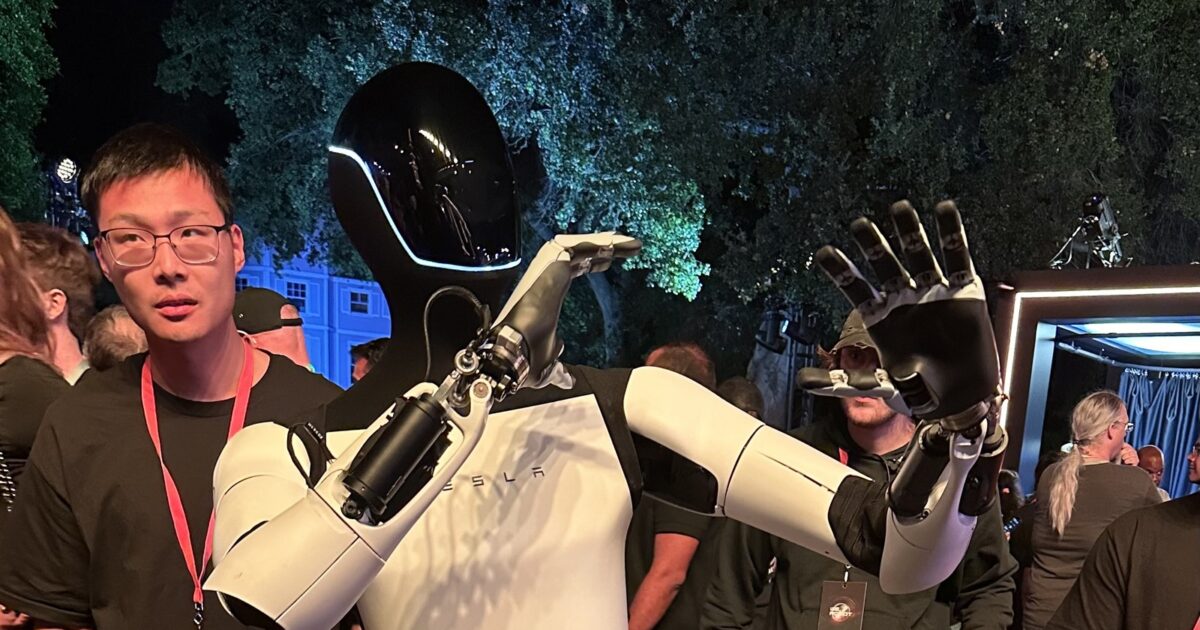
AI5 is going to Optimus. Tesla’s cars, he says, will remain on AI4 because the current computer already has enough capability to achieve driving beyond human performance.
The distinction matters for owners deciding whether to buy now, wait for newer hardware or keep an older car that still runs on AI3.
Musk gave the clearest version of the plan in a direct reply on X:
It’s going to Optimus. Cars will remain at AI4. That’s enough to solve superhuman driving.
— Elon Musk (@elonmusk) November 22, 2026
The statement makes Tesla’s chip roadmap look less like a straight upgrade ladder and more like a deliberate split between cars and humanoid robots.
Drive Tesla reports that Musk made the comment after an AI3 owner asked whether it made sense to wait for AI5 before replacing a current car.
Musk did not give a date for AI5 in vehicles. He instead said the next computer is intended for Optimus and repeated his belief that AI4 can handle unsupervised driving.
The owner question matters because Tesla has already acknowledged that AI3 cannot achieve unsupervised FSD. Earlier this year, Musk discussed a possible retrofit or discounted trade-in for qualifying owners who bought FSD, but Tesla still has not published a rollout schedule for either option.
Drive Tesla notes that Musk went further during Tesla’s first-quarter earnings call, saying Hardware 3 lacks the capability for unsupervised FSD. Months later, affected owners still have no firm retrofit date, eligibility procedure or trade-in terms.
So the practical dividing line remains AI3 versus AI4, not AI4 versus AI5.
At the same time, the cost of staying on AI4 is moving in the wrong direction.
AI4 costs twice as much now due to memory and storage price hikes
— Elon Musk (@elonmusk) November 22, 2026
Musk did not say whether that higher component cost will affect vehicle prices, margins or the pace of hardware upgrades. He did, however, connect Tesla’s intermediate AI4.5 design to the same memory squeeze.
Tesla North says Musk described AI4.5 as a relatively small performance improvement driven mainly by a move to LPDDR5X memory. He later said Tesla reduced the planned RAM from 32GB to 24GB because memory is expensive and because bandwidth constraints would make the full 32GB difficult to use.
Tesla has not said which vehicles will receive AI4.5 or when deliveries will begin. The first wave of FSD v15 runs on AI4, so the software version alone does not identify a car as having the refreshed computer.
The hardware distinction is easy to blur, but it matters. AI4.5 is a revised vehicle computer.
AI5 is a much larger next-generation program that Tesla now appears to be prioritizing for Optimus.
Tesla said in its Q1 2026 update that the company completed the final AI5 processor design in April. The update tied semiconductor expansion to the Robotaxi and Optimus ramps and warned that expected chip demand could exceed existing and planned industry capacity.
The company said its proposed semiconductor partnership with SpaceX would vertically integrate logic, memory and advanced packaging. It also identified a Tesla-owned Research Fab at Gigafactory Texas as the first step in that manufacturing push.
Tesla listed first-generation Optimus production lines as being installed and factory work in California and Texas as under construction. That is a far larger demand plan than a routine computer replacement in passenger cars.
The same update described Digital Optimus as an intelligence layer for automating digital work alongside Tesla’s real-world vehicle and humanoid-robot systems. In other words, Tesla was already presenting AI software, robots and custom chips as one connected production problem.
TrendForce News adds that the AI4.5 memory reduction follows earlier adjustments to Tesla’s AI5 and AI6 plans. Its report says Samsung has been preparing trial production for AI5 on a 2-nanometer process in Texas, with mass production targeted for 2027.
The report says Tesla previously cut AI5’s planned memory from 144GB to 72GB and reduced AI6 by roughly one-third to 144GB. Musk linked those changes to securing enough memory volume for Optimus while lowering cost.
Those supply-chain reports do not establish a delivery date for Optimus or settle what future Tesla vehicles may eventually use. They do show why Musk is talking about memory cost, manufacturing volume and product allocation at the same time.
For current owners, the message is both reassuring and uncomfortable.
Musk’s claim puts Tesla’s autonomy target within AI4’s reach. Tesla made similar sufficiency claims about AI3 before conceding that older hardware would fall short.
That history is why the next proof cannot be another chip promise. It has to be AI4 cars delivering unsupervised driving safely, at scale, under real regulatory approval.
Until then, Tesla’s roadmap is clear enough: the biggest new computer is headed for the robot, while the cars are being asked to finish the job with the hardware they already have.
Join the conversation!
Please share your thoughts about this article below. We value your opinions, and would love to see you add to the discussion!