
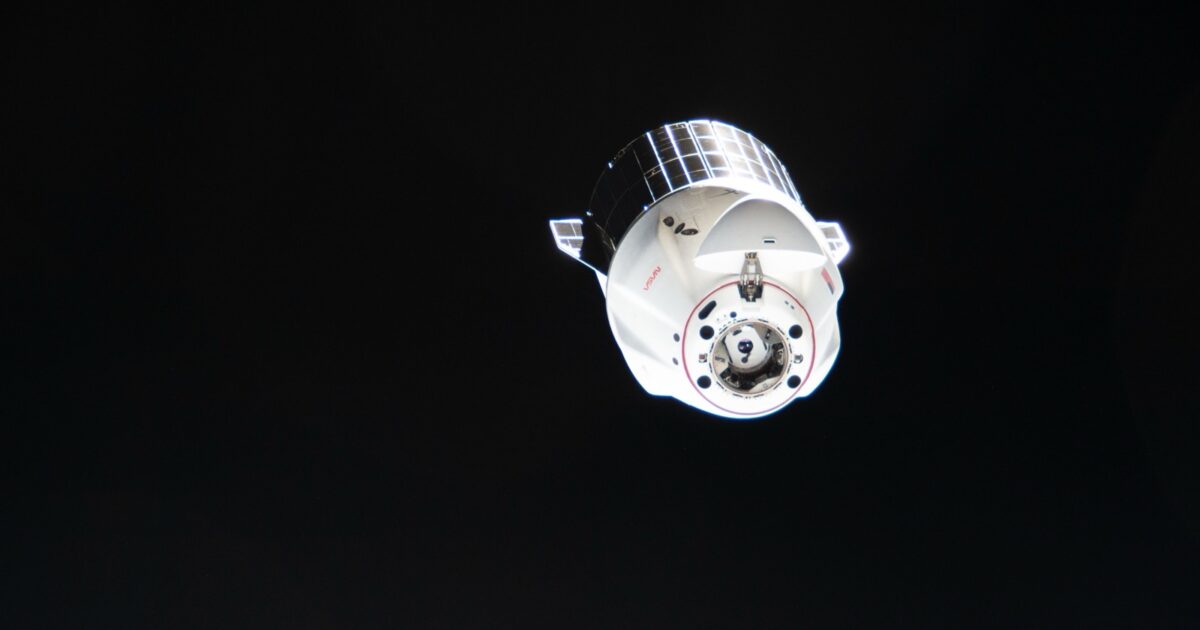
SpaceX’s CRS-35 Dragon is back on Earth with a return cargo that sounds more like a medical research vault than a routine spaceflight manifest.
The uncrewed capsule splashed down off Southern California on Saturday afternoon. Inside are frozen tumor organoids, a 3D-bioprinted blood-vessel construct, microbial samples and hardware from a lighting study that spent more than three years aboard the International Space Station.
SpaceX had targeted a landing near Los Angeles at about 2:05 p.m. Pacific:
Dragon is on track to reenter Earth’s atmosphere and splash down off the southern coast of California near Los Angeles at ~2:05 p.m. PT pic.twitter.com/wGJB6jq2s1
— SpaceX (@SpaceX) November 21, 2026
The return is what makes Dragon unusually useful. Other spacecraft can haul supplies uphill, but the current cargo fleet does not offer NASA another vehicle with Dragon’s ability to bring thousands of pounds of delicate research safely back through the atmosphere.
According to the November 20 station update from NASA, Dragon undocked from the space-facing port of the Harmony module at 12:05 p.m. Eastern Friday after SpaceX ground controllers sent the command. That began a roughly daylong trip from orbit to the Pacific.
CRS-35 launched from Cape Canaveral on October 13 and docked two days later. It carried more than 6,300 pounds of supplies, science and station hardware uphill before spending more than a month attached to the orbiting laboratory.
The most unusual item coming home is a 3D-bioprinted blood-vessel construct. Researchers used it to study vascular aging and cardiovascular disease in microgravity, where biological processes can unfold differently than they do on Earth.
Frozen tumor organoids treated aboard the station are also inside Dragon. Organoids are small three-dimensional cell models that can mimic some behavior of real tissue, giving researchers a way to examine how experimental treatments affect cancer-like growth without pretending the work is already a finished therapy.
The CRS-35 departure advisory from NASA says the organoids may help scientists improve cancer treatments and personalized medicine after the samples are recovered and analyzed. The work is built around comparing treated samples from orbit with what researchers observe after recovery on Earth.
The manifest also includes frozen microbial samples intended to show how antibiotic-resistant bacteria survive, adapt and evolve in space. Those samples give scientists a chance to examine changes that would be lost if the spacecraft and its cargo simply burned up during reentry.
A separate lighting system is returning after more than three years aboard the station. Researchers tested whether its light patterns could better support astronaut sleep and well-being during long missions—a practical problem for crews who live through repeated sunrises and sunsets every day.
Then came the short update everyone was waiting for:
Splashdown of Dragon confirmed, completing SpaceX’s 35th Commercial Resupply Services mission to the @Space_Station!
— SpaceX (@SpaceX) November 21, 2026
Dragon’s outbound cargo was just as important. The CRS-35 launch release from NASA says the spacecraft delivered the station’s final pair of roll-out solar arrays, artificial-retina manufacturing hardware, 3D heart-tissue models, brain organoids and materials for studying a new type of glass in microgravity.
The solar arrays remain in orbit, completing a power-system upgrade meant to support more research and station operations. The samples inside Dragon came back because their real value depends on what scientists can measure after landing.
That distinction matters. A successful launch proves the rocket and spacecraft can move a payload uphill.
A safe return turns the station into a working laboratory with a round trip, not a one-way destination.
Recovery is not the end of the science. Teams now have to preserve time-sensitive samples, move them to laboratories and compare what happened in orbit with control experiments kept on Earth.
For SpaceX, CRS-35 is complete. For the researchers waiting on the cargo, the important work is about to begin.

Join the conversation!
Please share your thoughts about this article below. We value your opinions, and would love to see you add to the discussion!