

Elon Musk just put a startling number on SpaceX’s Starship ambition.
SpaceX is aiming for more than 30 Starship launches per day in 2030, Musk said Thursday evening. He described that pace as roughly 10,000 launches a year.
Musk was describing a target, not a flight schedule or licensed cadence. Still, it is the clearest picture yet of what he means when he talks about making access to orbit feel more like air travel.
We’re aiming to reach 30+ Starship launches/day in 2030, which is ~10k annualized.
Still tiny numbers compared to airplane flights!
— Elon Musk (@elonmusk) August 21, 2026
The math is almost hard to picture.
Thirty launches a day equals 10,950 in a 365-day year. Spread evenly across the system, that is one Starship leaving Earth every 48 minutes.
It would not mean one rocket or one pad flying 30 times every day. It would require a fleet of ships and boosters, multiple launch and landing sites, fast propellant loading, dependable tower catches, enormous production capacity and regulatory machinery that can safely handle rocket traffic as routine infrastructure.
The timing of Musk’s post was not accidental. Hours earlier, the White House announced a new National Space Transportation Policy built around a dramatic increase in American launch and reentry activity.
Michael Kratsios, the White House science and technology director, said the policy aims to enable 1,000 launches and reentries on American soil by 2030. He said the United States recorded 178 successful orbital launches in 2025, up from 19 in 2013.
Today @POTUS signed a new National Space Transportation Policy, one that meets this moment of explosive growth and positions America to lead the next era of space.
In the 13 years since the last update to the Policy, U.S. launches have surged 10x: from 19 successful orbital… pic.twitter.com/3CzFLzrant
— Director Michael Kratsios (@mkratsios47) August 20, 2026
Kratsios said much of the country’s launch infrastructure still dates to the 1960s. The new policy calls for commercial co-investment in next-generation launch and reentry sites, an additional federal-land reentry site, priority airspace corridors and more transparent range allocation.
The government’s 1,000-operation goal is itself a huge jump. Musk’s roughly 10,000-Starship target is another order of magnitude beyond it.
The White House’s standing space policy order set the direction for that buildout before Thursday’s transportation update. President Trump directed agencies to increase launch and reentry cadence through upgraded facilities, efficiency improvements and policy reform, while attracting at least $50 billion in additional American space investment by 2028.
The order also ties transportation capacity to a return of Americans to the Moon by 2028, early lunar infrastructure and a commercial space economy that can do more than deliver payloads in one direction. Thursday’s policy adds launch sites, reentry sites, airspace and range access to that strategy.
It also calls for a commercial replacement for the International Space Station by 2030, stronger space-traffic management and a lunar-surface reactor ready for launch by the same year. All of those goals depend on moving far more hardware to and from space.
SpaceX has designed Starship around exactly this kind of scale.
SpaceX’s current Starship overview describes the 124-meter Starship and Super Heavy stack as a fully reusable transportation system with more than 100 metric tons of payload capacity. Both stages are intended to return to the launch site, be caught and fly again without refurbishment.
That last phrase is the heart of the 30-per-day claim. Falcon 9 proved that an orbital-class booster could fly repeatedly.
Starship is supposed to extend reuse to the upper stage and turn recovery into rapid turnaround rather than a lengthy inspection-and-refurbishment cycle.
SpaceX says Starbase now has two launch towers built to integrate, launch and catch the vehicle. Its Starfactory is sized to be capable of producing as many as 1,000 Starships per year.
Those are industrial-scale foundations, but a 10,000-flight year would still demand an operating system far beyond anything flying today.
The regulatory baseline shows how large the gap remains.
The Federal Aviation Administration says its completed Boca Chica environmental review covers up to 25 Starship/Super Heavy orbital launches a year at that site, along with up to 25 Starship landings and 25 Super Heavy landings.
The agency is also reviewing expanded Pacific contingency landing areas and another Starship return trajectory to Starbase. High-cadence flight depends on much more than whether the hardware can launch.
Every ascent, booster return and ship reentry has to fit safely around communities, air traffic, maritime traffic and emergency options.
FAA licensing reviews also cover public safety, national-security and foreign-policy concerns, insurance and environmental impact. A pro-launch national policy can streamline and expand that system, but it does not erase the work required to prove thousands of operations can be conducted safely.
Even the smaller engineering details become enormous at airline-like frequency.
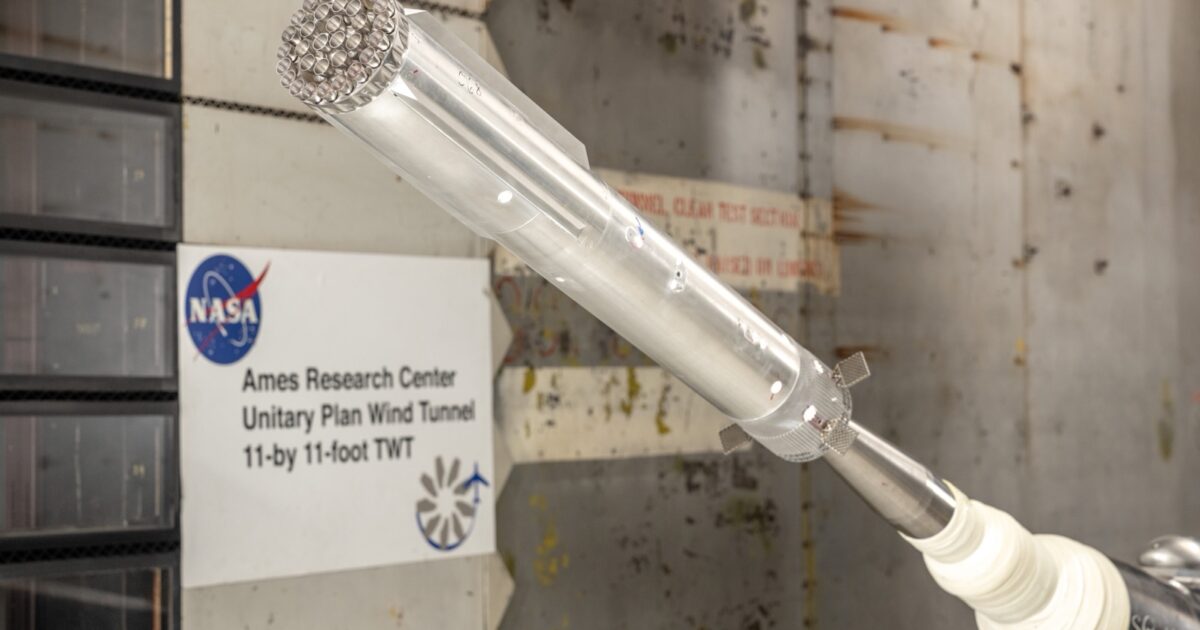
NASA Ames tested a 1.2%-scale Super Heavy model at speeds from Mach 0.7 to Mach 1.4 to study the booster’s stability and aerodynamic forces. Engineers used those measurements to update flight-control software and refine the exterior design.
The test also examined the grid fins that help steer Super Heavy back through the atmosphere. When a booster flies occasionally, one recovery is a spectacle.
When a fleet is expected to launch throughout the day, controlled return has to become repeatable, predictable and almost boring.
The two-week test placed pressure sensors across the model while the tunnel reproduced transonic airflow. NASA says the data informed Starship Flight 3 and helped engineers modify later booster designs.
Super Heavy’s return is only the first half of rapid reuse, but it is foundational. A booster that cannot reliably steer back to the tower cannot support the turnaround rhythm Musk is describing.
That is the real scale of Musk’s new number.
Thirty launches a day demands far more than a faster countdown clock. It means turning Starship into a transportation network: ships, boosters, towers, factories, propellant, ranges, landing zones, airspace corridors and regulators all working together.
SpaceX is still proving the vehicle. The country is only beginning to build the policy and infrastructure for a thousand annual operations.
But the destination is now unusually clear. By 2030, Musk wants Starship to be more than a rocket that launches once in a while.
He wants it to be a fleet that rarely stops.
Join the conversation!
Please share your thoughts about this article below. We value your opinions, and would love to see you add to the discussion!