
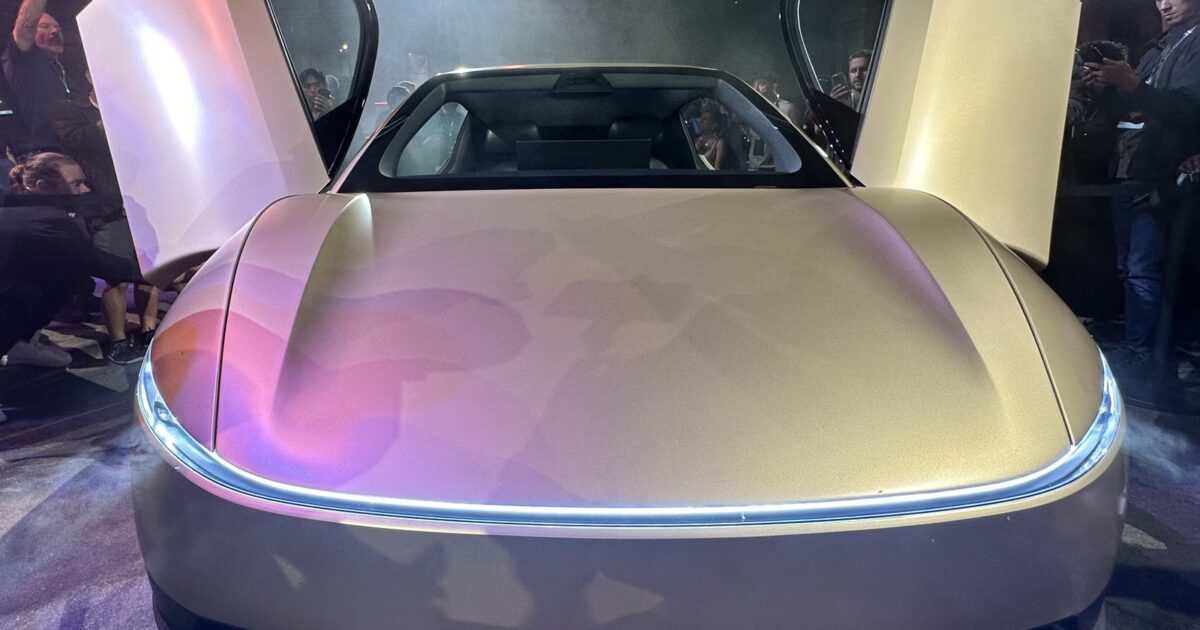
Tesla just made its original Robotaxi market dramatically bigger.
The company says a larger Austin service area is now live. Current map analysis puts the advertised zone at roughly 443 square miles, up about 171 square miles from the previous boundary.
That is a 63% jump.
The service day has grown too. The Robotaxi app now lists rides from 5 a.m. until 2 a.m., leaving only three hours when public service is not scheduled.
This is starting to look less like a cautious pilot and more like a city-scale transportation network.
Tesla announced the new map with a four-word message and a picture that told the rest of the story.
Bigger Austin service area now live pic.twitter.com/Ku336rCL7K
— Robotaxi (@robotaxi) November 9, 2026
Not a Tesla App mapped the change at about 171 additional square miles, taking Austin’s advertised coverage from 272 to roughly 443 square miles. The northern edge remains mostly unchanged, stopping short of Round Rock and Cedar Park, while the rest of the boundary pushes outward in nearly every direction.
To the east, the zone now reaches past Pflugerville toward Manor. It extends southeast beyond Austin-Bergstrom International Airport and the TX-130 toll road, southwest toward the TX-45 corridor near Buda, and west toward Lakeway.
That gives Austin a larger advertised Robotaxi footprint than Tesla’s other active markets. San Antonio is listed at 274 square miles, Houston at 254, Fort Worth at 143, and Dallas at 81.
There is an important catch: a boundary on a map is not the same thing as guaranteed pickup and drop-off coverage on every street inside it.
The same report found that Austin’s previous usable zone was materially smaller than its advertised outline, particularly on the east side. The real test is whether riders can consistently hail a car across the newly added territory, not whether the app can draw a bigger shape.
The operating-hours change may be even more revealing.
Starting at 5 a.m. and running until 2 a.m. gives Austin a 21-hour public service day. Tesla had already pushed the closing time later; now it is attacking the morning gap from the other direction.
Only three hours remain between the scheduled stop and the next day’s first rides.
Cybercabs are already moving during that gap. Ethan McKanna captured what appeared to be unsupervised cars operating between 2 a.m. and 6 a.m., raising the obvious question: is Tesla quietly testing the final step toward round-the-clock service?
Is Robotaxi operating 24/7 in Austin now? I'm seeing what appears to be unsupervised Cybercabs between 2-6am pic.twitter.com/Q7pA9VKAwf
— Ethan McKanna (@ethanmckanna) November 8, 2026
Not yet, at least not for paying riders.
Neither Tesla nor the Robotaxi app has announced 24/7 passenger service. Those overnight cars could be validating new software, repositioning across the expanded zone, or heading to charging and cleaning facilities.
But that activity matters. A robotaxi network cannot become a true replacement for late-night and early-morning transportation if its cars disappear when bars close, airport shifts begin, or commuters head out before sunrise.
Tesla described Austin as a market where unsupervised operations were already ramping. The company also said it had started Cybercab production, begun public-road engineering drives with production vehicles, and offered employee rides on the Gigafactory Texas campus.
The update showed how quickly Robotaxi was moving beyond its original launch footprint. Tesla said it had expanded Austin’s unsupervised operating area, launched unsupervised rides in Miami, Orlando, and Tampa, and continued testing, permitting, and first-responder training for additional metropolitan areas.
Tesla’s cumulative paid Robotaxi mileage chart reached roughly 2.44 million miles by the end of June, up from about 650,000 at the end of 2025. Those miles predate the current Cybercab surge, but they show that the company was already accumulating real passenger-service experience before the purpose-built fleet began scaling.
That was the factory-and-testing phase. The current expansion shows what the deployment phase looks like: more purpose-built cars, longer operating hours, and a service boundary that reaches far beyond central Austin.
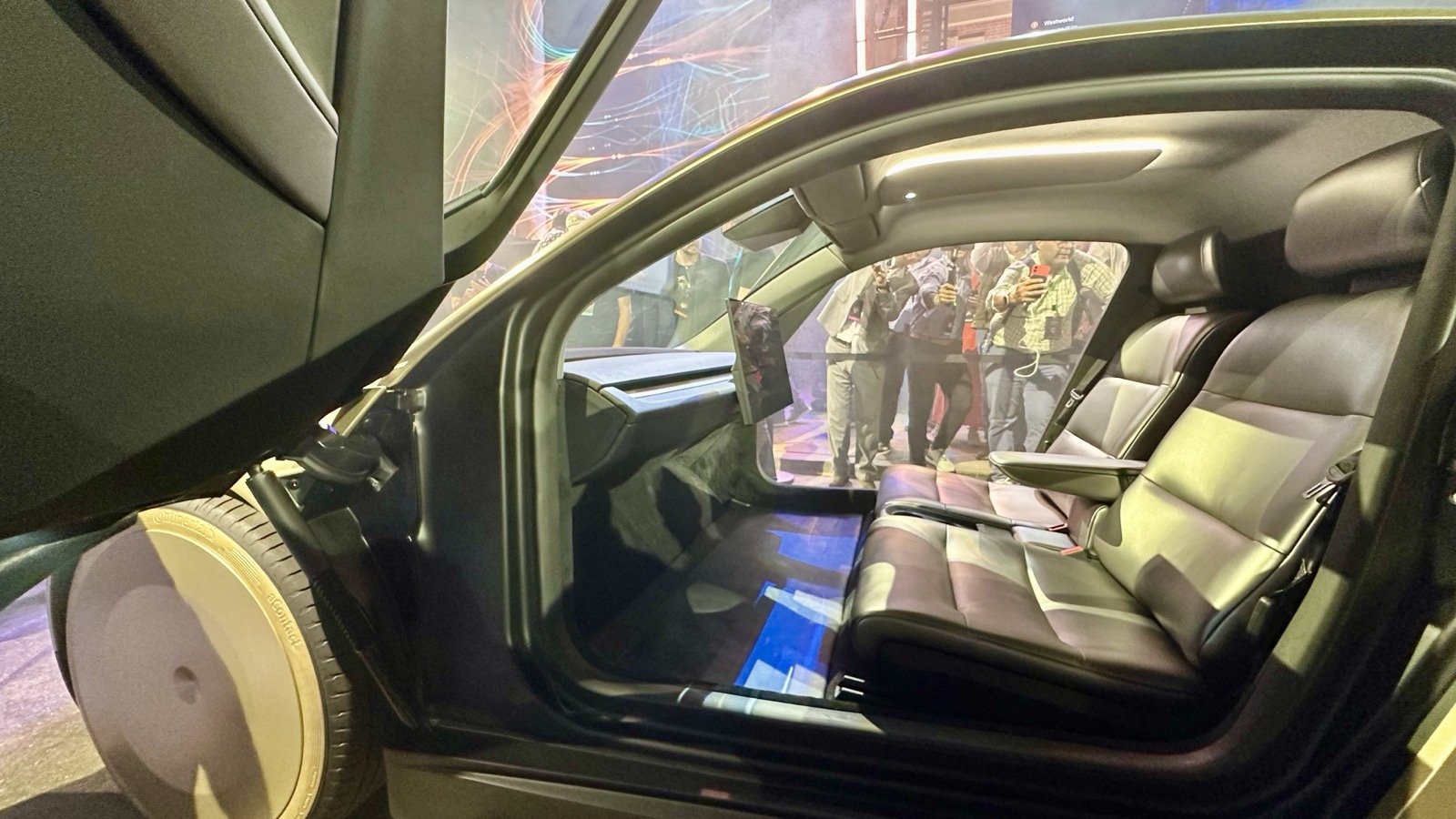
Tesla said in October that more than 300 Cybercabs were already serving the city. Those steering-wheel-free vehicles now work alongside unsupervised Model Ys, giving the company two ways to add supply while Cybercab production continues to ramp.
Scale does not erase scrutiny.
The National Highway Traffic Safety Administration opened an Audit Query after Cybercab’s Austin deployment to examine how Tesla certified a vehicle with no steering wheel, pedals, or traditional mirrors against federal safety standards written largely around human-driven cars.
The agency says it is reviewing the technical data and processes behind Tesla’s self-certification, including whether the company treated some requirements as inapplicable to a fully automated vehicle. NHTSA has also said it supports automated-vehicle development while insisting that existing standards remain in force until rule changes are complete.
That puts Austin at the center of two experiments at once.
Tesla is testing whether camera-based autonomy can run a broad, near-all-day transportation service without a driver. Regulators are testing whether the existing rulebook can properly evaluate a car designed without human controls.
The expanded map does not settle either question.
It does show that Tesla is no longer measuring progress in a few downtown streets or an extra hour at night. The company is adding territory by the hundreds of square miles and squeezing the daily shutdown window toward zero.
If the new zone works as advertised, Austin just became the first place where Tesla’s Robotaxi vision can be judged at real metropolitan scale.
Join the conversation!
Please share your thoughts about this article below. We value your opinions, and would love to see you add to the discussion!