

Tesla is putting a date on the Cybertruck’s retreat from Giga Texas—and the Cybercab is taking its place.
Elon Musk said Friday that Cybertruck production at the Austin-area factory will wind down around the middle of 2027 so Tesla can build more of its purpose-built robotaxi.
That is more than a product update. It is a factory-floor verdict on where Tesla believes its future lies.
Musk delivered the decision in one direct post:
Tesla will be winding down production of the Cybertruck at Gigafactory Texas around the middle of next year to make room for increased Cybercab production
— Elon Musk (@elonmusk) November 6, 2026
The wording is narrow but consequential. Musk named one plant, one rough deadline and one replacement priority.
He did not provide a final build date, a last-order date or a plan to move Cybertruck production elsewhere.
For now, the confirmed change is that the truck will surrender its Texas production footprint to Cybercab.
Associated Press put the announcement against the Cybertruck’s unusually loud seven-year arc. Tesla revealed the stainless-steel pickup at its California design studio in 2019, during the famous demonstration in which its supposedly unbreakable windows shattered, and started customer deliveries in late 2023.
The company once discussed annual volume around 250,000 units. The attention never translated into that kind of scale.
AP cited Kelley Blue Book estimates showing 20,237 U.S. sales in 2025, roughly half the prior year’s total. Through September 2026, the estimate was down another 28 percent.
Tesla does not break Cybertruck deliveries out separately in its quarterly company totals, so third-party registration and sales estimates remain the best public model-level measure.
That decline followed a launch that missed the original under-$40,000 promise. Early customer trucks arrived at roughly twice that figure or more, narrowing the audience before quality complaints and recalls added pressure.
The factory decision makes the gap impossible to ignore. A vehicle designed to reshape the pickup market is now giving up scarce Texas floor space after only a few years in customer hands.
TechCrunch reported that the truck reached customers at the end of 2023 after years of buildup, but total sales over the following three years remained in the tens of thousands rather than the hundreds of thousands Tesla once envisioned.
The outlet also placed the decision inside Tesla’s larger shift from conventional electric-vehicle sales toward AI, robotics and autonomous transportation.
That shift is already visible on Texas roads. Cybercabs have spent the past two months entering Tesla’s Austin fleet while the company builds out the robotaxi operation around them.
The factory trade now ties those two product stories together. Cybertruck is losing the line capacity that Cybercab needs, turning a strategic presentation into a measurable manufacturing commitment.
That context matters, but Musk did not frame Friday’s move as a postmortem. He framed it as a capacity choice: less Cybertruck, more Cybercab.
The engineer who led the truck program made the handoff explicit:
Cybertruck was an incredible technology development platform and lives on through Cybercab. Thanks to everyone who contributed to making the future looking like the future
As well to the community of owners whose adventures I've enjoyed and will continue to follow ❤️ https://t.co/0nZoTJYC5o
— Wes (@wmorrill3) November 6, 2026
Wes Morrill’s language is revealing. He described Cybertruck as a technology-development platform whose work continues in Cybercab, not as a dead end.
The truck introduced a 48-volt low-voltage architecture, steer-by-wire and other unconventional systems that Tesla can carry into later vehicles even if the original production line shrinks away.
That does not make the Cybertruck a sales success. It does explain why Tesla may judge the engineering investment differently from the retail numbers.
Tesla shows in its Q3 2026 update why Cybercab now wins the internal competition for space. The company says it put Cybercabs into the Austin Robotaxi fleet on September 3.
Cumulative unsupervised Robotaxi miles increased eightfold from the prior quarter, with sustained double-digit weekly growth.
The same company update says battery availability remained the limiting factor in increasing overall auto volumes. Musk’s new decision identifies a different, more local constraint inside Giga Texas: floor space and production capacity are valuable enough that Tesla is reallocating them toward the robotaxi.
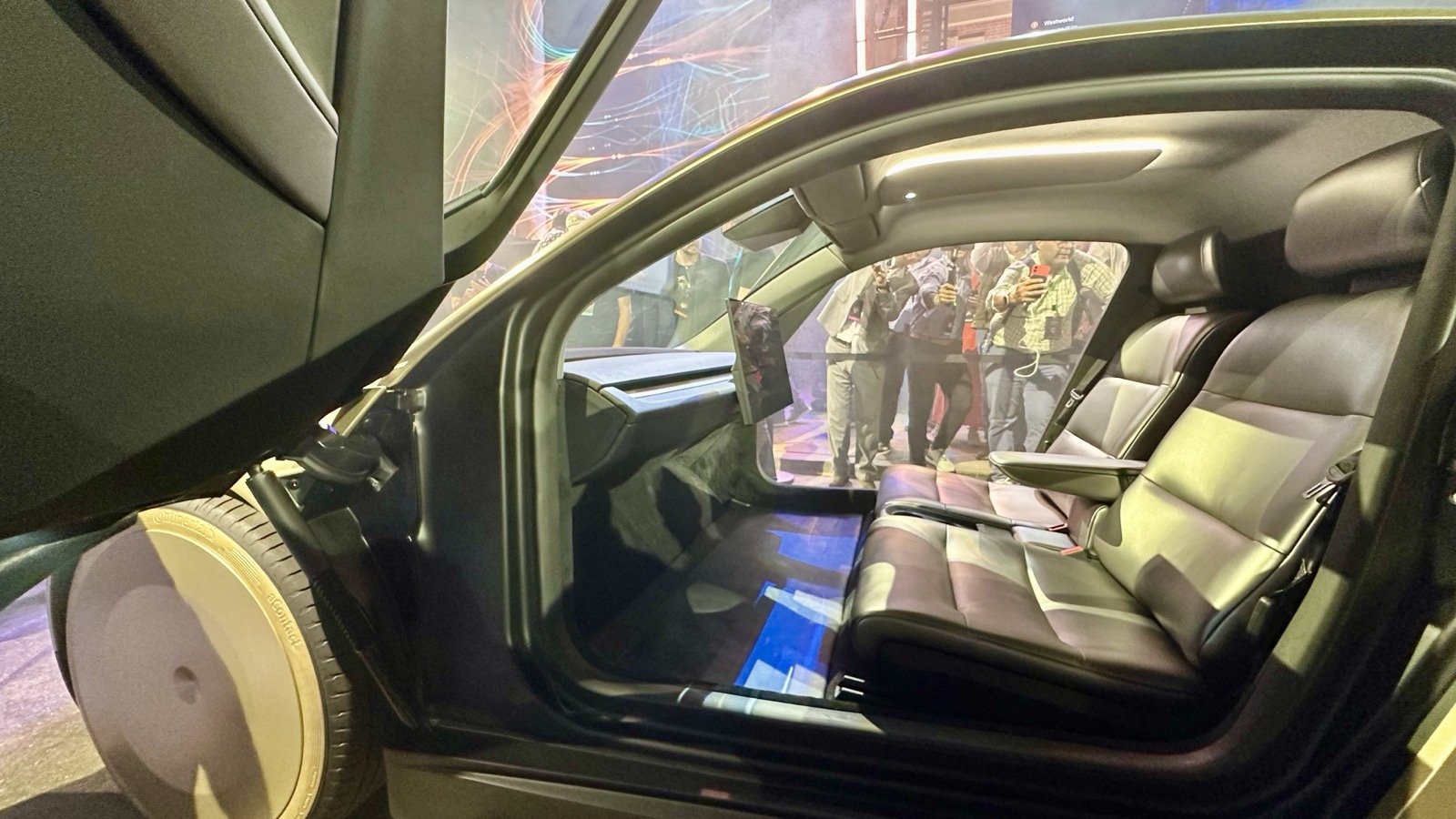
Cybercab is the hardware at the center of Tesla’s attempt to build a high-utilization autonomous ride service. If the company can deploy each vehicle into a working network, one factory slot may support recurring ride revenue instead of a single consumer sale.
That is the bet. It is also the risk.
Cybertruck entered a mature market with known customers, known roads and known rules. Cybercab depends on autonomous performance, regulatory acceptance and enough service demand to keep the cars busy.
Tesla is moving capacity from the difficult product it already knows to the much larger system it still has to prove.
The biggest unanswered question is whether “winding down” at Giga Texas means the end of Cybertruck production everywhere. Musk did not say that.
No other Tesla plant has been named as a destination, and no successor pickup was announced.
Owners also have practical questions about parts, repairs, software support and resale values. Friday’s posts offered appreciation and continuity of engineering, but Tesla has not published a detailed support plan tied to the production wind-down.
What Tesla did settle is the hierarchy.
The Cybertruck was once the machine that defined Giga Texas. By the middle of 2027, Tesla plans to use that space to build more Cybercabs instead.
The stainless-steel truck may live on as an engineering bridge, a cultural object and a fleet on the road. Inside the factory, the future now belongs to the robotaxi.

Join the conversation!
Please share your thoughts about this article below. We value your opinions, and would love to see you add to the discussion!