
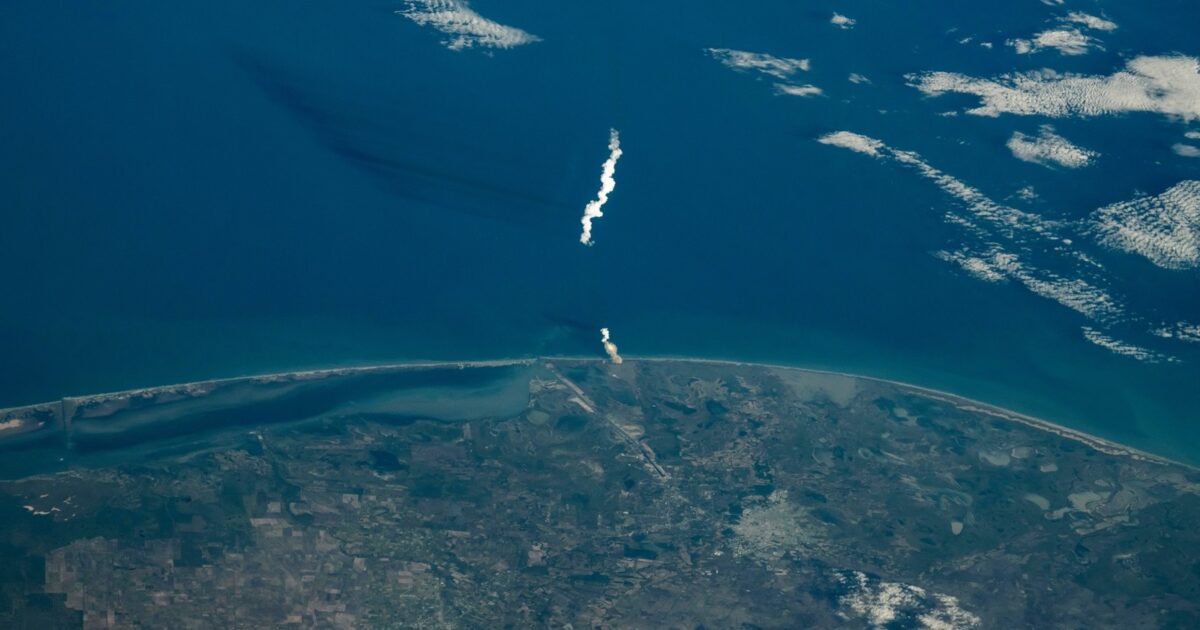
SpaceX has finally put a date and a full mission profile on the most ambitious Starship recovery attempt yet.
Flight 15 is targeting Friday, November 13, pending regulatory approval. The 75-minute launch window opens at 4:45 p.m. Central, but the mission will not end that evening.
If the flight goes to plan, Super Heavy will return to the Starbase tower about six and a half minutes after liftoff. Starship will stay in orbit for more than 22 hours, circle Earth roughly 14 times, and then come home for the first ship catch.
SpaceX made the date official with a simple message: Starship is preparing for catch.
Starship is preparing for catch
Flight 15 is targeting to launch as early as Friday, November 13, pending regulatory approval → https://t.co/K5XRci6bnw pic.twitter.com/WS2xGLjVsx
— SpaceX (@SpaceX) November 7, 2026
SpaceX’s Flight 15 mission page lays out a flight that is far more than a quick catch demonstration. Starship is expected to enter an orbit around 275 kilometers above Earth and deploy 26 Starlink V3 satellites between roughly 35 and 78 minutes after liftoff.
Three of those satellites will carry cameras pointed back at Starship’s heat shield. SpaceX says those views will be one of several data streams flight controllers use before committing the ship to a return over land.
The company lists the Super Heavy catch at about T+6:35. Starship’s deorbit burn comes more than 21 hours later, with the ship catch scheduled around T+22:32.
A launch at the opening of Friday’s window would put that second catch in the middle of Saturday afternoon in Texas. SpaceX is asking the upper stage to survive launch, orbital operations, satellite deployment, a high-energy reentry, a landing burn, and a precision approach to the same tower system.
SpaceX is explicit that the ship will only return to Starbase if flight controllers confirm the systems needed for reentry, the landing burn, and the tower approach are healthy. That is the right caveat for a vehicle coming back from orbital speed toward a launch site on the Texas coast.
The Federal Aviation Administration continues to handle the licensing and environmental work surrounding Starship operations at Boca Chica. Its Starship project page tracks reviews tied to launch-site operations, mission profiles, airspace closures, and license modifications.
The agency’s licensing process examines public safety, national-security and foreign-policy concerns, insurance requirements, and environmental effects. Returning both stages to Starbase adds a different risk picture from dropping them into the Gulf or Pacific, so the catch plan cannot be treated as automatic just because the hardware is ready.
The FAA has already completed environmental work covering return-to-launch-site profiles and revised airspace closures for earlier Starship missions. Flight 15 still needs the specific approval SpaceX references, which is why November 13 remains a target rather than a guaranteed launch date.
That means November 13 is not a promise. It is the earliest SpaceX says it is ready to try.
Elon Musk framed the stakes in unusually direct terms: bring back both pieces intact, and an orbital rocket has finally returned as a complete system.
SpaceX will attempt to catch both the Super Heavy booster and Starship on the upcoming flight.
If both are successful, it will mark the first time that all parts of an orbital rocket return to Earth intact.
This is the critical breakthrough needed to make life multiplanetary. https://t.co/BIxkhd5bkR
— Elon Musk (@elonmusk) November 6, 2026
Space.com reported that Ship 42 completed a full-duration six-engine static fire and a separate single-engine firing designed to simulate a deorbit burn. Booster 22 had already fired all 33 of its Raptor engines during its own ground test.
The hardware is building on Flight 14, which put Starship into orbit and deployed 26 operational Starlink V3 satellites. That mission returned early after an upper-stage Raptor shut down during ascent, but the ship still made a controlled reentry and ocean landing.
Flight 15 carries changes intended to protect the heat shield, including stronger tile retention in high-risk areas and curved tiles meant to reduce heating through the gaps. Those details could decide whether a 170-foot spacecraft arrives over the tower in one piece.
SpaceX has caught Super Heavy before. Catching Starship is the missing half of the architecture.
An ocean splashdown proves the ship can survive. A tower catch gives engineers the vehicle back where they can inspect it, service it, and eventually fly it again.
That is the difference between a spectacular reusable first stage and the fully reusable orbital system SpaceX has promised for years.
Flight 15 still has to clear regulators, launch cleanly, deploy its satellites, survive a full day in orbit, and pass every health gate on the way home. There are plenty of places for the plan to change.
But the goal is no longer vague. SpaceX has picked the date, published the timeline, and put both catches on the board.
If Starship comes back to the tower next Saturday, rocket recovery will have a new definition.


Join the conversation!
Please share your thoughts about this article below. We value your opinions, and would love to see you add to the discussion!