
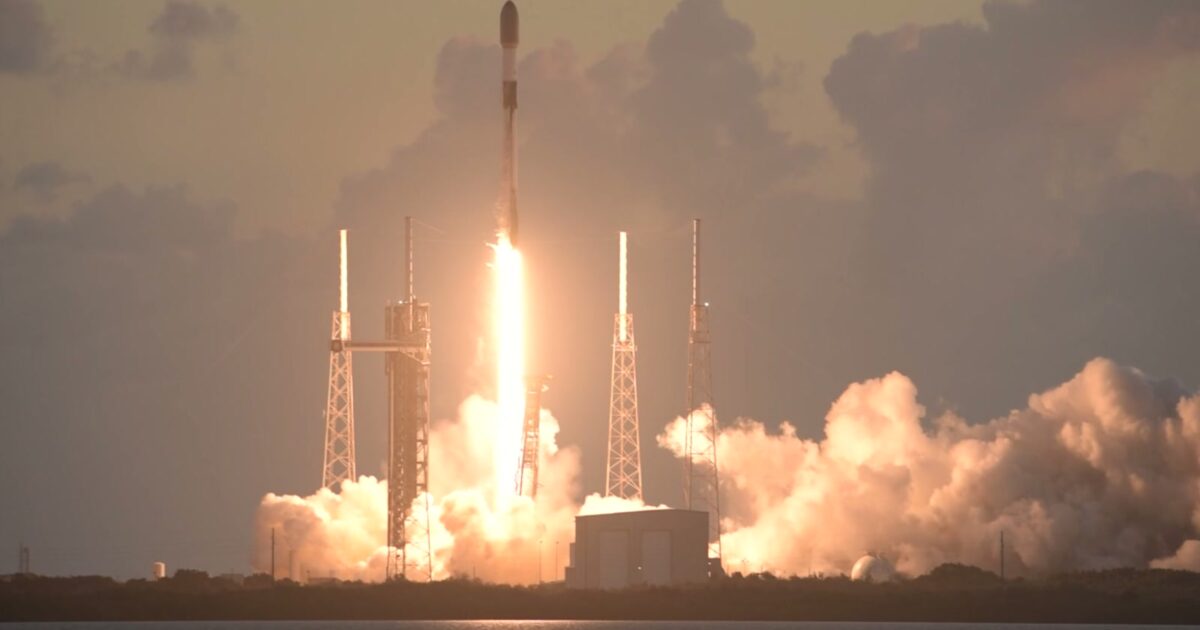
SpaceX is done talking about Starlink Mobile like it will be a satellite service with a few ground-network assists.
The company has selected Qualcomm to supply the radio and baseband technology for a nationwide terrestrial 5G network of its own.
The planned scale is not a pilot: tens of thousands of U.S. sites, with deployment beginning in 2027 under a multi-year agreement.
Big news! SpaceX has just officially announced that they are partnering with Qualcomm to help build @Starlink Mobile's nationwide terrestrial 5G network, with deployment beginning in 2027.
Under the multi-year agreement, SpaceX plans to deploy tens of thousands of cellular sites… pic.twitter.com/8vtnio27KT
— Sawyer Merritt (@SawyerMerritt) November 4, 2026
That puts real hardware behind Elon Musk’s ambition to challenge AT&T, Verizon and T-Mobile across the entire network instead of limiting Starlink to their dead zones.
Qualcomm will supply the guts of the ground network
Qualcomm says SpaceX chose its Dragonwing QRU100 and QDU100 platforms, plus commercial-grade Layer 1 software, for Starlink Mobile’s terrestrial base stations. Those are not smartphone chips.
They handle radio-unit and time-sensitive baseband processing inside a cellular network.
The planned radios use 64 transmit and 64 receive paths, an architecture known as 64T64R Massive MIMO. In plain English, the system can use many antenna elements at once to direct capacity more efficiently toward users instead of spraying the same signal everywhere.
Qualcomm says that should improve coverage, capacity and performance per watt. When the plan involves tens of thousands of sites, power efficiency is not a brochure detail—it becomes part of whether the network can operate economically.
The companies are also leaving room for multiple spectrum bands and later network upgrades. Qualcomm describes the 5G build as a foundation for an eventual AI-native 6G system.
This is Qualcomm’s biggest 5G deal yet
Reuters reports that Qualcomm called the SpaceX agreement its largest 5G deal to date. The companies did not disclose financial terms.
The commitment covers radio equipment, baseband units and software across tens of thousands of macro cell sites beginning next year. It gives Qualcomm a flagship customer as the chipmaker pushes beyond phones and into the equipment inside carrier networks.
The deal also moves Qualcomm deeper into telecom infrastructure, where it will compete with companies supplying the chips and systems behind existing carrier networks.
SpaceX is taking on a different fight. It must turn those components into an operating network capable of carrying calls and data at national scale, while Qualcomm must prove its technology can perform reliably across a deployment far larger than its earlier infrastructure wins.
For SpaceX, the importance is even clearer. Satellite-to-phone service reaches beyond towers.
Satellites cannot match the dense capacity or indoor reliability of a mature ground network in every city, airport, stadium and office building.
A Starlink-branded carrier needs both layers.
One network, two very different coverage tools
SpaceX’s pitch is straightforward: terrestrial 5G should handle heavy traffic in populated areas while Starlink satellites extend service across rural roads, remote land and disaster zones where towers disappear.
Musk summarized the intended consumer experience in one sentence:
At last there will be one network with good signal everywhere! https://t.co/pPdg80J82m
— Elon Musk (@elonmusk) November 4, 2026
The hard part is making the handoff between those layers feel invisible. Customers will not care whether a signal came from a tower or a satellite if calls stay connected and data keeps moving.
They will care immediately if the transition is slow, unreliable or expensive.
The tower build is now real—but far from finished
Axios reports that Qualcomm will provide the foundational radio and baseband technology while SpaceX develops additional software and other network components. Analyst Joe Madden estimates the combined satellite and terrestrial effort could cost at least $100 billion, including spectrum.
That is an outside estimate, not a budget disclosed by SpaceX. It still captures the size of the undertaking.
Buying radios does not secure tower leases, local permits, fiber backhaul, retail distribution, billing systems or customer support. SpaceX has to assemble all of that while the big three defend networks they have spent decades building.
Axios also notes a larger opportunity beyond ordinary smartphones. A hybrid network could keep delivery drones, autonomous vehicles, security robots and other connected machines online as they move between dense cities and places with weak tower coverage.
That may explain why SpaceX is designing for more than today’s phone plans. The company is trying to build a connectivity layer for machines that cannot simply shrug and wait for the next signal bar.
Why SpaceX is building instead of borrowing
Android Central reported last week that T-Mobile CEO Srini Gopalan does not see room for a deeper mobile virtual network operator arrangement with SpaceX. T-Mobile may consider a conventional commercial or resale deal, but it does not appear eager to hand a future rival broad access to its network.
That stance makes the Qualcomm agreement easier to understand. If the incumbent carriers will not provide the terrestrial layer on terms SpaceX wants, SpaceX can build one.
The company is also pursuing low-band spectrum designed to reach farther and penetrate buildings better than satellite links. Recent reports that SpaceX explored a Boost Mobile deal point toward the same missing pieces: customers, distribution and terrestrial access.
Qualcomm now supplies a concrete technical foundation for the build-it-yourself path.
The announcement is a commitment, not coverage
No first-city list, consumer price or completed national footprint was announced. A rollout that begins in 2027 is not the same thing as nationwide service arriving in 2027.
SpaceX still has to integrate the network, obtain needed approvals, deploy the sites and prove that its economics work.
But the argument changed this week.
Starlink Mobile is no longer just a constellation, a spectrum portfolio or a possible deal with somebody else’s carrier. SpaceX has chosen the core technology for a ground network spanning tens of thousands of sites.
The company that built cell towers in space is preparing to build them on Earth.



Join the conversation!
Please share your thoughts about this article below. We value your opinions, and would love to see you add to the discussion!