

SpaceX just moved its strange, flat Starfall capsule from an intriguing experiment to something much more concrete.
The U.S. Air Force loaded it with survival and emergency equipment, sent that cargo through launch and reentry, recovered it from the Pacific Ocean and opened the pods back up.
That is the first real look at what Starfall could do beyond simply proving it can survive the trip home.
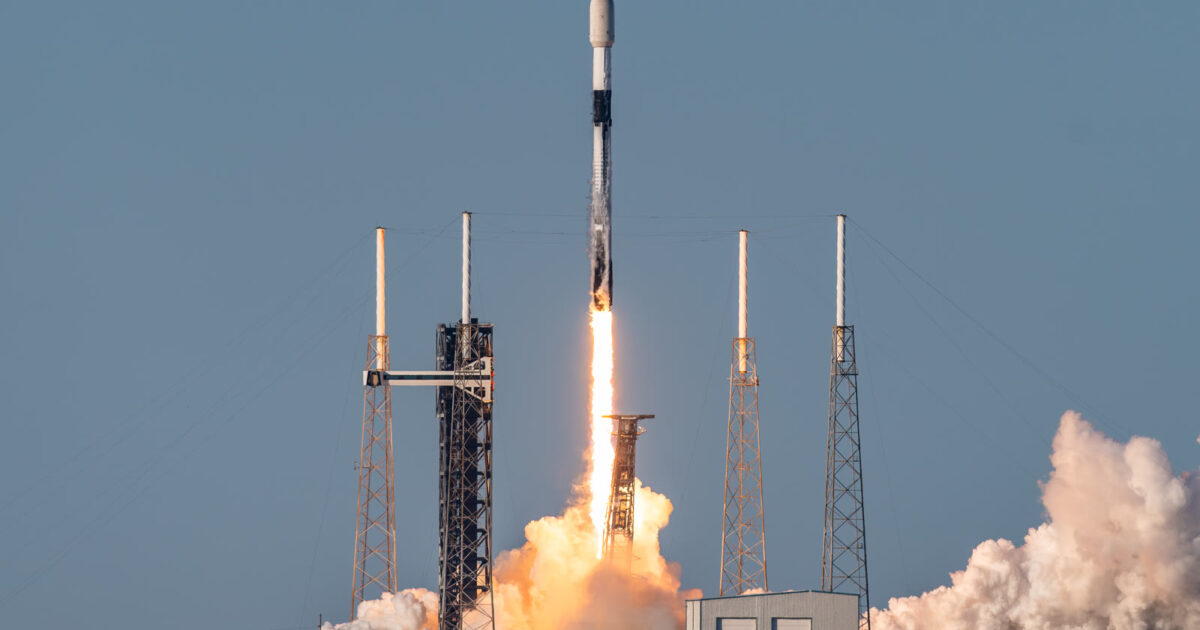
The test flew October 20 on SpaceX’s Bandwagon-5 rideshare mission from Cape Canaveral. Starfall carried compact Air Force Research Laboratory cargo pods fitted with sensors to record temperature, shock and vibration from liftoff through splashdown.
The contents were not ballast. They were the sort of things people might actually need when normal transportation has failed.
Air Force Research Laboratory says the pods held a satellite-communications tracker, batteries, a reverse-osmosis desalinator, survival gear and emergency medical equipment. Engineers also checked whether a UNI-PAC III life raft would fit inside Starfall for a future mission.
AFRL built the pods to accept different loads while measuring what those loads endure. The laboratory’s larger Rocket Cargo project is trying to determine whether commercial rockets and reentry vehicles can move vital supplies across the globe on tactical timelines.
The long-term use cases are blunt: contested locations, austere sites without usable roads or runways, rescue operations, disaster relief and response to chemical, biological, radiological or nuclear hazards.
This mission did not create a global delivery network. It demonstrated an essential sequence: representative cargo can ride Starfall through orbit, come back through the atmosphere and be recovered for engineers to inspect.
AFRL showed the result after splashdown:
With support from @SpaceX, the AFRL agile cargo pods were recovered after splashdown in the Pacific Ocean. Each pod contained representative mission equipment to study the effects of temperature, shock, and vibration of the cargo environments during launch and reentry. #Readiness https://t.co/swYExYfBSH pic.twitter.com/yWoND13ur4
— Air Force Research Lab – AFRL (@AFResearchLab) October 26, 2026
The photographs matter because SpaceX has said very little publicly about Starfall. The capsule made its debut in June, and even then most of its known specifications came from Federal Aviation Administration paperwork rather than a conventional product reveal.
Space.com reports that the disk-shaped vehicle is about 10.2 feet wide and can return roughly 2,200 pounds of payload. A carbon-fiber heat shield protects it during reentry, compressed-gas thrusters control its attitude, and parachutes handle the final descent toward the ocean.
The same report says the October flight was Starfall’s second trip to space. Bandwagon-5 carried 32 payloads and deployed them over roughly two hours, but Starfall had a different job from the satellites around it after separating from Falcon 9’s upper stage.
Its value depended on coming back.
Starfall is only about 2.5 feet tall despite its broad diameter. The vehicle itself weighs roughly 4,600 pounds before cargo, and it does not carry the propulsion system needed to deorbit on demand.
Instead, it follows a planned return trajectory, keeps its heat shield pointed correctly and descends into a remote Pacific recovery zone. That stripped-down design is a clue to SpaceX’s goal: make cargo return simpler than flying a crew-rated Dragon.
The capsule is uncrewed, and its parachute-assisted ocean landing trades runway access for recovery by ship. That makes this Air Force retrieval part of the vehicle test, not an afterthought.
That return leg is where the market gets interesting. SpaceX already dominates commercial launch.
A cheaper, repeatable way to bring experiments, manufactured materials and urgent equipment down from orbit would let it sell a round trip instead of only the ride up.
The Air Force is looking much farther ahead than a 2,200-pound capsule.
Breaking Defense reported in September that the military’s cargo-from-space effort has been shifting some attention from enormous rocket deliveries toward smaller commercial reentry vehicles. The original ambition involved moving tens of tons, but compact capsules can produce flight data and useful capability sooner.
That work is not limited to SpaceX. AFRL has also been examining technology from Blue Origin, Rocket Lab, Sierra Space, Anduril, Inversion Space and Outpost Space.
The competition is over whether orbital logistics can become reliable enough to serve customers who cannot wait for a cargo plane.
There is still a wide gap between one recovered test and an operational delivery network. Engineers need to study what the sensors recorded, determine how the equipment handled reentry, repeat the mission and prove that the cost and response time beat conventional options.
But SpaceX and the Air Force now have something better than a presentation slide.
They have the cargo back in their hands.
Join the conversation!
Please share your thoughts about this article below. We value your opinions, and would love to see you add to the discussion!