
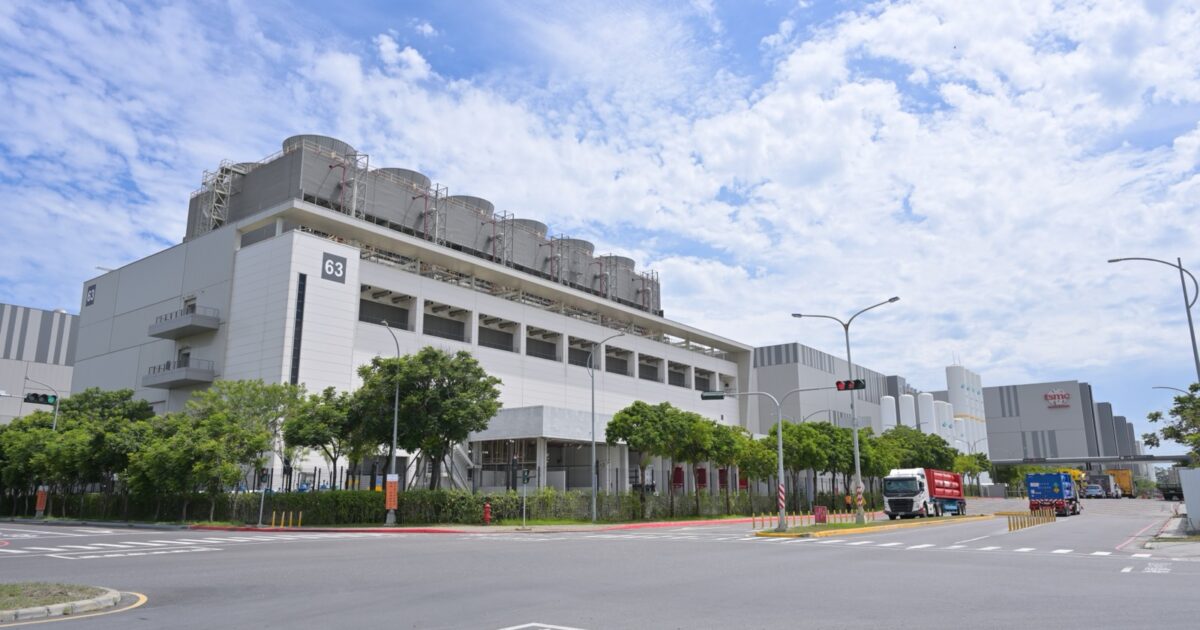
Elon Musk has confirmed that his Terafab project is talking with TSMC, potentially bringing the world’s largest contract chipmaker into the manufacturing plan meant to feed Tesla, SpaceX and xAI.
The confirmation is important. Its limit is equally important: no partnership, signed joint venture or replacement for Intel has been announced.
Musk described the status himself in one sentence:
Just discussions, but something may come of it
— Elon Musk (@elonmusk) October 3, 2026
That careful wording leaves the biggest questions open. TSMC could become an operator, investor, technology partner, supplier or some combination of those roles.
The conversation could also end without a deal.
Culpium first reported that TSMC was exploring ways to work with Terafab and help the startup chipmaker run new semiconductor factories in Texas. The report describes Terafab as a possible anchor customer for a future TSMC plant and says the foundry’s operating experience could become part of the arrangement.
The original report does not claim that final terms have been signed. That difference matters in a project involving enormous capital needs, sensitive process technology and three Musk companies whose demand could change faster than a conventional fab plan.
Culpium published the report on October 2 and described the talks as exploratory. Its central claim concerns operating know-how and a possible Texas manufacturing relationship, leaving ownership, process nodes, investment amounts and production timing unresolved.
Tom’s Hardware outlined two possible structures discussed around the report and placed them against Terafab’s existing Intel relationship. In one scenario, TSMC would own and operate a Texas facility while Terafab or SpaceX supplied capital, guaranteed chip purchases or both, giving the foundry committed demand without transferring full operating control.
Another scenario would leave SpaceX with majority control while TSMC provided process technology and operating expertise across a plant dedicated to Musk-company demand.
Those are scenarios, not settled terms. The publication explicitly cautioned that other structures could exist and that TSMC has not announced a Terafab agreement.
The same report identifies advanced packaging as another plausible area where TSMC’s established manufacturing system could matter even without replacing Intel’s process plan.
TSMC has used joint-venture structures in Japan and Germany, giving the discussion a real industrial precedent. A SpaceX-controlled fab operated with outside process expertise, however, would be a different arrangement and would require terms the companies have not disclosed.
The Intel question is now impossible to ignore. Musk previously said Terafab planned to use Intel’s 14A process once that technology was mature enough for the project’s timeline.
A TSMC role could compete with that plan, complement it or cover a different part of the stack. Advanced packaging alone is a huge undertaking, and Terafab’s stated ambition goes beyond etching logic dies.
The project is supposed to place logic, memory and advanced packaging under one roof.
Until the companies disclose more, claims that TSMC has pushed Intel out are speculation. What Musk confirmed is the discussion—not its structure or outcome.
SpaceX gave the clearest first-party explanation of why Terafab exists when it announced the Grimes County, Texas, site in August. The company said Tesla had already broken ground on a research fab at Giga Texas in April and described that smaller facility as a precursor to the full project.
SpaceX also put a staggering number on the demand problem. It expects the combined Tesla and SpaceX need for chips to exceed one terawatt of compute—more than current global supply can satisfy, according to the company.
For Tesla, that demand runs through autonomous vehicles, Optimus and the training and inference hardware behind its AI systems. SpaceX needs specialized computing across Starlink, spacecraft and its growing communications infrastructure. xAI adds another rapidly expanding appetite for accelerators and supporting silicon.
That makes TSMC’s possible involvement more than a name-dropping exercise. Building advanced fabs is brutally difficult.
Running them at competitive yield, maintaining process control and packaging high-performance chips at scale is the work of decades.
Terafab’s advantage is captive demand across companies that already spend heavily on compute. Its weakness is that ambition does not manufacture wafers.
Experienced operators, equipment suppliers and proven process technology determine whether an enormous building becomes a productive fab or an expensive monument.
TSMC would bring credibility on exactly that point. Intel would bring a U.S.-based advanced-node roadmap and a chance for Terafab to build around 14A.
There may be room for both if Musk’s demand projections are remotely accurate.
The most consequential part of Musk’s confirmation is that Terafab appears willing to look beyond a single-company solution. Tesla and SpaceX are trying to secure a manufacturing system large enough for products that do not yet exist at mass scale.
For now, the honest headline is talks. If those talks produce a structure that combines Musk’s demand, TSMC’s manufacturing discipline and Intel’s U.S. process ambitions, Terafab could become something far more interesting than an in-house chip plant.
Join the conversation!
Please share your thoughts about this article below. We value your opinions, and would love to see you add to the discussion!