

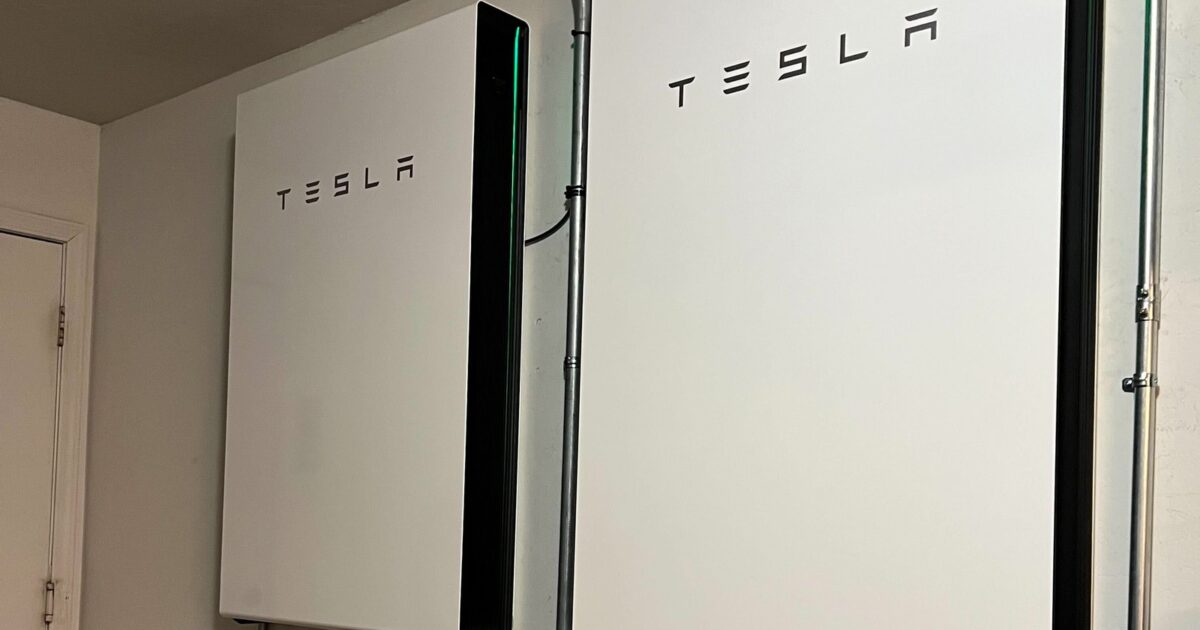
Tesla has finally given longtime Powerwall 2 owners a clean path into its current home-battery generation.
Beginning now in North America and Australia, eligible Powerwall 2 systems can be expanded with a Powerwall 3 instead of forcing the owner to hunt for discontinued hardware or replace batteries that still work.
Tesla Energy announced the change Wednesday with a simple message aimed directly at existing owners.
Powerwall 2 Owners: You can now increase your storage capacity with a Powerwall 3
Available in North America & Australia pic.twitter.com/iDq1RQOnVJ
— Tesla Energy (@teslaenergy) September 23, 2026
The headline is compatibility, but the official details make this much more than a cosmetic software toggle.
Tesla Energy Library says the mixed-generation setup begins with Powerwall software version 26.26. One Powerwall 3 can be connected to an existing system containing as many as four Powerwall 2 units, provided the installation uses the supported gateway and metering hardware.
The new Powerwall 3 becomes the Site Controller. Backup Gateway 2 continues to handle islanding and site metering, while the on-off switch on Powerwall 3 controls the complete system rather than only the new battery.
Tesla’s largest documented configuration combines one Powerwall 3, three Powerwall 3 Expansion units and four Powerwall 2 batteries. That adds up to 108 kWh of stored energy.
The Expansion units add capacity, not more system power. Tesla lists an 8 kW maximum continuous charging rate for a system using those expansions.
There are real limits. A Powerwall 2 installation with Backup Gateway 1 needs a Gateway 2 upgrade, and systems using Neurio metering need Tesla’s Remote Meter.
Powerwall+ systems are not supported in this mixed arrangement. Tesla says those units must be replaced with Powerwall 3 hardware instead.
Drive Tesla reports that the rollout covers both North America and Australia and removes a major problem for owners who wanted more storage but could not add Tesla’s newer battery to an older system.
The practical gain is straightforward. More storage can carry a home farther through an outage and hold more daytime solar for use after sunset.
Owners no longer have to treat a functioning Powerwall 2 fleet as a technological dead end. The old batteries can remain useful while Powerwall 3 supplies the modern control layer and new storage capacity.
The report also notes a separate boundary: Cybertruck Powershare currently works with Powerwall 3 systems, while Tesla says Powerwall 2 support is still coming. Mixed-battery compatibility should not be mistaken for immediate access to every Powerwall 3 feature.
Powerwall 3 first reached U.S. customers in 2024, so this update closes a gap that persisted for more than two years. Tesla has not published one flat installed price because gateway work, metering, labor and permits differ from home to home.
TeslaNorth puts the change in product context. Powerwall 3 is Tesla’s current 13.5 kWh home battery and includes an integrated solar inverter, while Powerwall 2 owners previously had no straightforward way to expand with the newer generation.
The outlet points to the questions that now move from software to the installer: total project cost, available wall space, existing wiring, permits and how much hardware an older setup needs before Powerwall 3 can take control.
A fully built 108 kWh system is the ceiling in Tesla’s application note, not the default upgrade. A homeowner with one or two older batteries can make a much smaller addition if the gateway, meter and electrical layout qualify.
Those details will decide whether an upgrade is simple or substantial. Tesla directs owners to work through their original installer or another Tesla Certified Installer rather than treating this as a do-it-yourself battery addition.
For early Powerwall buyers, this is the kind of compatibility that matters. A home battery is supposed to be a long-lived piece of infrastructure, not a gadget that becomes stranded when the next model arrives.
Tesla has now built a bridge between the two generations. Some homes will need gateway, meter or electrical work, but owners finally have a supported route to add current hardware without throwing away the system already on the wall.
Join the conversation!
Please share your thoughts about this article below. We value your opinions, and would love to see you add to the discussion!