

SpaceX Crew-13 has crossed the review that mattered most after an oxidizer leak knocked the mission off its original September schedule.
NASA, SpaceX and their international partners polled “go” to continue toward launch after completing the mission’s Flight Readiness Review. The new target is 11:10 a.m. EDT on Thursday, October 1.
The review did not make launch automatic. Final work remains, weather can still interfere and the opportunity is officially no earlier than October 1.
But Crew-13 is no longer sitting under an open-ended safety hold.
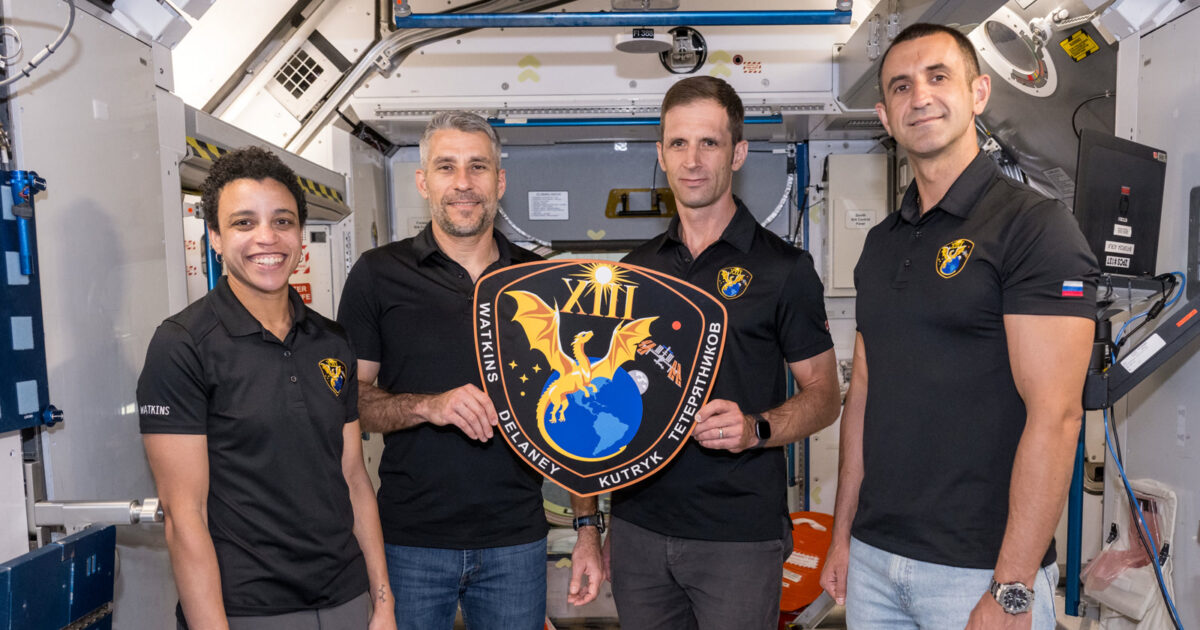
SpaceX announced the restored target with a new mission image and a direct link to its Crew-13 launch page.
Targeting no earlier than Thursday, October 1 for Falcon 9’s launch of @NASA’s Crew-13 mission to the @Space_Station → https://t.co/l8scSzLHlg pic.twitter.com/ln3UwEg3H3
— SpaceX (@SpaceX) September 22, 2026
The timeline matters because this mission slipped for a concrete hardware reason. In late August, teams found an oxidizer leak in Dragon’s propulsion system during standard prelaunch processing.
NASA and SpaceX removed the September target, began additional testing and data review, and refused to publish a replacement date until the spacecraft could move back through the readiness process.
NASA confirms that the mission has now reached that next stage. The review is not a ceremonial calendar meeting.
Managers examine SpaceX’s transportation system, mission operations and support functions while also checking whether the International Space Station is ready to receive the incoming crew.
NASA says the participants polled “go” to continue preparations. Falcon 9 is assigned to lift off from Space Launch Complex 40 at Cape Canaveral Space Force Station, with Dragon carrying four people to the station.
That wording is careful for a reason. A successful Flight Readiness Review closes a major gate, but launch teams still have to finish the final preflight sequence and remain satisfied with the vehicle, crew, station and operating conditions all the way to liftoff.
The official station account laid out the exact target and the work still in front of the teams.
.@NASA and @SpaceX are targeting 11:10 a.m. EDT, Thursday, Oct. 1, as the earliest launch opportunity for the Crew-13 mission to the @Space_Station.
Over the next several days, teams will complete a series of prelaunch activities and intensive reviews to confirm the crew, the…
— International Space Station (@Space_Station) September 22, 2026
NASA gives the mission’s fast-track plan once Falcon 9 leaves the pad. If the October 1 opportunity holds, Dragon is expected to reach the station in less than nine hours and dock at the forward-facing port of the Harmony module at about 8 p.m. EDT.
The crew was still in quarantine at Johnson Space Center when that timeline was announced. They have since traveled to Florida, turning an abstract launch target into an active campaign at Kennedy Space Center.
NASA astronauts Jessica Watkins and Luke Delaney will fly as commander and pilot. Canadian Space Agency astronaut Joshua Kutryk and Roscosmos cosmonaut Sergey Teteryatnikov are the mission specialists.
After docking, all four are scheduled to join Expedition 75.
NASA says the four touched down at Kennedy at 12:56 p.m. EDT on Saturday after flying from Houston with a brief refueling stop in Mississippi.
They are spending the remaining days before launch in quarantine while completing final preflight operations from Astronaut Crew Quarters. Suit checks, equipment reviews and mission briefings now replace the uncertainty that followed the leak.
The arrival put all four crew members at the launch center five days before the opening opportunity. They were greeted at the Shuttle Landing Facility before moving into the controlled preflight routine that keeps the crew healthy and close to the spacecraft team.
NASA still describes October 1 as a target, not a promise. The crew’s presence at Kennedy nevertheless shows that the mission has progressed from engineering review into the final days of launch operations.
The NASA mission page identifies this as SpaceX’s 13th operational crew-rotation mission for the agency and Dragon’s 14th flight with astronauts when the Demo-2 test mission is included. It lists the destination as the International Space Station, keeps the launch at 11:10 a.m. EDT on October 1 and gives a 2027 landing year.
Watkins is the veteran of the group. She spent 170 days in space on Crew-4 and will return as the person commanding Dragon.
Delaney, Kutryk and Teteryatnikov are preparing for their first trips to orbit. The page preserves the complete four-person roster and ties the flight directly to NASA’s Commercial Crew Program rather than treating it as a standalone SpaceX mission.
That experience mix makes the deliberate recovery from the leak more important, not less. One crew member knows Dragon from a long-duration mission.
Three will be trusting it with their first launch beyond Earth. Nobody benefits from forcing a date before the engineering case is ready.
The Canadian Space Agency adds another milestone: Kutryk will become the first Canadian astronaut to fly as part of NASA’s Commercial Crew Program. He is also set to become Canada’s fourth astronaut on a long-duration station mission.
Kutryk brings more than 4,000 flight hours across more than 40 aircraft types and experience as a fighter pilot, test pilot and mission-control capsule communicator. The agency expects him and the rest of Crew-13 to spend roughly six months aboard the station conducting research and testing new technology.
The oxidizer leak is still part of this mission’s story. The delay is evidence that the ground process found a propulsion-system problem before four people were strapped into the spacecraft.
Now comes the harder proof: completing the remaining work, holding the October 1 target and sending Crew-13 safely to orbit.
Passing Flight Readiness Review does not erase the delay. It turns it into what a safety hold is supposed to become—a problem found on the ground, a launch plan rebuilt around evidence, and a crew moving forward only after the system earned another “go.”
Join the conversation!
Please share your thoughts about this article below. We value your opinions, and would love to see you add to the discussion!