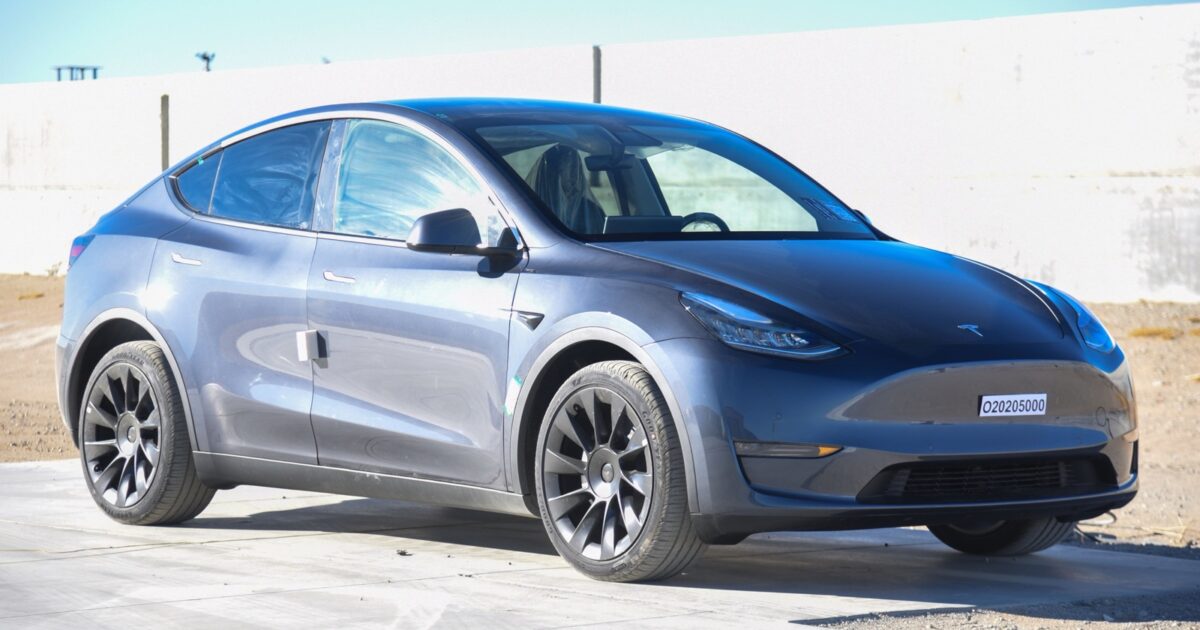
The Tesla owner-fleet promise may finally be moving out of the pitch deck and onto the road.
Elon Musk says trials that let owners send their own cars into Tesla’s Robotaxi network could begin next month if things go well.
That means December is now in play for a limited test. It does not mean every Tesla owner will be able to tap a button and put a car to work before Christmas.
The distinction matters because Musk left nearly every operating detail unanswered. He gave a timing target, not a launch plan.
The exchange began with Austin Uber driver John Welty, who said he uses FSD exclusively in his Model Y and receives between 49% and 63% of what a passenger pays.
Welty said he would rather send the Model Y to work for Robotaxi without him behind the wheel:
I'm a Diamond level Uber driver in the Austin area (using FSD exclusively) and I get anywhere between 49% and 63% of the passenger fare.
I'd rather send my Model Y off to work for Robotaxi without me. pic.twitter.com/W39bihiOYy
— John Welty (@apostlejohn) November 16, 2026
That is the economic idea in one post. The owner supplies the car, Tesla supplies the autonomous network, and the driver’s time is no longer the limiting factor.
Musk’s reply was short and conditional. He said the capability is coming soon, trials may start next month if things go well, and managing a fleet beats driving one car yourself.
Here is his full response:
Coming soon. If things well, may start trials next month.
Much better to manage a fleet of cars than have to drive just one car by yourself!
— Elon Musk (@elonmusk) November 16, 2026
Musk did not say Austin. He did not say Model Y owners would be the only participants, or even confirm which customer vehicles would qualify.
He also gave no enrollment process, fare split, insurance structure, charging plan, cleaning policy or answer for who pays when a rider damages the car.
Not a Tesla App reports that Austin is the logical starting point because the exchange involved an Austin driver and Tesla typically introduces Robotaxi features there first. The outlet correctly stops short of treating that inference as an announcement.
Its report also identifies the hardware question. Tesla’s working Robotaxi Model Ys have carried operational equipment not found on every customer car, including redundant communications hardware and camera-cleaning systems built for unattended service.
That does not prove an ordinary Model Y cannot join the network. It does mean Tesla must explain whether trial cars need retrofits, a particular hardware generation or only a software and fleet-management change.
The outlet also notes that no one has said what subscription would cover an owner-provided vehicle. FSD on a conventional Tesla and the autonomy subscription attached to a privately purchased Cybercab currently have different prices and different operating terms.
Those details are not paperwork around the edges. They determine which cars can enter a trial, what an owner pays before earning the first fare and whether Tesla can support an unattended vehicle when a camera is dirty or a data connection drops.
The timing is the bigger surprise.
Not a Tesla App reported after Tesla’s October earnings call that AI chief Ashok Elluswamy expected the first customer vehicles to join the Robotaxi fleet around the second quarter of 2027.
Elluswamy said customer cars would use the same core software as Tesla’s Robotaxi Model Ys and Cybercabs. The remaining work included placing those cars inside Tesla’s geofences and fleet-management system so they could operate without an owner supervising every mile.
A December trial would arrive at least four months before that Q2 window. The two statements can still fit together if December is a small controlled pilot and Q2 remains the target for a broader first wave.
The owner-fleet concept itself is not new.
Tesla’s Master Plan, Part Deux said in 2016 that owners would eventually add a car to the Tesla shared fleet from the phone app and let it generate income while they were working or on vacation.
The plan argued that a car sits unused for most of the day, so autonomy could multiply its economic value. Tesla would operate company-owned vehicles only where customer supply could not satisfy demand.
Ten years later, Tesla has built the company-owned side of that equation. The owner-supplied side is still the missing piece.
There is another wrinkle. Tesla has started offering Cybercab to select private buyers, but buying the purpose-built autonomous car does not automatically let an owner run it as a commercial taxi.
Tesla’s Cybercab Autonomy Subscription Agreement limits the initial product to personal, non-commercial use unless Tesla separately authorizes commercial operation. It also keeps the car inside Tesla-supported geofences and requires an active autonomy subscription.
That makes the possible owner-car trial even more interesting. Tesla may test the commercial network with selected existing vehicles while the first privately purchased Cybercabs remain personal-use machines.
The hard questions will decide whether the idea works for owners.
A revenue split that looks attractive before tires, charging, cleaning, insurance and depreciation can look very different after thousands of rider miles. Owners will also need controls for when the car works, where it travels and how quickly it returns when they need it.
Tesla has not answered those questions yet. A real trial would force the company to start answering them with operating rules instead of another projection.
Musk’s post is not a December launch guarantee. It is the clearest sign that Tesla may be ready to test the part of Robotaxi that turns customers into fleet operators.
If even a small group of owner cars begins carrying passengers next month, one of Tesla’s oldest autonomy promises will finally face the only test that counts: everyday use.
Join the conversation!
Please share your thoughts about this article below. We value your opinions, and would love to see you add to the discussion!