
Nevada’s 10-car cap on Tesla’s Las Vegas Robotaxi operation did not last long.
The Nevada Transportation Authority has now approved Tesla’s full Autonomous Vehicle Network Company permit, opening the door to as many as 5,000 autonomous vehicles in Clark County during the first 12 months.
That is a massive expansion from the interim order that limited Tesla to 10 vehicles along a defined Las Vegas Strip corridor. It is also a regulatory ceiling, not a promise that 5,000 cars are about to flood the Strip.
The approval itself is real, and it changes the scale of what Tesla is allowed to build in Nevada.
EXCLUSIVE: Tesla has just officially received approval for its full Autonomous Vehicle Network Company permit in Nevada, clearing the way for Tesla to launch a paid public Robotaxi service in Las Vegas.
This officially allows @Tesla to deploy up to 5,000 robotaxis over the next… pic.twitter.com/DPs5UtUlrE
— Sawyer Merritt (@SawyerMerritt) August 20, 2026
The vote came Thursday during an NTA general session that also considered applications from Waymo and Aviari. Tesla received the largest first-year allowance of the group.
KTNV reports that the three applications were approved unanimously. Tesla was authorized for up to 5,000 autonomous vehicles, while Waymo and Aviari received authority for up to 1,000 each.
The permits are not a license to switch on thousands of cars overnight. Before carrying paying passengers, the companies must provide vehicle inspections and documentation, maintain the required insurance, submit their rates, and give the NTA information about their customer-facing apps.
They also have to meet accessibility, nondiscrimination, receipt and reporting rules; report crashes and other legally required events; and provide first responders with a 24-hour emergency contact. The companies must begin operations within 120 days, but public service cannot start until those conditions are satisfied.
The geographic authority covers Clark County. Harry Reid International Airport is inside that footprint, but Tesla still needs separate approval from the Clark County Department of Aviation before its Robotaxis can serve the airport.
That distinction matters in Las Vegas. A Robotaxi network that can move riders around the Strip is useful.
One that can also handle airport trips becomes a much more complete transportation product.
Tesla gave regulators a much clearer look at how it expects to start.
EVwire reports that Tesla Cybercab engineering lead Eric Early told the commission the company would be “extremely happy” to deploy roughly 2,500 Nevada Robotaxis within a year. That is still an enormous target, but it makes clear that 5,000 is room to grow rather than a near-term fleet forecast.
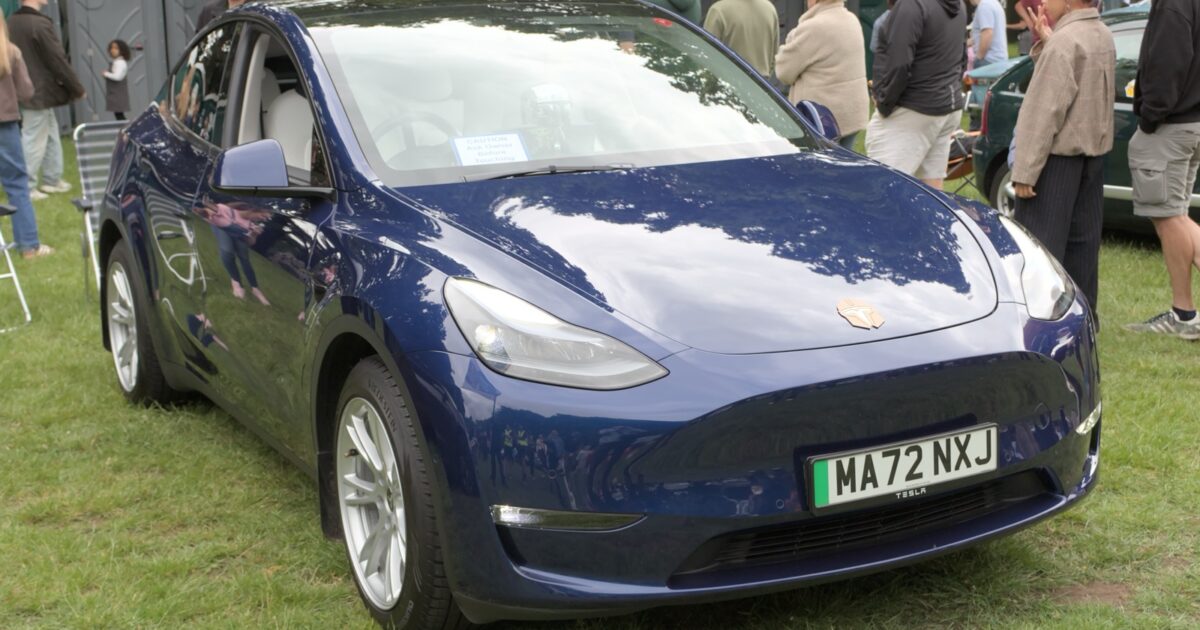
The first Nevada Robotaxis are expected to be Model Ys, following the basic approach Tesla has used in Texas. Cybercab, the purpose-built two-seat vehicle with no steering wheel or pedals, is expected to follow later.
Tesla still needs to finish its inspections, insurance work and fare submission. Meeting-based reporting puts the path to commercial service at roughly 30 days if those administrative pieces come together.
The hearing also showed that Robotaxi scale is about more than cars. Tesla discussed mission-control capacity, first-responder access, cybersecurity, rider support and accessibility features being built into Cybercab.
The full Tesla question-and-answer session captured those operational details, including the company’s willingness to add more mission-control centers as the fleet expands.
Here is the full Q&A session with @Tesla from the Nevada Transportation Authority's 4-hour long general session meeting that I watched today.
Highlights:
• Tesla is open to opening more robotaxi mission control centers (beyond the two they already have in Austin and the Bay… https://t.co/ElCFALjbKc pic.twitter.com/5cICHejZZz— Sawyer Merritt (@SawyerMerritt) August 20, 2026
The paper trail began months before Thursday’s vote.
The Nevada Transportation Authority published Tesla Robotaxi LLC’s application as docket 26-05015 in June. The notice requested authority across Clark County, including Harry Reid International Airport and Henderson Executive Airport, for no more than 5,000 vehicles during the first 12 months.
The notice also established that the application fell under Nevada’s autonomous-vehicle network law and the NTA’s jurisdiction. That is the framework through which Tesla moved from an interim 10-car order to the full permit approved this week.
The difference between those two orders is hard to overstate. The interim permit WTT covered last week looked like a cautious regulatory toe in the water: 10 cars, a limited corridor, lower-speed roads and human-supervision requirements.
The full approval gives Tesla a genuine path to a city-scale network. The inspections, insurance, airport approval and operational work remain, but the tiny fleet ceiling is gone.
Now Tesla has to prove it can use that room.
Getting the first Model Ys into paid service will be the immediate test. Growing from there toward 2,500 vehicles would require reliable software, enough mission-control support, fast incident response, charging capacity and public confidence.
Five thousand is the number on the permit.
The next number that matters is how many Robotaxis Tesla can put on Nevada roads and keep there.
Join the conversation!
Please share your thoughts about this article below. We value your opinions, and would love to see you add to the discussion!