

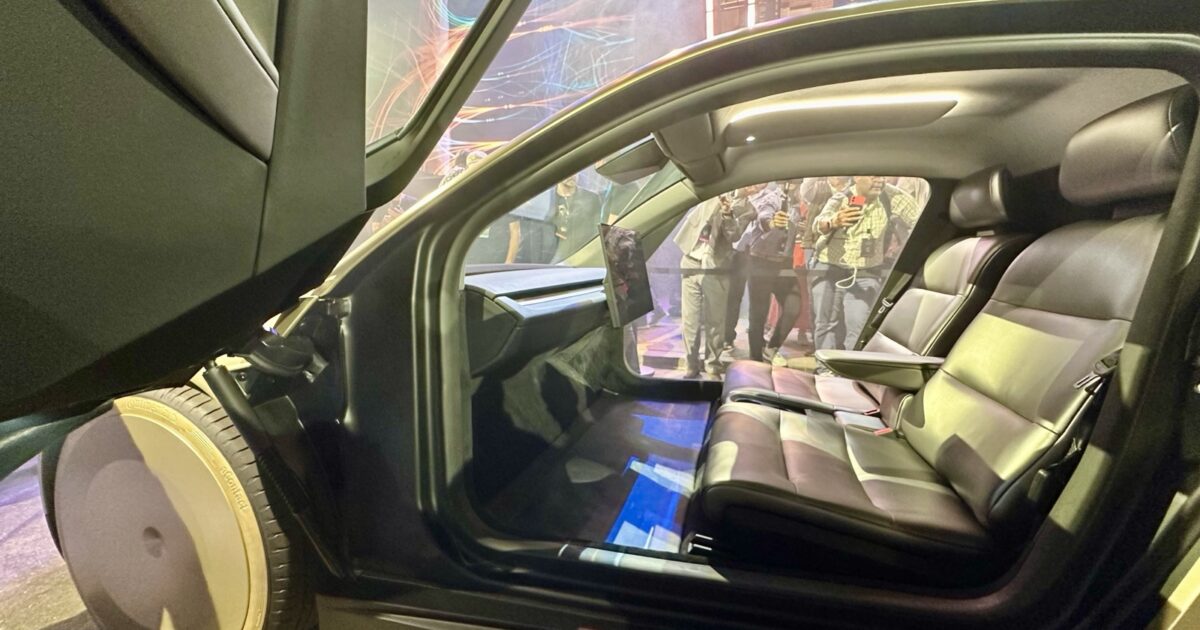
Tesla’s Texas Robotaxi fleet has crossed another line that was easy to dismiss as distant only a few months ago.
The state’s live registry now lists 1,080 vehicles under Tesla Robotaxi LLC.
More important than the four-digit total is the split: 573 Cybercabs and 507 Model Ys.
Tesla’s purpose-built, steering-wheel-free Robotaxi has officially overtaken the retail vehicle that carried the network through its first expansion.
The crossover first appeared when Cybercab reached 544 registrations against 507 Model Ys:
The Cybercab has officially surpassed the Model Y in total robotaxi registrations in Texas.
Vehicles registered for Tesla’s Robotaxi fleet in Texas:
• Cybercab: 544
• Model Y: 507
Total: 1,051 pic.twitter.com/o7Eaq5B701— Sawyer Merritt (@SawyerMerritt) October 27, 2026
And that was not the end of the batch.
FSD Database showed 573 Cybercabs and 507 Model Ys when the live Texas registry tracker was checked, for a combined 1,080 vehicles. It also showed 222 additions over seven days and 534 over 30 days.
That 30-day change works out to roughly 98 percent growth in the registered fleet. Cybercab now accounts for just over 53 percent of the total.
The same database lists one complaint on file. The registry is doing more than counting sightings: it records specific vehicles attached to an authorized operator.
The live record also separates the two vehicle types instead of hiding them inside one fleet total. That split is what makes the crossover visible and lets the public measure Tesla’s transition away from Model Y as new VINs arrive.
Registration is not deployment, though.
A VIN on the Texas list does not prove that the vehicle carried a paying passenger yesterday, entered a public service zone or even left staging. It does prove Tesla is moving production vehicles into the regulated fleet in serious numbers.
The next update added 29 more Cybercabs and moved the total from 1,051 to 1,080:
$TSLA
NEW : Tesla has just added **29 Cybercab vehicles to the Texas DMV in the last few minutes.The registered fleet of Cybercab now has 573 units!
The Model Y is the same 507. So the total changed from 1051 to 1080. pic.twitter.com/0HHpyA3wzL
— Tsla Chan (@Tslachan) October 28, 2026
Drive Tesla reports that the 29-vehicle update followed an 81-Cybercab addition only hours earlier. That earlier batch pushed Tesla over 1,000 registered Robotaxis and put Cybercab ahead of Model Y for the first time.
The outlet also counted 222 Cybercabs added over the preceding week. Hundreds of vehicles appeared to be working around Austin’s Formula 1 weekend, but the crucial line remains: registered vehicles are not necessarily deployed vehicles.
Recent reporting from Tesla’s Cybercab engineering team adds another piece. Production is running fast enough that the line can outpace deployment, which means getting cars built is not the only bottleneck anymore.
The statewide total also does not assign every VIN to a city or reveal utilization. Austin, Dallas and Houston can all sit under the same Texas authorization while public Cybercab service remains much narrower than the registry count.
Tesla still has to inspect them, stage them, place them in service areas, charge them, clean them and support them when the software needs help.
Tesla News Wire traces the ramp from 69 registered vehicles in June to 186 in mid-August, 546 at the end of September and more than 1,000 in late October.
Its first count at the crossover was 1,051 vehicles: 544 Cybercabs and 507 Model Ys. The report also points out that public Cybercab rides remain centered in Austin, so the statewide registration total should not be mistaken for 1,080 cars accepting rides at once.
That distinction makes the milestone more useful, not less. The registry gives us a hard view of the hardware Tesla is putting behind its autonomy bet without pretending it answers every operational question.
The chronology is the real story: the fleet moved from dozens of listed vehicles in early summer to hundreds by September, then crossed four digits in late October. That pace turns a one-day registration spike into a sustained manufacturing-and-intake trend.
Model Y was always the bridge.
It gave Tesla a familiar vehicle with steering controls, four doors and an existing production system while the dedicated Robotaxi moved from reveal stage to factory line.
Cybercab taking the majority position says that bridge is starting to lead somewhere.
The next numbers should be harder ones: vehicles actually carrying passengers, paid rides per day, miles per car, utilization, interventions and the cost of keeping the fleet moving.
But 1,080 registered Robotaxis with Cybercab now in front is not a concept slide.
It is a fleet taking shape in public records, one VIN at a time.
Join the conversation!
Please share your thoughts about this article below. We value your opinions, and would love to see you add to the discussion!