
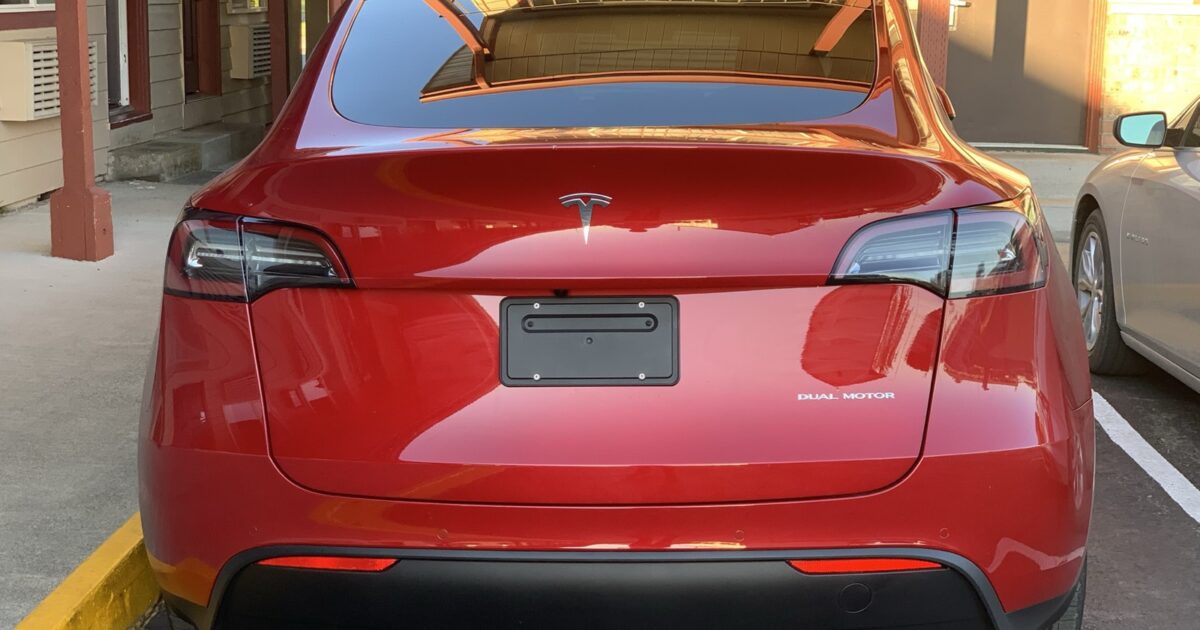
Tesla has opened Model 3 and Model Y orders in Argentina, turning a promised November 20 arrival into a live direct-sales operation.
The Model 3 starts at US$40,990. The Model Y starts at US$43,990.
Five versions are available at launch, and the first deliveries are currently estimated for March and April 2027.
That is a real market launch, not another “coming soon” teaser.
Tesla Latinoamerica made the change official Friday, telling Argentina that the online configurators were live:
Hola Argentina, llegamos!
El configurador online ya está disponible en nuestro websiteModel Y https://t.co/b4sQ706ZaY
Model 3https://t.co/bd9S9p2kI0 pic.twitter.com/xUilFsSyFk
— Tesla Latinoamérica (@Tesla_LatAm) November 20, 2026
The opening gives buyers actual choices and prices. The Model 3 comes in Rear-Wheel Drive, Premium Long Range Rear-Wheel Drive and Performance All-Wheel Drive.
The Model Y arrives in Premium Rear-Wheel Drive and Premium Long Range Rear-Wheel Drive.
Drive Tesla reports that the entry Model 3 is rated at 534 kilometers of WLTP range and reaches 100 km/h in 6.2 seconds. The US$46,490 Premium Long Range version raises rated range to 750 kilometers, while the US$53,990 Performance model cuts the sprint to 3.1 seconds and brings all-wheel drive.
The Model Y starts with a US$43,990 Premium version rated at 466 kilometers. A US$49,990 Premium Long Range version extends that figure to 661 kilometers.
Neither an all-wheel-drive nor a Performance Model Y appears in the initial Argentine lineup. All five configurations show estimated deliveries beginning in March, giving buyers a real timeline but still leaving several months between reservation and handover.
Those are not bargain prices, especially compared with neighboring markets.
El Cronista calculates that Argentina’s entry Model 3 costs 38 percent more than the comparable starting price in Chile and 24 percent more than in Uruguay. The Argentine price is US$40,990 before a reservation and destination charge, while Tesla lists the same starting model at US$29,640 in Chile and US$32,990 in Uruguay.
The report says all five vehicles will be imported from China, so the regional gap cannot be explained simply by a different factory. Shipping, insurance, taxes and local operating costs all enter the final number, but Tesla has not published a line-by-line explanation for the difference.
Argentine buyers can configure and reserve a car online for US$250. Tesla warns that the reservation is nonrefundable and that the final delivery date can change with the chosen configuration and availability.
That direct-order system is central to Tesla’s approach. The company has opened customer-facing locations at Unicenter and Paseo Alcorta where people can see the cars and arrange test drives, but the transaction itself stays online.
Local reporting puts the first handovers in March and April 2027. Vehicles are expected to move through Tesla’s delivery center in Munro, north of Buenos Aires.
The software menu is arriving with the cars.
Tesla’s Argentine configurator lists Full Self-Driving (Supervised) as a US$119 monthly subscription. The important word is “Supervised”: the system requires an attentive driver and does not make the Model 3 or Model Y autonomous.
Local activation also depends on regulatory approval and Tesla’s release schedule.
The opening also drew an immediate same-day breakdown of Tesla’s new South American footprint and delivery timing:
Tesla has officially launched vehicle ordering in Argentina, making this the 4th country in South America with an official Tesla presence after Chile, Colombia and Uruguay.
Deliveries of the Model Y and Model 3 start in March 2027. The online vehicle configurator is now live:… pic.twitter.com/TgxVtkardS
— Sawyer Merritt (@SawyerMerritt) November 20, 2026
The March date matches Tesla’s live configurators and makes the post useful beyond repeating the announcement. Friday’s launch closes the gap between promise and operation: Tesla now has named cars, published prices, order buttons, physical stores and an estimated delivery window in Argentina.
Investing.com, carrying Reuters reporting, says Argentina becomes Tesla’s fourth direct-sales market in South America after Chile, Colombia and Uruguay. The opening comes as Argentina relaxes years of protectionist auto policy and Chinese brands take a larger share of the country’s passenger-vehicle market.
The same report says Chinese automakers reached 10 percent of Argentine passenger-car and light-commercial sales in August, up from roughly 2 percent late last year. Tesla is entering a market that is opening quickly, but it is not entering alone.
The company registered Tesla Argentina in April and is entering through a Buenos Aires shopping-mall location rather than a conventional dealer network. That gives Tesla a direct retail foothold while keeping the actual order, configuration and reservation process on its own website.
Charging remains the other half of the equation.
Tesla and Argentina’s state energy company YPF signed a letter of intent in June to explore fast-charging and energy-storage cooperation. The June document does not create a completed national Supercharger network, and neither company has published a buildout schedule.
Argentina’s long distances and still-limited public charging make that work more than a side issue. Opening orders is the first step; giving owners a dependable way to travel beyond home charging will determine how large the market can become.
Tesla describes the November 20 event as the public’s first chance to experience its vehicles in Argentina. The official page fixed the date and location, while the live Model 3 and Model Y configurators supplied the commercial details the event notice did not.
Buyers can now choose among three Model 3 versions and two Model Y versions, see prices in dollars and pesos, add the supervised-driving subscription and place a reservation. That combination makes the day more consequential than a showroom debut: Tesla has moved from introducing the brand to accepting orders under a delivery timetable.
Tesla is now taking Argentine customers’ money and promising cars. The next proof point will come in March: whether those first delivery estimates hold and whether charging infrastructure grows fast enough to support the expansion.

Join the conversation!
Please share your thoughts about this article below. We value your opinions, and would love to see you add to the discussion!