
Tesla is working on a simple Cybercab feature that could make a driverless ride feel a lot less blind.
The company is developing an on-demand touchscreen view for the rear camera and both side repeater cameras, according to a Tesla UI software engineer.
That would give passengers something Cybercab’s cabin does not: a way to look behind and beside the car whenever they want.
A rider asked Tesla to make the camera feeds available during a trip. Evan, a Tesla UI software engineer, gave the clearest answer yet:
In development
— Evan (@CarCoder) October 10, 2026
It is only a two-word confirmation. Tesla did not provide a release date, a software version or a preview of the finished interface.
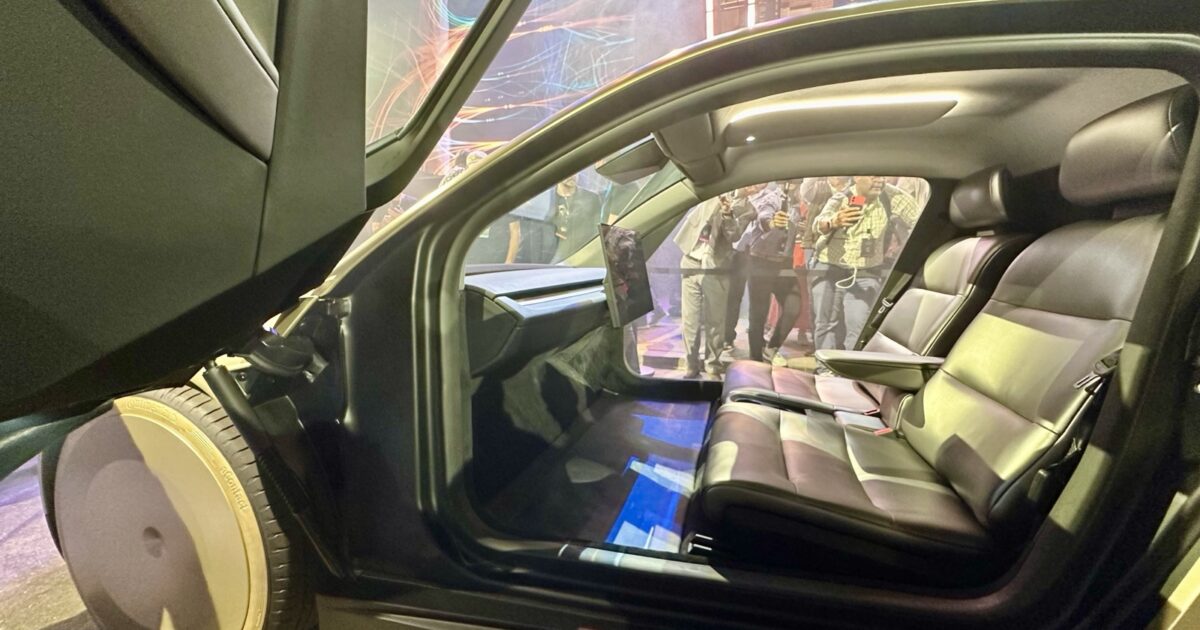
Still, the request points directly at one of Cybercab’s strangest passenger-experience problems. The car has no rear-view mirror, no side mirrors and no driver whose shoulders or mirror checks can tell you what is happening around the vehicle.
Not a Tesla App reports that Cybercab already uses a three-camera display at the end of a ride. When the car reaches its destination, the screen shows the left repeater, rear and right repeater views side by side so passengers can check for traffic, cyclists or pedestrians before opening a door.
Riders cannot call up that view while the car is moving. The proposed change would turn an exit aid into a full-trip visibility tool, using cameras and a display that are already installed instead of waiting for a hardware redesign.
That may sound like a comfort feature. In a vehicle without conventional controls, comfort and situational awareness are tied together.
A passenger in an ordinary car can glance over a shoulder, watch the driver’s mirrors or see the steering wheel move. Cybercab removes all three of those cues.
The person in the seat has to trust the vehicle while seeing less of the traffic scene than the software can see.
Tesla Cybercab Rider Guide describes a two-seat interior with no steering wheel, accelerator pedal or brake pedal. The central touchscreen handles doors, climate, seat adjustments, trip controls and entertainment, while a separate overhead stop button can request an immediate pull-over and connect the rider with support.
The guide also says passengers can use the screen to request a pull-over or reach Tesla Robotaxi Support. Adding the exterior camera view there would fit the same design logic: the display becomes the rider’s control center because the normal driver hardware is gone.
The camera feed also needs careful presentation. Three live views can add confidence, but only if the screen makes direction, distance and blind areas easy to understand at a glance.
A tiny or confusing layout could create the opposite result, especially when a rider is deciding whether it is safe to open one of Cybercab’s large doors near a bike lane or moving traffic.
Tesla Robotaxi Privacy Notice says the automated-driving system uses an external camera suite and normally processes that camera data on the vehicle. Tesla separates short safety-event recordings, which can be linked to an account when a collision, airbag deployment or emergency request occurs, from anonymous fleet-learning clips used to improve the system.
The notice says a safety-event clip can include time and location metadata and may run for up to 30 seconds. Fleet-learning recordings serve a different purpose: recognizing lane lines, signs and traffic lights while remaining detached from the rider’s account.
Tesla applies broader collection rules to early-access rides, including exterior-camera analytics used for testing and product development. The company says those temporary practices are disclosed separately and that the exterior-camera analytics are not linked to the rider’s account.
A rider-facing live view is a local window into cameras the vehicle is already using to drive. Tesla will need to keep the viewing feature and its recording policies equally easy to understand when the software ships.
The timing matters because Cybercab’s unconventional design is still under federal scrutiny.
NHTSA opened an Audit Query in September to examine Tesla’s certification that Cybercab complies with the federal safety standards that apply to it. The agency said the review followed the car’s commercial deployment in Austin and is meant to determine whether Tesla’s self-certification is supported.
The new camera-view feature does not resolve that broader inquiry, and Tesla has not presented it as a regulatory answer. It does show the company responding to a practical question created by the same radical design choice: if the mirrors and driver controls disappear, what replaces the rider’s view of the road?
Software is the obvious answer because it can reach the existing fleet without sending hundreds of cars back for new hardware.
The real test will be the finished version. Tesla needs to make the feed fast, clear and easy to summon without burying emergency or trip controls behind another layer of the interface.
For now, the feature has a confirmed status but no timetable: it is in development.
The two-word confirmation is not a release announcement. It shows Tesla understands that driverless confidence depends on giving passengers a usable view of the traffic scene.
The car already sees the road. Riders want to see some of it, too.
Join the conversation!
Please share your thoughts about this article below. We value your opinions, and would love to see you add to the discussion!