
Tesla’s latest Full Self-Driving milestone crossed the country and reset the clock.
A team in a Tesla Model 3 says it covered the 2,886-mile Cannonball route from Manhattan to Redondo Beach in 47 hours, 15 minutes, and 39 seconds.
The car ran FSD Supervised v14.3.6. According to the team, it completed the entire trip without one disengagement or driver intervention.
That is roughly two hours and 40 minutes quicker than the previous FSD benchmark set in May.
And Tesla clearly liked what it saw.
FSD Supervised has reached the point where Cannonball records are measured in time, not possibility https://t.co/kxLk9uQFd8
— Tesla (@Tesla) July 27, 2026
A Model 3 just moved the benchmark.
Drive Tesla reported that David Moss, Spencer Scott, and Owen Sparks left the Red Ball Garage in Manhattan and finished at the Portofino Hotel in Redondo Beach, California.
The team put the final distance at 2,886 miles and the time at 47 hours, 15 minutes, and 39 seconds. They said FSD Supervised v14.3.6 handled the full run without a disengagement or driver intervention.
The previous owner-run benchmark came in May, when another team finished in roughly 49 hours and 55 minutes using FSD v14.3.2. This attempt cut about two hours and 40 minutes from that mark.
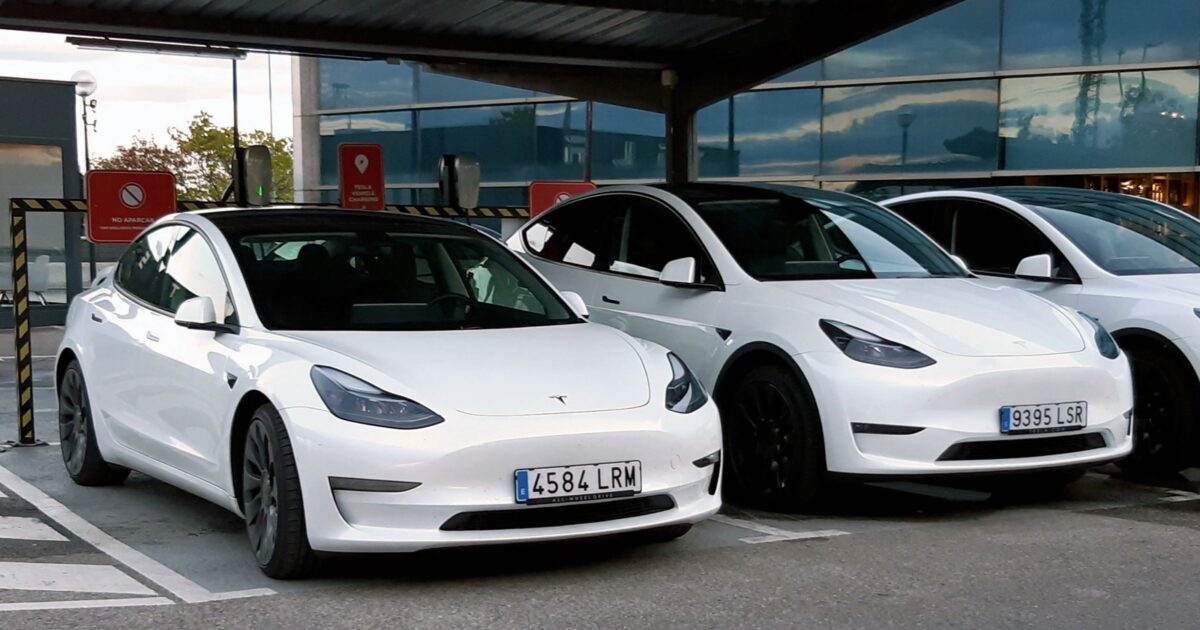
The car was Moss’s Model 3. The same report says the vehicle has now accumulated more than 20,000 miles on FSD without an intervention or disengagement.
The numbers come from the participants, and no independent body certified the result as an official speed record. It is best understood as a community benchmark with a documented route, a precise finish time, and a claim that can be tested against future runs.
That makes it much more interesting than a polished clip from one friendly stretch of road.
The stopwatch is not the biggest part of the story.
A 47-hour finish grabs attention. The more important claim is that the car moved between two specific doors on opposite coasts without the driver taking over.
That means more than cruising on interstates. A trip like this also brings city streets, highway interchanges, exits, turns, parking areas, changing traffic patterns, and the repeated job of reaching charging stops.
Tesla says FSD Supervised can follow a navigation route, select forks, change lanes, steer around vehicles and objects, make left and right turns, negotiate intersections and roundabouts, and enter or exit highways.
The system is designed for residential streets, city roads, and highways, while features can vary by vehicle, hardware, software version, region, trim, and model year. Tesla also tells owners how to disengage by braking, steering, using the gear stalk, or pressing the right scroll wheel, depending on the car.
Most importantly, Tesla says the current product requires active driver supervision and does not make the vehicle autonomous. The driver remains responsible for speed and control and must stay attentive whenever FSD Supervised is engaged.
That distinction matters here. The team was supervising a production driver-assistance system, not riding in a driverless car.
The achievement is how little the humans say they had to do, not that their responsibility disappeared.
The run also revived an old measuring stick inside Tesla’s AI orbit: coast-to-coast travel without intervention as a practical test of a self-driving system’s reach.
NEWS: Zero intervention coast to coast self-driving passed a bar once called its Turing Test, Tesla's AI chief says
Ashok Elluswamy, Tesla's VP of AI software, was responding to the recent run of record autonomous Cannonball drives from New York to Los Angeles.
"Yeah, AI… https://t.co/WqmrjuDHyP pic.twitter.com/KcV260jrp0
— Muskonomy (@muskonomy) July 27, 2026
This was not Moss’s first coast-to-coast test.
In a customer story published in March, Tesla documented Moss’s earlier California-to-South Carolina trip in a Model 3 using FSD Supervised.
That drive covered more than 2,700 miles in two days and 20 hours. Tesla said the Model 3 handled road signs, turns, and Supercharger stops while Moss remained responsible for supervising it.
Tesla described the trip as intervention-free and said it was part of a 12,000-mile FSD Supervised streak at the time. The journey established a useful earlier baseline months before Moss joined this faster run from New York to California.
The newly reported Cannonball result puts his Model 3 above 20,000 miles without a takeover, according to the fresh account. It also moves the test from one successful cross-country journey to a repeat attempt on newer software, a fixed historic route, and a much tighter clock.
That progression is what makes the latest finish worth watching.
One cross-country run can be a great day, a favorable route, or a determined crew. Multiple coast-to-coast runs on newer software, with lower times and the same zero-takeover claim, begin to look like a pattern.
They still do not prove that FSD is ready to operate without supervision everywhere. They do show how quickly the argument is changing.
The question used to be whether a customer Tesla could travel across America under FSD without a human takeover.
Now the team, and Tesla itself, are talking about how fast it can do it again.
Join the conversation!
Please share your thoughts about this article below. We value your opinions, and would love to see you add to the discussion!