
Tesla just made two big moves on the one resource every part of its future will need: electricity.
In Arizona, the company agreed to buy roughly 90% of the annual output from a massive solar-and-battery project. In Texas, Tesla signed up for every megawatt produced by a separate 140 MWac solar farm.
Both agreements surfaced Tuesday. Neither plant is operating yet, but together they show Tesla reserving serious future generating capacity years before the power is scheduled to arrive.
Tesla has struck a long-term deal to buy electricity from a big solar and battery project in Arizona, developer ContourGlobal said.
The firm will sell 90% of the output from Project Sterling to Tesla. The facility is scheduled to begin operating in 2028 and will include 509MW of… pic.twitter.com/ptIWfZmOmy
— Sawyer Merritt (@SawyerMerritt) July 28, 2026
The Arizona deal is the heavyweight.
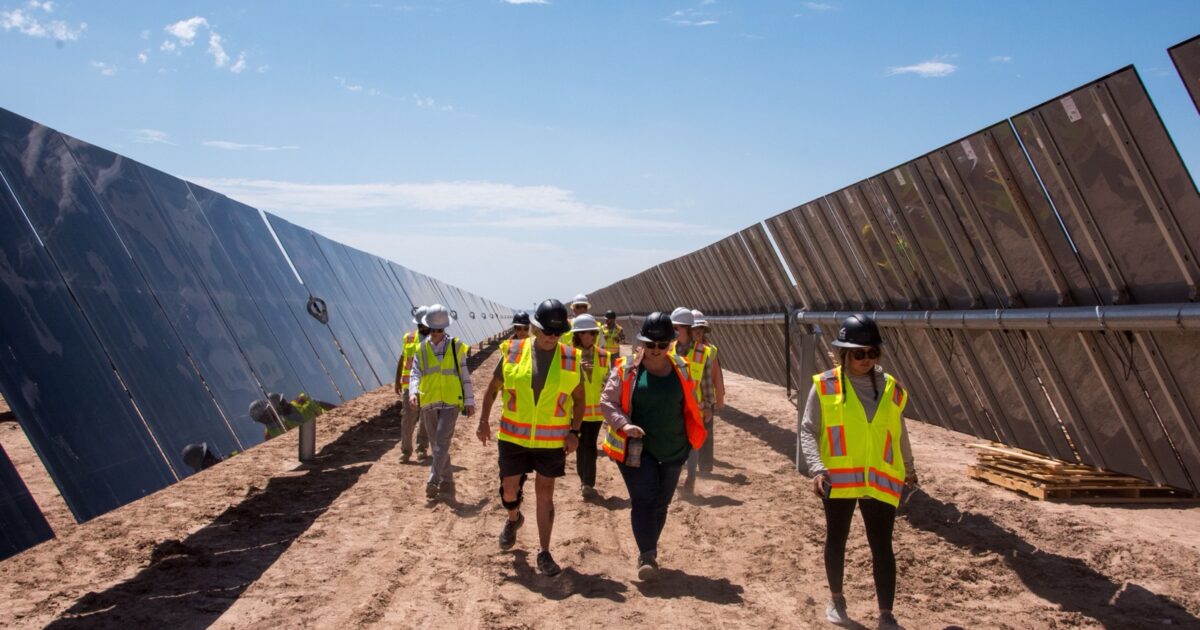
According to ContourGlobal, Project Sterling in Mohave County will pair 509 MWp of solar generation, rated at 450 MWac, with a 360 MW battery system capable of storing 1.4 GWh. That is four hours of storage at the battery’s rated output.
Tesla’s long-term agreement covers more than 1 TWh of electricity per year, or about 90% of Sterling’s expected as-generated output. ContourGlobal compares the plant’s annual production with the residential electricity demand of a U.S. city of roughly 100,000 to 120,000 people.
The project is physically connected to the Western Area Power Administration grid and holds firm transmission rights into California’s CAISO market. First energization is planned for the third quarter of 2027, with commercial operation targeted for the first quarter of 2028.
That storage changes the character of the project. Sterling will have room to shift a substantial block of solar electricity into later hours instead of sending everything to the grid while the sun is high.
There is also an important boundary around what Tesla announced. A power purchase agreement makes Tesla the buyer of the electricity; it does not make Tesla the owner or builder of the plant.
No company involved has identified the battery or panel supplier, and none has tied the electricity to a specific Tesla factory, data center, charging network, or business unit. Those blanks should stay blank until one of the companies fills them in.
The Texas agreement is smaller, simpler, and still meaningful.
Tesla has signed a long-term power purchase agreement with Zelestra for the entire output of the 140MWac Lumen Farm solar project in Texas.
Zelestra said the solar farm is expected to enter construction in 2027 and achieve full operations in 2029. pic.twitter.com/2Jf8LEQq6B
— Sawyer Merritt (@SawyerMerritt) July 28, 2026
Renewables Now reported that Zelestra announced the long-term agreement Tuesday, giving its planned 140 MWac Lumen Farm solar project a buyer before construction begins. Tesla will take the entire electrical output once the plant is running rather than a partial share.
Construction is expected to begin in 2027, while full operations are targeted for 2029. That puts the Texas project roughly a year behind Sterling’s commercial-operation target, and neither company has publicly identified the contract price, its exact length, or the Tesla operation that will use the power.
Unlike Project Sterling, the announced Lumen Farm deal does not include a battery component. The central fact is the offtake commitment: Tesla has contracted for 100% of the planned Texas plant’s generation.
On its current U.S. portfolio page, Zelestra lists Lumen Farm as “Under Development.” That status matters: the PPA is a major commercial milestone, but the project still has construction, grid work, and commissioning ahead before it can deliver power.
The same portfolio page puts Zelestra’s U.S. development pipeline at 16 GW and says nearly 1.4 GW of its solar projects are already under construction. It also sorts projects into contracted, under-development, under-construction, and operating stages, making clear that Lumen Farm has not reached the construction phase yet.
Zelestra’s American pipeline gives the company scale, but it does not shorten Lumen Farm’s published 2029 schedule. Tesla is contracting for future output, not buying electricity from an existing Texas plant.
Tesla and Zelestra already had a power relationship. In February 2025, Zelestra announced a separate 57 MWac agreement expected to supply Tesla with about 130 GWh of renewable electricity each year from three planned solar plants in Spain.
The new Texas contract is much larger on capacity and extends that relationship into the United States.
Two agreements in one morning look less like opportunistic shopping and more like advance planning. Tesla is lining up supply before every future facility and electricity need is fully visible.
That makes sense for a company simultaneously expanding vehicle factories, charging, battery production, AI compute, and company-operated autonomous services. It would still be a mistake to assign either contract to one of those uses without evidence, but the direction is hard to miss: Tesla expects electricity to become a bigger strategic input, not a smaller one.
The long timelines are just as revealing. Sterling is aiming for 2028.
Lumen Farm is targeting 2029.
These are not quick purchases to patch a short-term power bill. They are contracts built around Tesla’s needs later in the decade.
There is plenty left to learn, including pricing, contract length, delivery structure, and the exact Tesla operations that will benefit. But the scale is already clear.
Tesla has now put its name on roughly 90% of a 509 MWp solar-plus-storage project and 100% of another large solar plant. The electricity is still years away, but Tesla is claiming its place in line now.
Join the conversation!
Please share your thoughts about this article below. We value your opinions, and would love to see you add to the discussion!