
France is done debating Tesla’s Full Self-Driving technology from a distance.
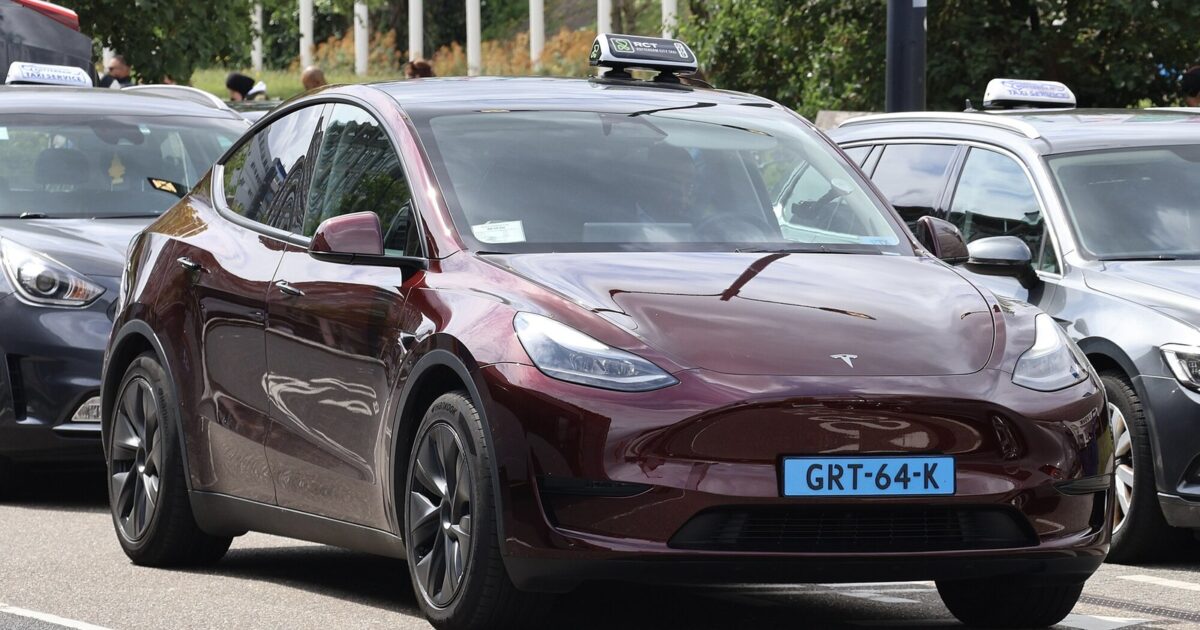
The country is putting two production Teslas onto its own roads for an independent evaluation of FSD Supervised—an important turn after French officials spent the summer saying the system’s safety tradeoffs were not yet good enough.
French transport minister Philippe Tabarot announced the move after what he called a constructive conversation with Elon Musk. Tesla provided the two cars, but France’s UTAC approval organization will conduct the evaluation.
Tabarot’s announcement makes the change in posture plain: months of technical discussions are now becoming road tests.
Échange constructif ce soir avec @elonmusk autour du dispositif Full Self-Driving (FSD) de Tesla.
Depuis plusieurs mois, les autorités françaises travaillent étroitement avec @Tesla sur les adaptations techniques qui permettront à la France de soutenir son homologation, qui sera… pic.twitter.com/d1Y90cGJLf
— Philippe Tabarot (@PhilippeTabarot) September 2, 2026
The evaluation does not give French Tesla owners permission to switch on FSD, and Tesla has already driven the software in France.
The milestone is independent: a French testing body now gets its own hands on the system instead of relying entirely on Tesla’s evidence or work led by Dutch regulators.
Reuters reports that France wants to verify the data supplied by Tesla and the Netherlands while testing FSD against French roads and urban layouts. The two cars will help officials examine the speed-limit behavior and driver-attention warnings that Tabarot identified as concerns in July.
The ministry is aiming for results in mid-to-late September. That schedule matters because the European Union’s Technical Committee on Motor Vehicles is due to meet October 6, when a broader decision could be taken—although the matter could also move to a later meeting.
FSD Supervised can steer, accelerate and brake, but it remains a driver-assistance system. The person behind the wheel is still responsible, must pay attention and must be ready to intervene.
Frandroid adds an important correction to the early coverage: Tesla supplied the vehicles to UTAC rather than the transport ministry, and they are production cars intended for the French market rather than special prototypes.
Tesla has conducted FSD work in France since 2024, accumulating more than 200,000 kilometers and conducting more than 5,000 passenger demonstrations since December 2025. What begins now is the first independent French road evaluation, not the first movement of an FSD-equipped Tesla inside the country.
No consumer activation date has been announced. France has shifted from “not yet” to “show us,” and those are very different positions.
Tesla’s European account laid out the case it wants regulators to accept: five EU countries already permit the supervised system, more than 70,000 customers use it, and the fleet covers more than one million kilometers per day.
An update on FSD Supervised in Europe
FSD is currently approved in five EU countries (NL, DK, BE, EE, LT), used by >70k customers for over 1 million km per day, and is 4.1x less likely to get into a crash compared to manual driving, measured across 100 million km on public EU…
— Tesla Europe, Middle East & Africa (@teslaeurope) September 1, 2026
Tesla published the deeper Article 39 technical package behind that argument. The company says its European engineering fleet accumulated more than 793,000 FSD miles across eight countries with no major or minor collision attributed to FSD performance.
The company also reports more than 230,000 structured scenario tests across Amsterdam, Barcelona, Rome, Paris, Munich and Copenhagen. Those runs concentrated difficult situations—including roundabouts, cyclists, crosswalks, tram lanes and narrow roads—and Tesla reports zero safety-critical events, with pass rates above 99 percent for most listed scenario groups.
The dashboard is unusually detailed for Tesla, but it is still Tesla’s case for Tesla. The company acknowledges that its fleet-wide studies do not control for every exposure variable that can affect collision risk, and certified safety drivers were present for the fixed-route tests.
That is exactly why the French step carries weight. UTAC can test the software on local roads, compare Tesla’s claims with its own observations and identify any changes France wants before supporting a wider European approval.
Two cars will not settle every argument around FSD. They do, however, turn a political and regulatory standoff into an engineering test with a near-term deadline.
For Tesla owners waiting across Europe, that is real progress.
Join the conversation!
Please share your thoughts about this article below. We value your opinions, and would love to see you add to the discussion!