
Tesla’s Cybercab barely had time to begin carrying paying riders before federal regulators opened a new examination of the vehicle itself.
The National Highway Traffic Safety Administration launched Audit Query AQ26002 on Friday, covering roughly 1,000 Cybercabs and the technical basis Tesla used to certify that the purpose-built robotaxi complies with federal safety standards.
Tesla began limited commercial Cybercab rides in Austin on Thursday, turning its long-promised two-seat autonomous vehicle into a real passenger service.
Hours later, NHTSA made clear that self-certification does not end the federal review.
The future has arrived in Austin pic.twitter.com/RTCb0O5sez
— Tesla (@Tesla) September 3, 2026
The National Highway Traffic Safety Administration says Tesla told the agency that it self-certified Cybercab as meeting all applicable Federal Motor Vehicle Safety Standards. Automakers generally make that certification themselves, but the government can demand the engineering record behind it.
NHTSA’s audit will examine the process and technical data Tesla relied on. It will also look at whether Tesla concluded that some standards do not apply because Cybercab was designed without equipment those rules traditionally assume will be present.
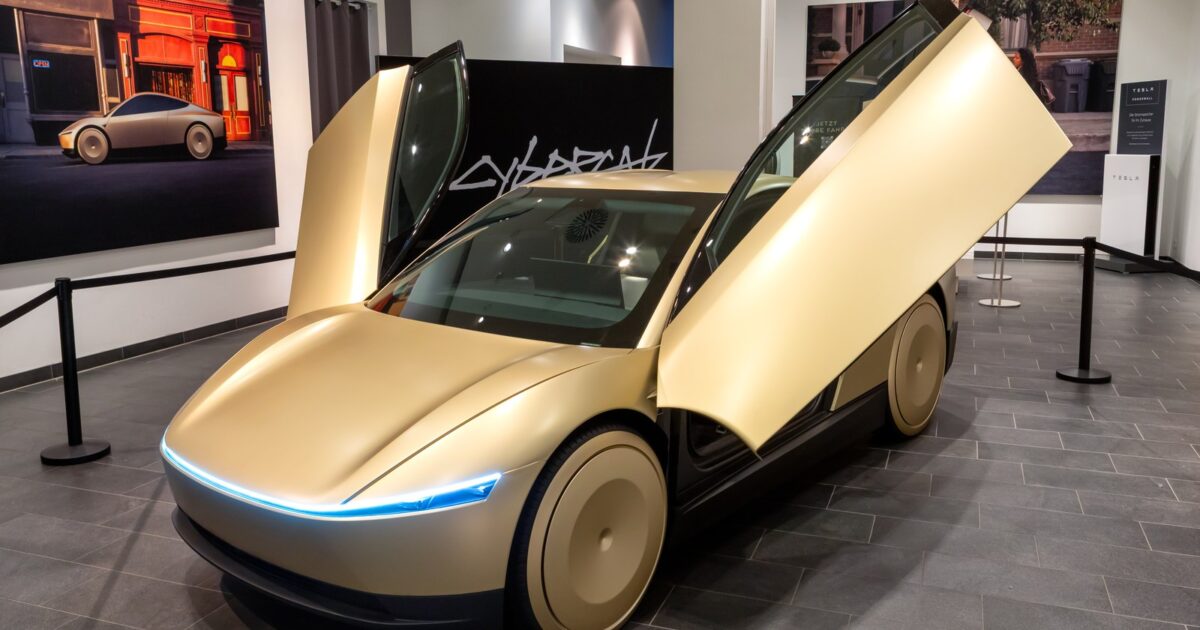
The agency specifically points to the absence of a brake pedal, accelerator pedal, steering wheel and exterior mirrors. Those missing controls are the defining hardware difference between Cybercab and the Model Y vehicles Tesla has used to build its Robotaxi service.
The case is an audit query, not a recall order or a finding that Cybercab has a safety defect. Its immediate question is narrower and foundational: what evidence supports Tesla’s certification, and how did the company decide which federal standards applied?
In its separate official statement, NHTSA said it supports the safe development and deployment of automated vehicles while insisting that current federal law still has to be followed. Administrator Jonathan Morrison described the agency’s goal as balancing innovation with safety oversight.
The agency is working on updates meant to remove manual-control requirements that may not make sense for vehicles built exclusively for autonomous operation. NHTSA said those changes are still in progress, however, and that existing standards remain in force until the rulemaking is finished.
That leaves Tesla in an unusual gap. Cybercab is built around the future rulebook regulators are trying to create, while its commercial service has begun under the rulebook that exists now.
No steering wheel, no pedals
— Tesla Robotaxi (@robotaxi) September 2, 2026
TechCrunch reports that the audit opened only hours after the Austin deployment and focuses on the evidence behind Tesla’s compliance decision—not on a newly alleged crash or defect. The filing asks what Tesla tested, how it interpreted the standards and which requirements it considered inapplicable.
The report also points to a close procedural precedent. NHTSA challenged Zoox after that company self-certified its purpose-built robotaxi without traditional driver controls, first seeking more information and then opening the same type of audit now facing Tesla.
Zoox later moved through an exemption process before receiving federal approval connected to commercial service. That history shows why an audit can matter, but it does not establish how long Tesla’s review will take, whether NHTSA will demand an exemption or whether Austin service will change.
There is another important distinction between the two cases: Zoox was still deep in testing when its compliance fight began, while Tesla put Cybercab into a limited paid service before this audit opened. That makes the sequence unusually aggressive even if the legal and engineering questions still need answers.
CNET adds the scale and product context. Texas records showed 45 Cybercabs among 420 Tesla autonomous vehicles registered Friday morning, though registration does not prove that every vehicle was simultaneously available to passengers.
Cybercab removes human controls and uses Tesla’s camera-based autonomy approach instead of the camera-radar-lidar combinations deployed by several rivals. The vehicle was engineered from the start around the claim that no human driver needs to take over.
That makes the certification record unusually consequential. NHTSA is examining a complete vehicle architecture, not a familiar car with its steering wheel removed after the fact.
CNET also notes that Tesla started Cybercab production in April and warned that the ramp would be slow because of supply-chain and validation work. The 45 registered vehicles therefore represent an opening deployment rather than the mature scale Tesla ultimately wants.
Tesla’s Cybercab FAQ says rides are now available only in limited areas of Austin. Riders cannot initially choose between Cybercab and Model Y because the app assigns a vehicle based on availability and party size.
Cybercab carries up to two passengers, and Tesla’s current rules do not permit guests younger than 13. The vehicle waits seven minutes at pickup before fees may apply or a trip may be canceled.
Those limits define the launch for what it is: a real commercial deployment, but not yet a broad replacement of Tesla’s Model Y Robotaxi fleet. Tesla’s own rider material also includes pull-over and support controls for situations in which passengers need help during a trip.
Tesla has not publicly answered the audit in detail. The next meaningful evidence will be the company’s technical response, any additional requests NHTSA places in the case and whether service continues unchanged while the review proceeds.
Cybercab’s launch was always going to test more than Tesla’s manufacturing ramp and self-driving software. It is now testing whether a vehicle designed without a human driver can move faster than the federal standards built around one.
Join the conversation!
Please share your thoughts about this article below. We value your opinions, and would love to see you add to the discussion!