

+
Starlink just picked up a much bigger presence in East Asian aviation.
Korean Air and Asiana Airlines switched on complimentary Starlink Wi-Fi today across 14 retrofitted widebody jets. The launch covers every cabin class on participating flights, with no paid access tier.
Korean Air begins with four aircraft. Asiana starts with ten.
That makes the September 15 rollout the first operational Starlink deployment by full-service carriers in East Asia—and the opening move in a much larger fleet conversion.
Korean Air marked the launch with a look at the connected experience now available on participating flights:
하늘 위에서도 세상과의 연결은 그대로 ✈️🛜
대한항공이 동아시아 대형 항공사(FSC) 최초로 스타링크 기반 기내 와이파이를 무료로 선보입니다.
업무부터 콘텐츠 감상, 게임까지. 서비스 제공 항공편의 모든 좌석 클래스에서 무료로 즐겨보세요.
모두가 즐거운 하늘 위 연결.#KoreanAir #KE… pic.twitter.com/h3D55JIfBH
— 대한항공 (@KoreanAir) September 15, 2026
Korean Air starts with four long-haul jets
Korean Air Newsroom says its first Starlink group includes three Airbus A350-900s and one Boeing 777-300ER. Those aircraft will be used primarily on medium- and long-haul routes to the Americas, Europe and Southeast Asia, although some shorter flights may also receive them.
The airline is making the service free in economy, premium cabins and every seat between. Passengers connect to the aircraft network, enter the name and seat number printed on the boarding pass, watch an advertisement and go online without creating a separate account.
Korean Air says the connection can support streaming video, online gaming, messaging, file transfers and cloud-based work. Internet voice calls, video calls and live social-media broadcasts remain restricted by airline policy even when the connection can technically handle them.
The starting fleet is small, but the timetable is not. Korean Air says it intends to install Starlink on most of its operating aircraft by the end of 2027, replacing the paid Wi-Fi arrangement aircraft will continue using while they wait for conversion.
That distinction is important for anyone booking a flight. Starlink is live, but it is not yet on every Korean Air aircraft.
Availability still depends on which tail is assigned to the route.
Asiana comes online with ten aircraft
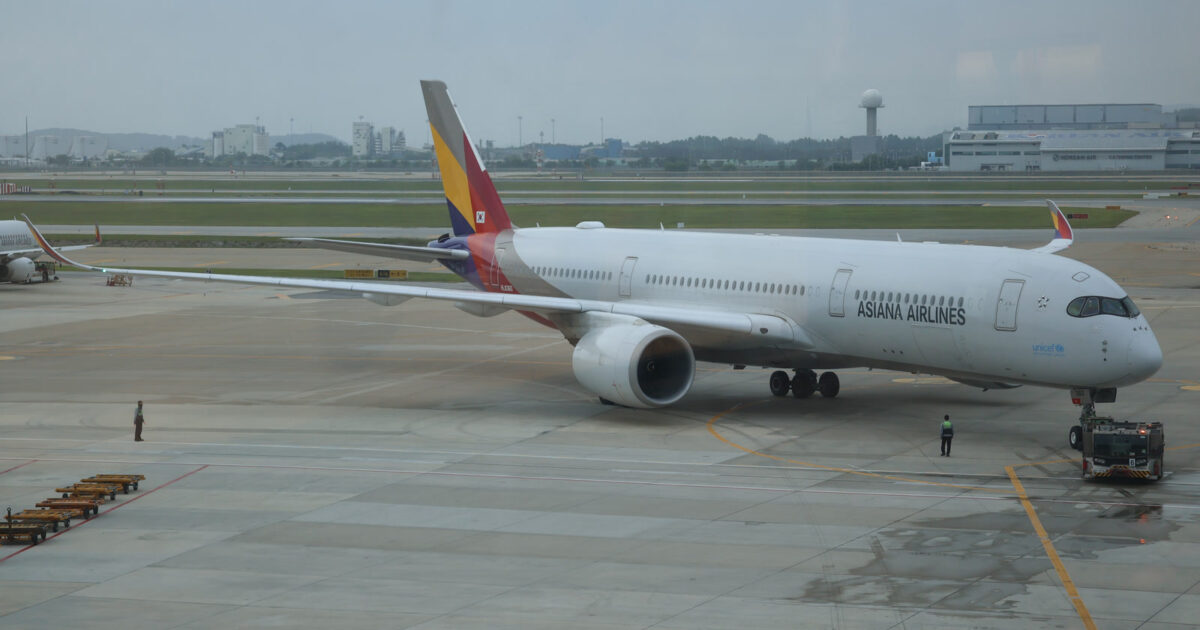
Asiana Airlines launches with nine A350-900s and one A330-300, giving it the larger of the two opening fleets. Those ten aircraft begin on selected long-haul routes, while the carrier says additional installations will expand access beyond the first launch group.
Asiana’s setup is deliberately simple. Passengers switch their device to airplane mode, turn Wi-Fi back on and join the airline’s onboard network.
No separate application is required, and the service is complimentary for all passengers. Phones, tablets and laptops can connect without a device limit, giving each traveler access on the hardware already in the cabin.
The notice says Starlink’s low-Earth-orbit network is built to maintain connectivity over oceans and polar routes. That reach is especially useful on the long flights assigned to Asiana’s A350 fleet.
The airline describes access as gate-to-gate—from boarding until the aircraft parks at the destination—where local regulations allow it. Starlink can also operate on domestic flights when an equipped aircraft is assigned.
Asiana says passengers can use the connection for HD streaming, messaging, browsing and gaming. Voice and video calls are prohibited, as are unauthorized filming and live streaming of other passengers or crew.
The nine A350s make up 90 percent of Asiana’s opening Starlink fleet. With one A330 completing the first group, the airline has ten equipped aircraft available at launch rather than a single demonstration jet.
Asiana’s launch post shows the service entering passenger use on the same day:
@Starlink
is now onboard Asiana Airlines!✈️Enjoy complimentary fast, reliable internet in the sky,
for HD streaming, real-time messaging, gaming and more.✨Stay seamlessly connected to everyday life,
even in the sky. Look forward to a more convenient journey with Starlink.✈️ pic.twitter.com/RaiWnrz89x— 아시아나항공 AsianaAirlines (@Flyasiana) September 15, 2026
Fourteen aircraft are only the first wave
Aviation Week counts the coordinated opening fleet at 14 widebody aircraft: Korean Air’s three A350s and one 777, plus Asiana’s nine A350s and one A330. That mix puts the first installations where better connectivity has the most obvious value—on longer flights where passengers may spend hours working, watching video or messaging.
The two airlines are beginning on the same day, but passengers should not expect one identical login experience. Each carrier uses its own onboard network and portal, and each controls its own cabin-use policies.
What they share is more consequential: both have made the faster service free across the cabin. That removes the usual decision between paying for a full-flight plan, settling for a messaging tier or simply staying offline.
For Starlink, aviation is becoming a repeatable business rather than a showcase installation. Each additional fleet brings recurring service demand, more aircraft hardware and more passengers experiencing SpaceX’s network in a setting where older satellite Wi-Fi has often struggled.
For the airlines, the competitive pressure now moves to execution. Fast internet sounds great in an announcement.
It has to remain fast when hundreds of passengers connect at once, work over ocean routes and expect the same smooth experience from boarding through arrival.
Today’s launch is still a meaningful line in the sky.
Fourteen Korean Air and Asiana jets are now flying with free Starlink access, and the conversion clock is running on the rest of the fleets.
Join the conversation!
Please share your thoughts about this article below. We value your opinions, and would love to see you add to the discussion!