

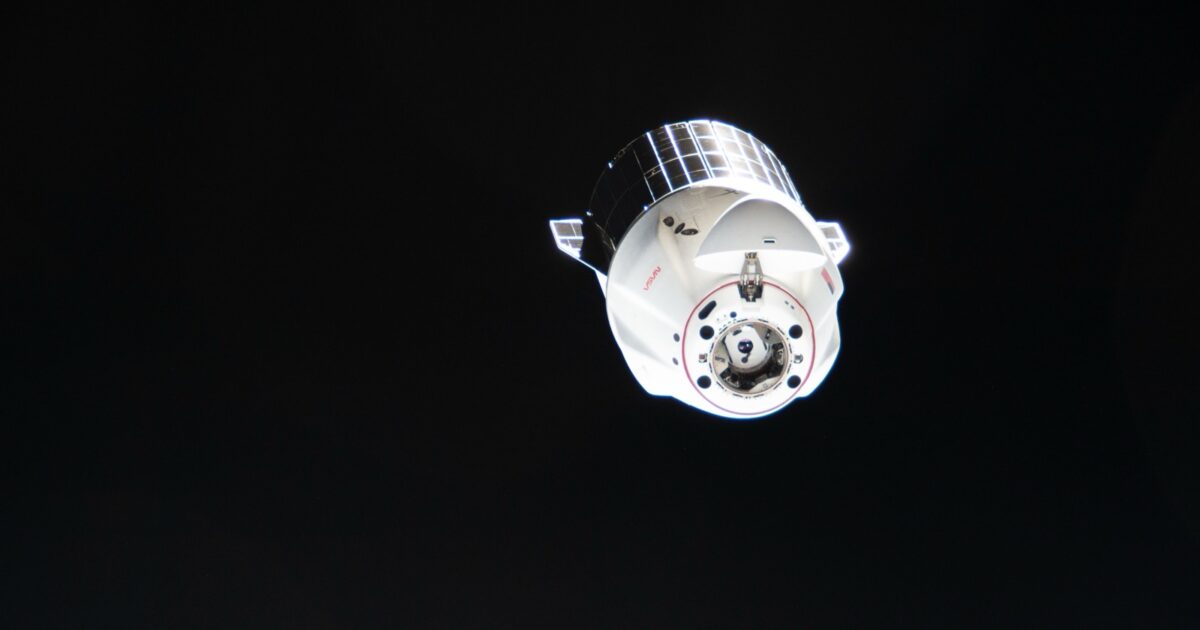
SpaceX is set to send far more than food and spare parts to the International Space Station on Tuesday morning.
Dragon’s CRS-35 cargo includes the station’s final pair of roll-out solar arrays, hardware for making artificial retinas in orbit, 3D heart tissue models and brain organoids that could point researchers toward new treatments for devastating diseases.
The launch is targeted for 6:33 a.m. Eastern from Cape Canaveral. If it stays on schedule, Dragon will reach the station Thursday after a flight of roughly 52 hours.
NASA laid out the mission and its solar-array cargo in this official update:
Our next uncrewed resupply mission is scheduled to lift off to the @Space_Station no earlier than Tuesday, Oct. 13. It will bring science, supplies, and equipment to the orbiting lab, including a new set of solar arrays. Get details on the mission: https://t.co/pUn5CDiErn pic.twitter.com/RP3UgMenmd
— NASA (@NASA) October 7, 2026
The last big solar-power upgrade.
In its current flight advisory, NASA says CRS-35 will lift more than 6,300 pounds of supplies, science and equipment from Space Launch Complex 40. The final International Space Station Roll-Out Solar Arrays are the largest pieces of hardware in that manifest.
They are not replacements for the station’s original wings. The compact arrays are installed in front of the older panels, then unroll to add fresh generating capacity while leaving portions of the original arrays exposed.
NASA says completing the roll-out array set will increase the station’s power generation by about 30 percent. That extra electricity supports the laboratory’s research load and daily operations as the ISS moves through its final years.
The timing is practical. A laboratory cannot run more experiments than its electrical system can support, and aging orbital hardware does not get a quick service call from the ground.
Research aimed at eyes, hearts and brains.
The medical cargo is unusually tangible. NASA says one investigation will compare how thin films used in artificial retinas form on Earth and in microgravity.
The goal is to improve manufacturing methods for retinal implants that could one day help restore vision for people with degenerative eye disease. Microgravity can allow materials to assemble without settling and convection interfering in the same way they do on Earth.
Dragon will also carry 3D heart tissue models for larger-scale drug testing during future missions. Another experiment uses brain organoids, tiny laboratory-grown models of brain tissue, to search for treatment targets tied to Alzheimer’s, Parkinson’s and multiple sclerosis.
A separate materials study will examine how a new type of glass forms in microgravity.
Station cargo runs now move experimental hardware in both directions between a national laboratory and researchers on Earth. The return trip can matter as much as the launch because completed samples must reach laboratories on the ground.
A veteran Dragon and booster.
The mission profile from SpaceX shows how routine-looking launches now rely on heavily reused hardware. This Dragon previously flew CRS-26, CRS-29 and CRS-33, so Tuesday’s mission will be its fourth trip to orbit.
The Falcon 9 first stage is scheduled for its eighth flight. After sending Dragon on its way, the booster is planned to turn back toward Cape Canaveral and land at Landing Zone 40 rather than on a droneship.
SpaceX lists a backup launch opportunity at 6:08 a.m. Eastern Wednesday. If Tuesday’s attempt goes, Dragon is expected to dock autonomously with the space-facing port of the station’s Harmony module around 11 a.m. Eastern Thursday.
The spacecraft should remain at the station until mid-November, then return time-sensitive research and other cargo to a Pacific splashdown off California.
Thirty-five cargo missions changed the baseline.
The official mission record from NASA identifies CRS-35 as SpaceX’s 35th commercial resupply flight for the agency. The number matters because the service has moved beyond proving a private spacecraft can reach the station.
Dragon now carries hardware that expands the station itself, experiments designed around repeated access to microgravity and completed research that must survive the ride home. Reuse makes that rhythm possible, but the cargo is the reason to fly.
NASA’s Commercial Resupply Services program gives the station a regular American cargo line while freeing the agency to buy transportation as a service. Dragon also brings back substantial cargo, a capability that lets investigators recover samples and hardware instead of relying only on data transmitted from orbit.
CRS-35 joins that mature logistics chain at a consequential moment. The station needs its final power upgrade, researchers need another round trip for delicate experiments, and every launch must fit around crew rotations, visiting vehicles and orbital maintenance.
Tuesday’s mission puts both sides of that equation on one rocket: a veteran booster and spacecraft carrying new power hardware, medical research and more than three tons of useful work to orbit.
Join the conversation!
Please share your thoughts about this article below. We value your opinions, and would love to see you add to the discussion!