
Tesla has finally put the words “Cybercab launch event” in public—and current Robotaxi riders have a chance to get inside.
The company’s official Robotaxi account announced early Tuesday that anyone who completes a Robotaxi ride through August 23 can enter for a shot at attending the event. More rides mean better odds.
Rides must be completed by 11:59 p.m. on August 23. Tesla says the winners will be announced by 9 a.m. on August 25.
Ride in Robotaxi through 8/23 for a shot to attend our Cybercab launch event
— Tesla Robotaxi (@robotaxi) August 18, 2026
More rides = better odds pic.twitter.com/NxA4H9sWF2
That is the clearest official signal yet that Tesla is ready to move Cybercab from factory production and testing toward a public-facing launch.
It is not, however, a public-service date.
Tesla has not announced when the event will happen, where it will be held, how many riders will be invited, or when ordinary customers will first be able to summon a Cybercab. The company’s post confirms the event and the contest—nothing more.
Teslarati reports that Tesla employees have been told to prepare for a possible public Cybercab launch in Austin as soon as the end of August, citing reporting from The Information. The same report says Austin would be the first market for public riders.
Tesla has not confirmed that late-August timetable. The new contest does make the underlying direction much harder to dismiss: a launch event exists, preparations are active, and the company is recruiting guests from people already using its Robotaxi network.
That choice of audience is smart. These are not people seeing Tesla autonomy for the first time.
They already know how the app works, how pickup and drop-off feel, and what it is like to sit in a Model Y with no human driving the trip.
The leap is the vehicle itself.
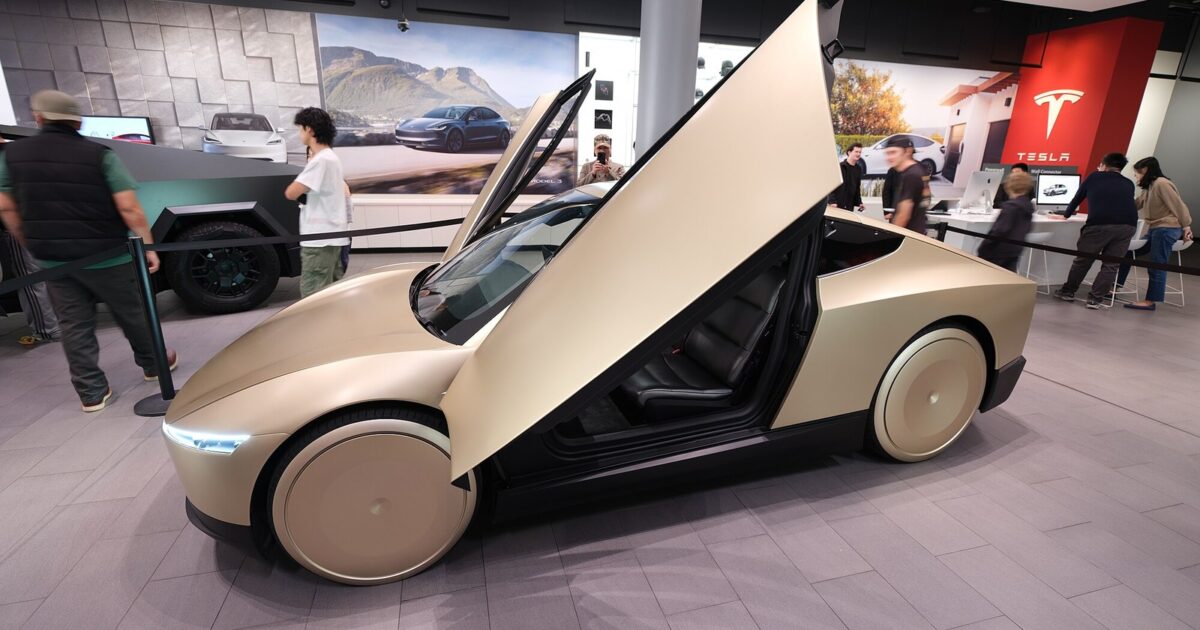
Cybercab has two seats, no steering wheel and no pedals. Unlike the Model Y vehicles running Tesla’s current service, there is no conventional driver position waiting in reserve.
Every public ride depends on the autonomy system, remote support and operating network working together.
Tesla’s Robotaxi page says autonomous rides are now offered with Model Y in Austin, Dallas and Houston, Texas, plus Miami, Orlando and Tampa, Florida. On the same page, Tesla still describes Cybercab as a vehicle that will offer rides in the future.
The page directs customers to the iOS or Android Robotaxi app, presents Model Y as the vehicle bringing autonomous rides to market today, and asks people outside those cities to register for launch notices. Tesla also says the service is being designed around accessibility needs, including room for some wheelchairs and service animals.
That wording draws the line cleanly. Tesla has a live Robotaxi business today, but the purpose-built car remains the next stage.
Tesla’s Robotaxi support guide shows how much of the service layer is already in place. Riders book through the app, verify the plate, start the trip from the app, adjust climate and media settings, and carry passenger preferences from one ride to the next.
The same guide says a requested vehicle waits seven minutes at pickup, displays trip progress on both the app and touchscreen, and lets a passenger reroute a destination during the ride. Minors from 8 through 17 may ride only with an adult, and the person booking the trip must be the rider.
Riders also get a pull-over control and a direct support connection through the vehicle’s touchscreen, cabin microphone and speakers. Cybercab does not need Tesla to invent that operating experience from zero.
It needs the new vehicle to enter the system safely and reliably.
There are other signs that Tesla has been preparing for more than a stage presentation.
Tesla’s first-responder hub now has a Cybercab-specific interaction plan, emergency response guide and rescue sheet. Tesla also offers in-person or virtual Robotaxi training for public-safety agencies.
The hub keeps Cybercab material separate from the Model Y documents used for today’s fleet, and it gives responders a dedicated Tesla contact for Robotaxi safety questions and training requests. Roadside-support questions are routed separately through Tesla Roadside Assistance.
Those documents cover the unglamorous work that matters once a car without manual controls leaves a test route: how responders identify it, stop it, approach it and handle an emergency. Tesla is preparing agencies for a vehicle that operates differently from an ordinary passenger car, even though an unrestricted-service date remains unannounced.
Tesla’s Robotaxi logistics posting points in the same direction. The company is hiring to manage final-mile vehicle deployments across North America, coordinate carriers and rail partners, develop logistics hubs, track performance and work with regional teams on market entry.
The Austin-based role calls for experience with auto transport or other high-value freight, weekly performance reporting and travel of up to 50 percent. It also puts one person across engineering, operations and regional teams—the groups that must coordinate when Tesla moves a fleet into a new city.
A launch event is the visible moment. Moving vehicles, training responders, staffing support and opening markets is the machinery underneath it.
Tesla has spent years making aggressive autonomy promises, so the missing details still matter. The company now has to show when Cybercab will carry the public, where it will operate, and what limits will apply on day one.
But this morning’s announcement moves the story forward in a concrete way. Cybercab is no longer waiting only on another forecast from Elon Musk or another car spotted in a parking lot.
Tesla is inviting real Robotaxi customers to its launch event. The next reveal should be what, exactly, they will be launching into public service.
Join the conversation!
Please share your thoughts about this article below. We value your opinions, and would love to see you add to the discussion!