

Elon Musk has now put a clear condition on the end of SpaceX’s Falcon era.
Falcon will not be wound down because Starship has completed one impressive test or reached orbit once. Musk says the handoff begins when Starship is flying reliably several times every week.
Only then, he wrote Saturday, would it make sense to shift scarce SpaceX engineering and production resources toward pushing Starship to several flights per day:
Once Starship is flying reliably several times per week, it makes sense to shift super scarce SpaceX engineering and production resources to Starship to get launch rate to several times per day, which means winding down Falcon
— Elon Musk (@elonmusk) August 22, 2026
That is the strongest direct description Musk has given of the transition. It is also more conditional than a simple retirement headline suggests.
There is no announced Falcon shutdown date in his statement. There is no claim that Starship is already ready to inherit Falcon’s manifest. There is a demanding reliability threshold that Starship still has to meet.
Falcon 9, meanwhile, is not limping toward retirement.
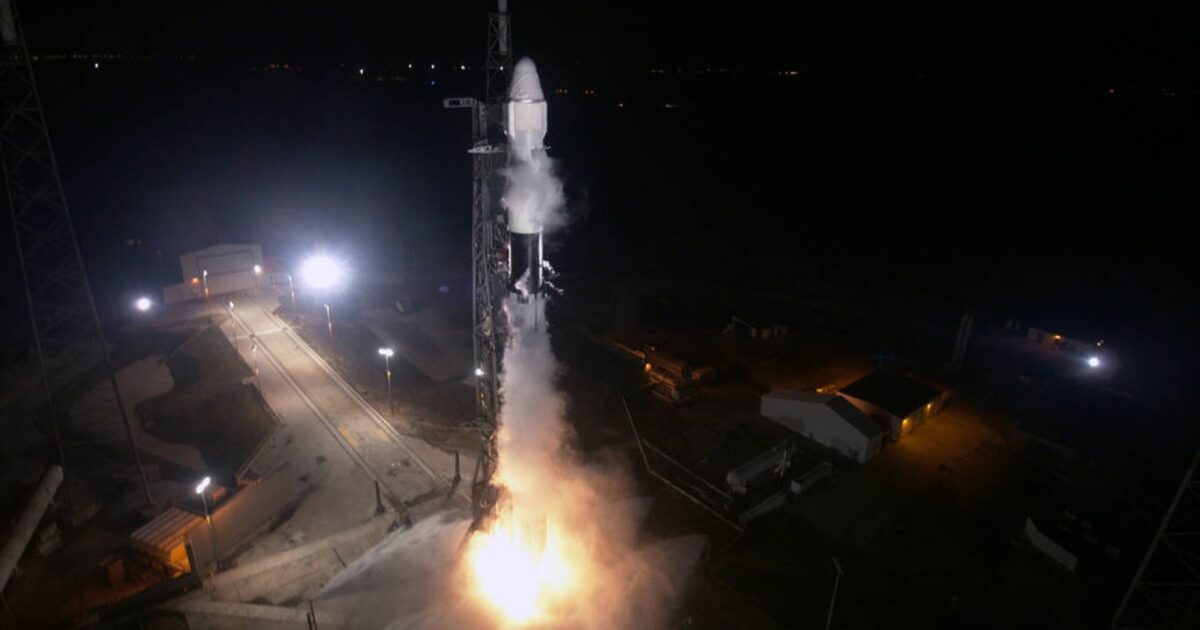
SpaceX said Saturday’s Starlink mission from California delivered 27 satellites to orbit and completed the company’s 100th Falcon launch of 2026. That number refers to Falcon launches, not the company’s total missions across every vehicle.
The same post celebrated the hardware practices that made that pace possible: landing boosters and recovering payload fairings for reuse. Falcon has become the machine SpaceX can launch, land, inspect and fly again at an industrial rhythm.
Musk is proposing that SpaceX eventually redirect the people and factory capacity behind that success toward a rocket that is vastly larger and intended to be fully reusable.
The discussion that prompted his statement centered on a harder question: what happens to NASA and the rest of the launch market if Falcon leaves before Starship can perform all of its jobs?
That concern was laid out bluntly in the post Musk answered:
Now @SciGuySpace reports NASA is in a tizzy because after running the most successful launcher ever for more than a decade and nearing 1000 launches, @SpaceX is planning to retire Falcon in favor of Starship in a few years.
Sorry, NASA, you've had 15 years to burn down the… https://t.co/uCNoMwK0v9
— Casey Handmer (@CJHandmer) August 22, 2026
Whatever one thinks of that criticism of NASA, the agency’s dependence on the current system is real.
NASA’s Commercial Crew Program press kit describes Dragon as the spacecraft that restored regular American astronaut launches from U.S. soil. Dragon carries crews and critical cargo to orbit, and it launches on Falcon 9 from Launch Complex 39A at Kennedy Space Center.
That pairing is not interchangeable today. Starship is not certified to carry NASA crews, and Musk’s post did not explain how crew rotation or cargo obligations would be handled during a Falcon wind-down.
NASA’s current material traces the system back to Demo-2 in May 2020, when Falcon 9 and Crew Dragon carried astronauts Robert Behnken and Douglas Hurley toward the International Space Station. That mission ended a long gap in American orbital crew launches from home soil.
The agency now uses Dragon for regular crew rotations while a separate cargo version moves science, supplies and station hardware. Falcon is therefore tied to both the people NASA sends up and the material that keeps the station operating.
NASA is only one part of the issue. Falcon also launches national-security spacecraft, commercial satellites, science missions, rideshares and SpaceX’s own Starlink batches.
Some payloads are designed around Falcon’s dimensions, vibration environment, integration process and proven mission profile.
SpaceX’s Falcon 9 page still presents the rocket as a reusable two-stage vehicle for the safe and reliable transport of people and payloads to Earth orbit and beyond. It lists the rocket at 70 meters tall, powered by nine Merlin engines on the first stage, with Dragon missions flying from Kennedy’s pad 39A.
The first stage supplies the thrust needed to leave the pad and is built to return for another mission. The second stage uses a single vacuum-optimized Merlin engine to carry the payload toward its required orbit.
SpaceX lists the vehicle at 3.7 meters wide with a launch mass of about 549,000 kilograms. The company operates Falcon missions from Florida and California, giving it access to different orbital paths for crew, commercial, government and Starlink payloads.
The official page also shows why Falcon has become difficult to replace. SpaceX recovered a Falcon 9 first stage for the first time in 2015 and reflown one in 2017.
The years since have turned reuse from an experiment into the backbone of the world’s busiest orbital launch operation.
Starship is trying to make that achievement look small.
Its Super Heavy booster uses 33 Raptor engines. The Ship upper stage is designed to return from orbit and fly again rather than being discarded after one mission.
SpaceX is building more than a bigger Falcon. It wants a launch system with aircraft-like reuse and enough payload capacity to move satellites, tankers, lunar hardware and eventually crews at a scale Falcon cannot approach.
That promise is why Musk sees engineers and production lines as a zero-sum choice once Starship becomes reliable. Keeping the best teams focused on a mature system carries an opportunity cost if the new vehicle is ready to multiply launch capacity.
But the words “once” and “reliably” do most of the work in his statement.
Starship has not yet demonstrated several dependable flights per week. It has not demonstrated several flights per day.
It has not begun routine customer missions, and its upper stage has not yet been recovered and reflown.
Ars Technica reported earlier this week that satellite operators already face a tightening launch market. SpaceX has reportedly stopped taking some new Falcon 9 and rideshare bookings beyond 2028 as it prepares for Starship, while customers are competing for limited alternatives from other launch providers.
The report describes a market in which Falcon’s own success helped create enormous demand for orbital access, but SpaceX’s next move could leave customers caught between a proven rocket whose future is narrowing and a replacement that has not entered routine service.
Musk’s new statement does not erase that risk. It does establish a sensible technical gate before the company commits its scarce resources to the new system.
Falcon will keep doing the work until Starship proves it can do far more of it, far more often.
If SpaceX reaches several reliable Starship flights each week, the transition will stop looking theoretical. At that point, winding down Falcon may be less about retiring a legendary rocket than freeing the team that built it to finish the machine meant to replace it.
For now, Falcon is still flying at a record pace. Starship has to earn the handoff.
Join the conversation!
Please share your thoughts about this article below. We value your opinions, and would love to see you add to the discussion!