
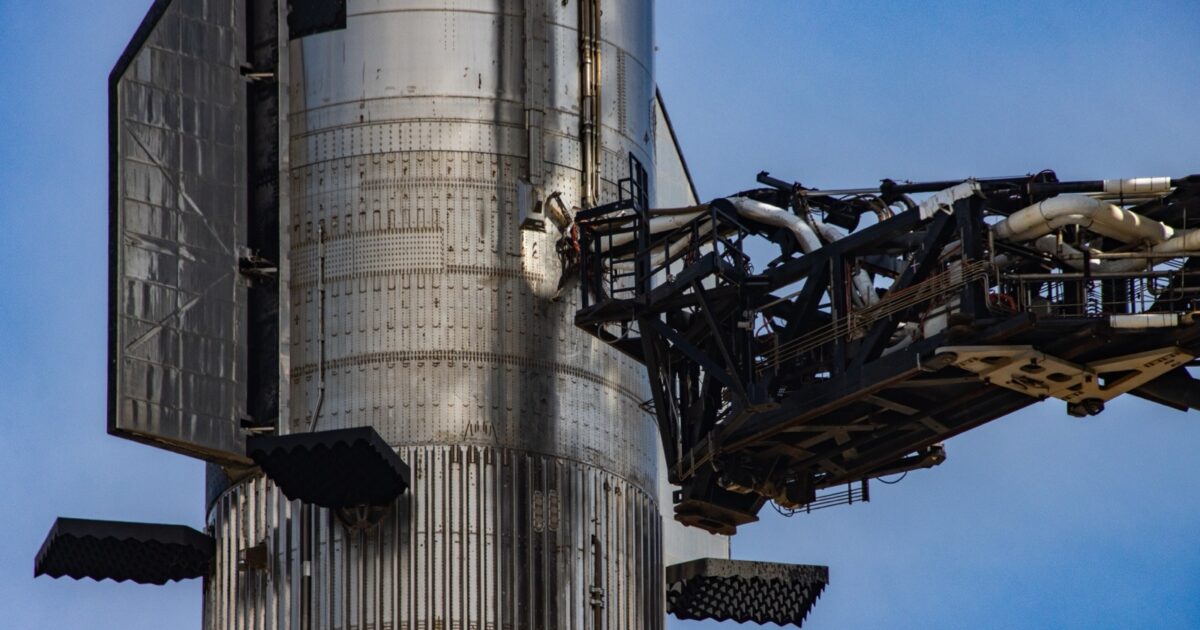
SpaceX has fired all 33 engines on the Super Heavy booster assigned to Starship Flight 14.
The full-duration static fire put Booster 21 through its biggest propulsion test yet at Starbase, turning a vehicle that had only recently reached the pad into a first stage with a completed all-engine firing behind it.
It does not mean Flight 14 is cleared to launch. It does mean SpaceX has checked off one of the loudest and most consequential ground tests in the campaign.
SpaceX released two views of the firing:
Full duration 33-engine static fire with the Super Heavy booster preparing for Flight 14 pic.twitter.com/0UXb7tvk7X
— SpaceX (@SpaceX) August 28, 2026
All 33 Raptors ignited while the 72-meter booster remained locked to the pad. The test gave engineers a concentrated look at the engines, propellant delivery, flight computers, plumbing and ground systems operating together before the vehicle ever leaves the tower.
SpaceX described the firing as both full-duration and a preparation step for Flight 14. The company did not attach a launch date or declare Booster 21 flight-ready in that announcement.
The distinction is important. A successful-looking firing is a major milestone, but the test data still has to be reviewed.
The booster also has to return to the launch flow, meet the upper stage and complete whatever integrated checks SpaceX requires.
The official post nonetheless gives the campaign a hard fact: SpaceX commanded all 33 engines through the planned static-fire sequence and publicly identified the test with the next Starship flight.
Booster 21 had arrived at the pad only three days earlier. SpaceX documented that move before the engine test began:
Booster 21 moved to the pad at Starbase for static fire testing ahead of Flight 14 pic.twitter.com/yY4NnaXcSx
— SpaceX (@SpaceX) August 25, 2026
The rollout photographs identified the hardware and the purpose of the pad trip before SpaceX fired it. That sequence also makes clear that the August 28 event was not a generic development test on a spare stage; it involved the booster being prepared for Flight 14.
Space.com reports that the firing took place Friday at Starbase in South Texas and followed the engine-test campaign for Flight 14’s upper stage. The Ship had already completed its own six-engine firing, leaving the Super Heavy test as the next major propulsion milestone.
The outlet notes that Starship consists of the Super Heavy first stage and a 52-meter upper stage. Flight 14 is expected to take that combined system farther than the suborbital profile flown on Flight 13, although SpaceX has not published a firm launch date in the material used here.
That makes the static fire progress, not a countdown. Booster 21 has demonstrated the planned pad firing; the company still controls the schedule based on data review, vehicle work, integration and launch readiness.
Thirty-three engines sound almost excessive until the scale of Super Heavy comes into view.
SpaceX Starship lists the booster at 72 meters tall with capacity for 3,650 metric tonnes of liquid methane and liquid oxygen. The company rates the first stage at 8,240 metric-ton-force of thrust, or about 18.1 million pounds-force.
The engine layout is split between 13 maneuverable Raptors in the center and 20 fixed engines around the perimeter. That inner cluster helps steer the booster, while the complete array provides the force needed to lift the fully fueled Starship system away from the pad.
SpaceX designed Super Heavy to do more than survive ascent. The first stage is intended to return to the launch site, be caught by the launch tower and enter a rapid reuse cycle rather than splash down or land on conventional legs.
That ambition puts unusual pressure on every part of the booster. The engines must start and run together, the vehicle has to control a massive propellant flow, and the stage eventually has to reverse course and guide itself back to a tower built to catch it.
A static fire cannot prove all of that. It can expose problems before flight while the booster is still secured to the ground, surrounded by instrumentation and within reach of the engineering team.
Flight 14’s upper stage has already completed its own major engine tests. Now Booster 21 has fired all 33 of its Raptors in a full-duration pad sequence.
SpaceX still has to turn two tested stages into one launch-ready Starship. But the first stage has now spoken for itself—and all 33 engines answered at once.
Join the conversation!
Please share your thoughts about this article below. We value your opinions, and would love to see you add to the discussion!