

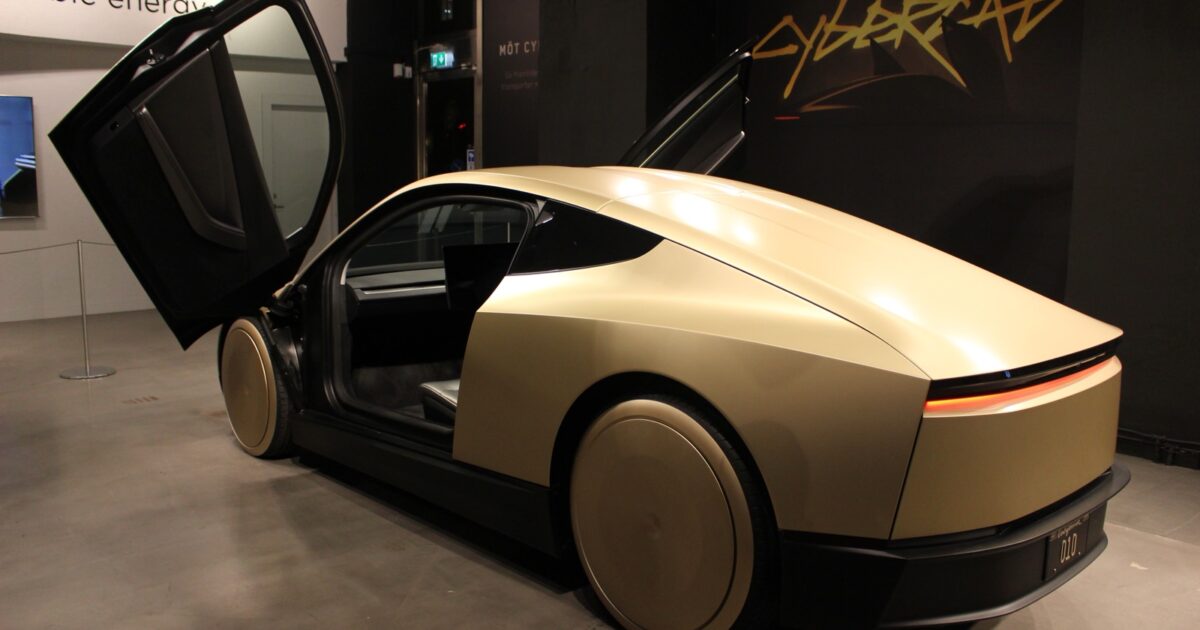
Tesla has officially put Cybercab into limited Robotaxi service in Austin.
The company’s new rider materials do more than celebrate a launch event. They tell customers how a Cybercab is assigned, how its doors work, how to start a ride and what to do when they need the car to pull over.
Tesla is also inviting commercial purchase inquiries for Cybercab, opening a second path beyond rides in the company-operated network.
The rollout is still deliberately narrow. Tesla has not published a Cybercab fleet count, a general Austin access date, a retail price or a delivery schedule.
But the central question hanging over this morning’s launch preview now has an answer: Cybercab is carrying riders rather than circling Austin only for testing and demonstrations.
Tesla marked the moment with footage of the production vehicle moving through downtown Austin:
The future has arrived in Austin pic.twitter.com/RTCb0O5sez
— Tesla (@Tesla) September 3, 2026
The video matters because this is the production Cybercab operating on real public streets, without a steering wheel or pedals inside.
Tesla Cybercab FAQ now calls Cybercab the newest addition to the Robotaxi fleet and says rides are available in limited areas of Austin. Tesla’s other five Robotaxi markets—Dallas, Houston, Miami, Orlando and Tampa—continue to use Model Y vehicles for now.
A rider cannot initially tap a button and insist on the gold two-seater. Tesla says the app will assign Cybercab or Model Y according to vehicle availability and the number of people traveling together.
That makes the first rollout a mixed fleet. Parties of one or two may receive either vehicle; larger groups need the five-seat Model Y.
Cybercab itself is limited to two passengers, and riders under 13 are not permitted in it.
The FAQ also gives the first concrete picture of Cybercab’s accessibility design. Tesla lists bench-style seating at wheelchair-transfer height, room for service animals, Braille on doors and overhead buttons, and trunk space for wheelchairs and other assistive devices.
Those features are more consequential than the car’s dramatic doors. A purpose-built robotaxi has to work for passengers who cannot rely on a driver to help with every part of pickup and boarding.
The cabin itself is radically simple. A same-day first look shows the two-seat layout and the large central screen riders use instead of conventional controls:
First look at the Cybercab pic.twitter.com/pp3UVJaORf
— Whole Mars Catalog (@wholemars) September 3, 2026
Tesla Cybercab Rider Guide walks through the experience from booking to drop-off. Customers enter a destination in the Robotaxi app, review the estimated fare and wait time, and receive a notification when the vehicle is on its way.
At pickup, Cybercab’s rear lightbar glows red while the front lightbar changes to the color assigned in the app. Tesla tells riders to match the license plate, while the doors can open automatically when the car detects the ride requester’s phone.
Once everyone is seated, the trip will not begin until the doors and trunk are closed and every passenger is buckled. The rider then taps “Start Ride” on the touchscreen.
During the trip, that screen carries the map, arrival estimate, climate controls and entertainment. A rider can edit the destination in the mobile app or use the screen’s Pull Over and Support controls when the situation changes.
The guide even spells out the end of the trip: Cybercab parks, flashes its hazards, opens from the screen or interior lever, and closes its doors after the customer completes the ride in the app.
That level of instruction marks a real change from prototype theater. Tesla is documenting the unglamorous edge cases that come with putting a vehicle with no onboard driver into customer service.
There is another important launch-day change.
The Tesla Robotaxi Interest Form asks prospective partners whether they are interested in Cybercab fleet-vehicle purchasing, mobility hubs and infrastructure, event collaboration or another opportunity. Tesla’s FAQ goes further, saying people interested in a fleet or an individual Cybercab for commercial purposes can submit the form and wait for a representative to make contact.
The page stops short of an online order process. There is no public price, deposit, trim list, delivery window or guarantee that every inquiry will become a sale.
Still, it is the clearest official indication yet that Tesla intends Cybercab to reach commercial operators beyond vehicles retained inside its own fleet. That could turn the car into both a transportation service and a product sold to businesses building local ride networks.
Associated Press reported that dozens of Cybercabs were sent onto Austin streets Thursday, while Tesla shares rose more than 5 percent during the launch-day excitement. The report also frames the scale challenge clearly: Tesla’s driverless service remains far smaller than Waymo’s fleet, and public confidence in vehicles without human controls is far from automatic.
Tesla’s advantage is a vehicle built from the outset for this exact job. There is no driver’s position to waste, no manual-control package to carry and no need to adapt a retail cabin around a service it was not originally designed to perform.
The tradeoff is unforgiving. Every pickup, blocked door, confused passenger, roadside stop and support call has to work without a human employee sitting inside the car.
Limited Austin service is the right place to prove that system. It lets Tesla learn with real riders while keeping the fleet and geography contained.
The next milestones are now easy to measure: more Austin access, a larger active Cybercab fleet, expansion beyond one city, and actual purchase terms for commercial buyers.
For today, Tesla crossed the line that mattered most. Cybercab is no longer waiting for a future ride-hailing launch. In part of Austin, that future is already taking passengers.
Join the conversation!
Please share your thoughts about this article below. We value your opinions, and would love to see you add to the discussion!