
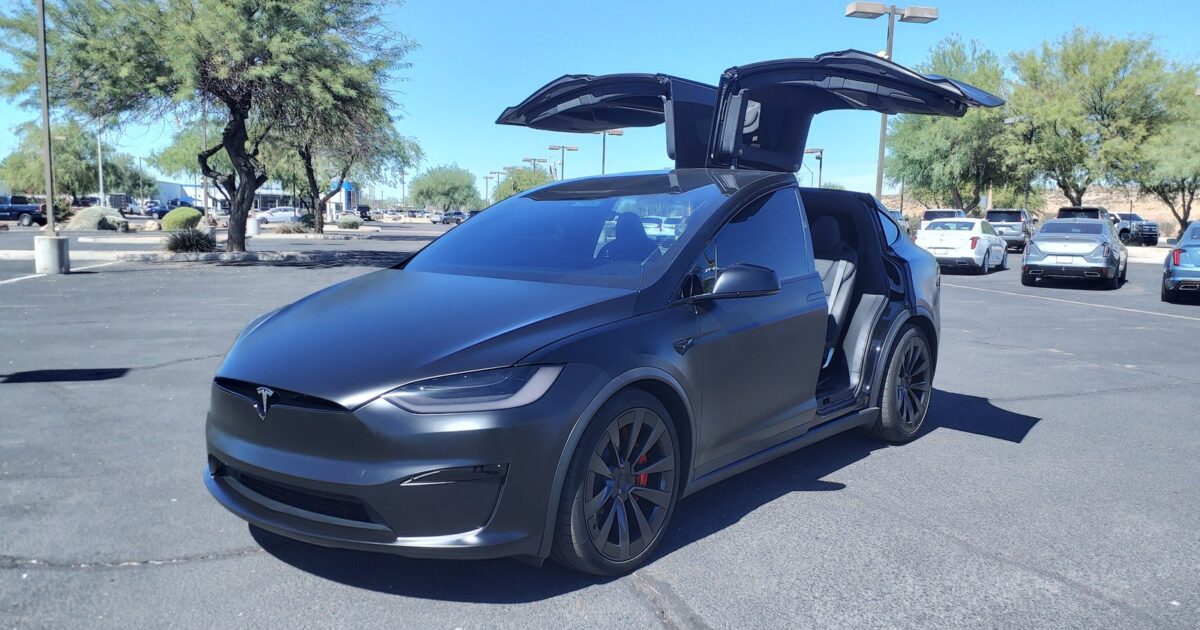
Tesla’s two retired flagships may not be done shaping the auto industry.
Elon Musk said in a Friday post that Tesla plans to make the design and software behind the Model S and Model X open source, following the route the company took with the original Roadster.
Just as Tesla made the original Roadster design & software open source, we plan to do the same with Model S & X
— Elon Musk (@elonmusk) July 24, 2026
That one sentence is exciting. It is also deliberately incomplete.
Tesla has not said when the material will arrive, where it will be published, what license will govern it, or which parts of the cars’ design and software will be included. Those details will decide whether this becomes a useful engineering archive, a real resource for owners and specialists, or something much narrower.
The timing makes the announcement especially interesting.
Axios reported this week that Tesla had removed the discontinued Model S and Model X assembly lines from its Fremont factory. The company expects Optimus humanoid robot production to begin in that space later this year.
Axios published the update alongside Tesla’s second-quarter results, making the Fremont conversion a current factory status rather than a distant proposal. The next use of that factory floor is already identified.
The announcement does not signal a Model S and Model X production comeback. Tesla has physically moved the factory floor toward its next program.
Fremont had been the manufacturing home of both flagships. With their dedicated lines dismantled and replacement equipment moving in, Tesla no longer has those production systems waiting in reserve.
That factory change puts the open-source plan squarely in the preservation phase of the cars’ lives.
Open sourcing the old flagships would be a different kind of second life. Instead of putting the cars back on the line, Tesla could let engineers, repair specialists, parts makers, and technically capable owners study more of what made them work.
Tesla’s original Roadster shows both the promise and the limits of that idea.
Tesla currently hosts a public Roadster portal with service information, parts resources, circuit diagrams, connector references, owner material, warranty documents, and technical manuals. It is a serious archive for a low-volume vehicle whose factory support challenges only grow as the cars age.
The portal’s disclosed research-and-development section also lists downloadable material for the Battery Monitoring Board, Vehicle Display System, and HVAC Controller. Those are meaningful systems, especially for the specialists trying to keep early Roadsters alive.
Tesla also puts a blunt warning beside those files. The company says the research material came from the design phase, may not accurately match production cars, carries no warranty for work performed outside Tesla, and does not turn community-made parts or procedures into Tesla-approved repairs.
InsideEVs examined the Roadster release when it appeared in 2023 and found schematics for those three electronic systems, along with diagnostic software. The outlet also noted what was missing, including the kind of complete CAD package that would let someone reproduce every trim piece or build an entire car from the archive.
Its practical conclusion was much more grounded: the files could make life easier for a skilled person repairing several Roadster circuit boards. That is valuable, but it is a long way from handing the public a ready-to-build Tesla.
The same distinction will matter even more for the Model S and Model X.
These vehicles were produced in far larger numbers, changed hardware repeatedly over long lifecycles, and still depend on deeply integrated electronics. A useful release will need to identify versions clearly and show where design files, service information, diagnostic tools, and software actually fit.
Public source code also does not automatically give an owner a safe or supported way to install modified software in a car. Vehicle signing, security, build tools, hardware compatibility, and safety-critical controls are separate questions, and Tesla has not answered any of them yet.
The owner side of this story is easy to understand. Production has ended, but the cars have not disappeared.
Cars that already left Fremont will need parts, diagnostics, and skilled hands for years. A factory line can vanish in weeks; the knowledge required to keep a vehicle healthy has to last much longer.
That is why the quality of this release matters.
A well-organized archive could help independent experts diagnose failures, preserve knowledge as original components become scarce, and build better replacement solutions. Even documentation that stops short of flashable vehicle software could be enormously useful if it is complete, versioned, searchable, and honest about its limits.
A thin document dump would produce a few headlines and little else. The Roadster precedent suggests Tesla understands that real technical files can keep an aging vehicle community moving, but it also shows how much can remain outside the package.
For now, Musk has made the promise. The next things to watch are the repository, the license, the exact file list, the software versions, and Tesla’s explanation of how the material can be used safely.
Model S and Model X changed what people expected from electric cars. Giving their engineering a useful life beyond the assembly line would be a fitting next chapter.
Join the conversation!
Please share your thoughts about this article below. We value your opinions, and would love to see you add to the discussion!