
Tesla is building Robotaxi as a direct service. Uber is lobbying for a future that could make that model much harder to launch.
A proposal reported this week would require any platform in New Jersey’s planned autonomous-vehicle pilot to have human drivers handle at least 85 percent of all rides. Even if a driverless fleet cleared the bill’s safety tests, a pure autonomous network could not operate on its own terms under that structure.
For Tesla, the fight reaches well beyond one state.
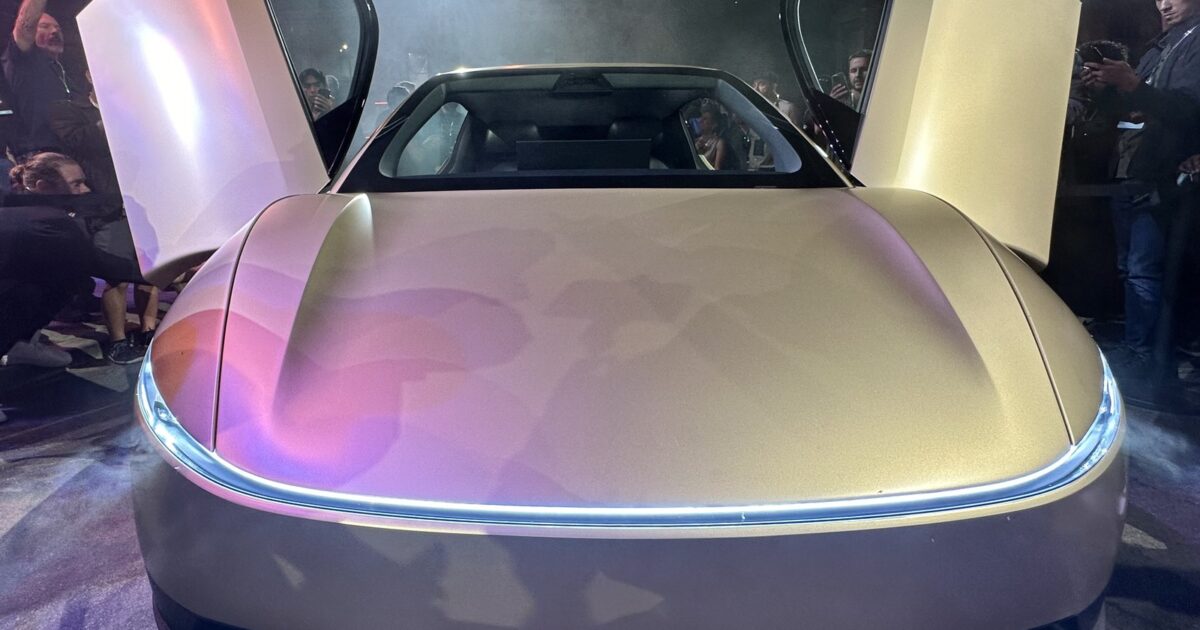
Cybercab is built around removing the driver, while Tesla’s network is built around a native app and a direct relationship with the rider.
A rule that reserves 85 percent of trips for human drivers does more than regulate that model. It rewrites it.
“Uber lobbyists are proposing a major add-on to the legislation: requiring any platform offering robotaxi services to have human drivers handle at least 85% of all rides during the pilot program.”@Uber do better https://t.co/y2hJozIQ6D
— Mark Fonte (@markfonte) July 25, 2026
Not a Tesla App traced the proposal to Uber’s wider push for mandatory hybrid networks, where human drivers and autonomous vehicles share one platform. The report says Uber lobbyists want the 85 percent floor added to New Jersey’s three-year pilot.
If lawmakers adopt that language, a driverless-only operator would face two obvious choices: build a large human-driver business it never planned to run, or route rides through a platform that already has one.
Either option protects the incumbent middleman.
The outlet also points to Tesla’s decision to operate Robotaxi through its own app instead of placing rides on Uber. Uber’s proposed framework treats a hybrid platform as the starting point, while Tesla’s plan is built to make that middle layer unnecessary.
New Jersey Legislature records show the current bill is already demanding. The posted text calls for 50,000 miles of in-state public-road testing with a human driver in the seat before driverless operation, plus at least $5 million in liability coverage for autonomous-vehicle testers.
Commercial driverless operators would also need a first-responder interaction plan. Pilot vehicles would need crash-avoidance hardware that includes a camera and two distinct sensing modalities capable of detecting and following obstacles if the camera system fails.
The 85 percent floor does not appear in the current posted bill. It is a reported add-on being proposed by Uber lobbyists, not enacted law.
New Jersey is already debating a heavy safety and testing framework. The extra proposal would reach past the vehicle and dictate the operator’s business model.
Axios reported in May that Uber’s own policy paper favors a long transition in which robotaxis and human drivers share the same platform for years. Uber says human drivers can cover communities and conditions where autonomous fleets are not yet available, while cities and workers should have a voice in deployments.
The company has more than two dozen partnerships with autonomous-vehicle developers. A hybrid network gives Uber a way to keep those vehicles inside the app it already operates at massive scale.
There is a reasonable policy debate in all of that. A fixed 85 percent floor goes much further.
Under the reported proposal, autonomous trips would be limited to 15 percent by design, before regulators judged the service on safety, reliability, coverage, or price. That creates a convenient moat for the platform whose biggest asset is its human-driver network.
The same tension is already visible inside Uber’s biggest robotaxi partnership.
🇺🇸 Waymo is reportedly considering ending its partnership with Uber as tensions grow over how the robotaxi business is being run.
The Financial Times reported the companies have clashed over operations, vehicle availability, and the financial terms of their agreement.
Waymo has… pic.twitter.com/Vf1dDSDvFG
— NewsForce (@Newsforce) July 25, 2026
Financial Times reported that Waymo has held internal discussions about ending its Uber partnership after clashes over operations and commercial terms. The partnership began in 2023 and currently puts Waymo vehicles inside Uber’s app in Austin and Atlanta.
Waymo reportedly raised concerns about vehicle cleanliness and Uber’s routing, while Uber criticized bad-weather vehicle availability and called the financial terms unsustainable. The two companies were described as pursuing diverging objectives.
Waymo reportedly notified Uber that it plans to enter Austin and Atlanta independently in January 2028, when the contract allows. The companies ended their Phoenix partnership in June, and Reuters said it could not independently verify the Financial Times account.
No separation has been completed in either city.
TechCrunch added an on-record timetable from Uber. The company said Waymo intends to begin offering rides through its own app in Austin and Atlanta in January 2028, alongside the existing service.
Uber said the contract covering those two cities ends in May 2028. TechCrunch also confirmed that the two companies had already split in Phoenix.
Tesla is not part of that contract. The dispute still exposes the stakes for Tesla’s approach.
If Tesla’s Robotaxi strategy works, much of its advantage comes from keeping the vehicle, autonomy system, app, fleet operations, and customer relationship under one roof. Forcing that service into a human-first platform would hand away part of the model before the Cybercab network ever gets a fair test.
Autonomous fleets should face strict rules. Crash reporting, insurance, emergency response, cybersecurity, and hard real-world safety evidence are legitimate requirements.
New Jersey’s bill already spends plenty of ink on them.
Guaranteeing legacy platforms a fixed share of rides is something else.
The proposal has not become law. The next thing to watch is whether the 85 percent language appears in an amendment, and whether lawmakers treat it as a safety rule or recognize it as a structural advantage for companies that already own human-driver networks.
The robotaxi race is becoming a fight over more than who builds the best autonomous car. It is also a fight over who gets to stand between that car and its customer.
Join the conversation!
Please share your thoughts about this article below. We value your opinions, and would love to see you add to the discussion!