

NASA’s next SpaceX crew has stepped out for one last public appearance before launch preparations move to Florida.
Crew-13 gathered at Johnson Space Center on Monday for a mission overview and a full crew news conference. NASA called it the team’s final media availability before the astronauts and cosmonaut travel to Kennedy Space Center.
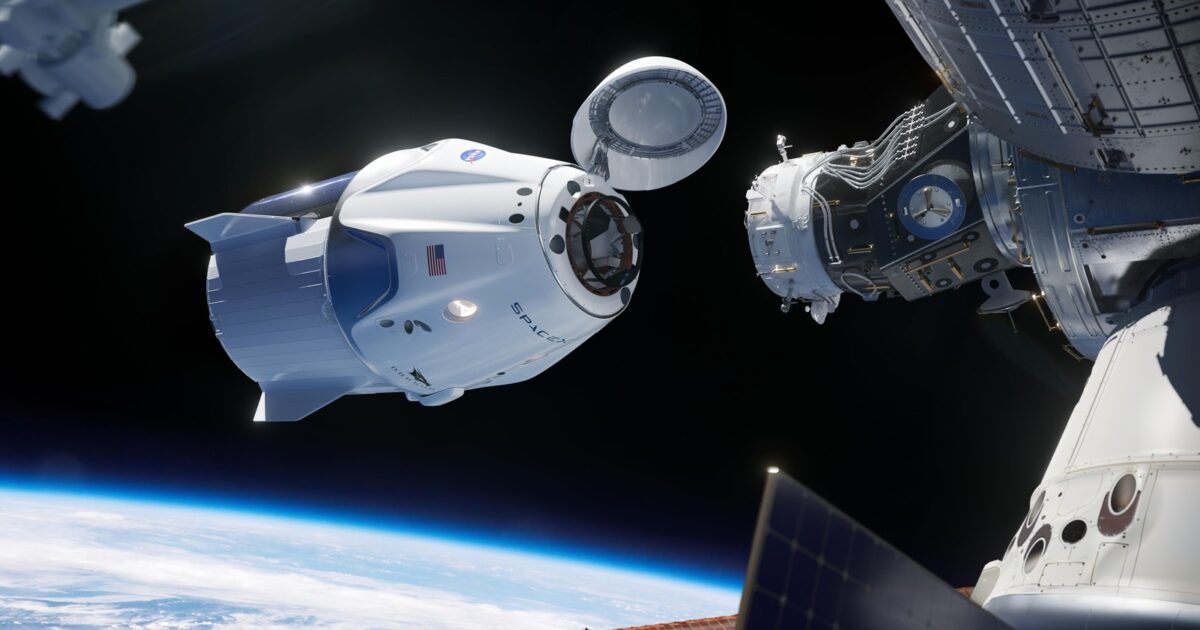
The mission is targeted to lift off no earlier than mid-September. A Falcon 9 will send Crew Dragon toward the International Space Station from Space Launch Complex 40 at Cape Canaveral Space Force Station.
This is an experienced spacecraft carrying a crew with plenty of firsts still ahead.
Jessica Watkins will command the mission on her second trip to orbit. NASA pilot Luke Delaney, Canadian Space Agency astronaut Joshua Kutryk and Roscosmos cosmonaut Sergey Teteryatnikov will each make their first spaceflight.
🚀 LIVE – Get a full overview of our upcoming mission to the International Space Station with a panel of experts. Learn all the details you need to know ahead of launch this September! https://t.co/GzwCaDH42m
— Canadian Space Agency (@csa_asc) August 3, 2026
NASA confirms the four-person roster, launch architecture and no-earlier-than-mid-September target. It also makes the timing important: Monday’s appearance was the final planned media stop before the crew moves into the launch phase in Florida.
Watkins brings the only prior orbital experience aboard Crew-13. Delaney comes to the pilot seat after a career that included naval aviation and flight-test work.
Kutryk is a former CF-18 pilot and experimental test pilot. Teteryatnikov trained as a naval engineer and worked with undersea-vessel power systems before joining the Russian cosmonaut corps.
The launch plan puts Falcon 9 and Dragon at SLC-40, the Cape Canaveral pad SpaceX modified for crewed missions. The rocket will handle the climb to orbit; Dragon will then perform the rendezvous and docking sequence that delivers the crew to the station.
NASA’s Crew-13 mission blog describes the flight as a long-duration science expedition. The headline moment will be Falcon 9 and Dragon leaving Florida, but the actual job begins after docking: research, technology demonstrations, station maintenance and daily operations alongside the Expedition 75 crew.
The flight will carry four people from three agencies to the orbiting laboratory for work that extends far beyond the launch and docking sequence. NASA says the expedition will support investigations and technology demonstrations meant to improve life on Earth and prepare crews for longer journeys toward the Moon and Mars.
The mission also continues the international exchange that keeps American astronauts and Russian cosmonauts flying together during a difficult period on Earth. Crew-13 puts representatives of NASA, the Canadian Space Agency and Roscosmos inside one American commercial spacecraft.
🧑🚀LIVE – @astro_kutryk and his Crew-13 crewmates are speaking live to media from NASA's Johnson Space Center. Tune in to get to know the crew! https://t.co/d4U1UcijHH
— Canadian Space Agency (@csa_asc) August 3, 2026
The Canadian Space Agency adds one of the mission’s biggest milestones. Kutryk will be the fourth Canadian to take part in a long-duration ISS mission and the first Canadian to fly under NASA’s Commercial Crew Program.
Kutryk is expected to conduct Canadian and international experiments, including work focused on human health, while also carrying out station maintenance and operational duties. His path to Crew-13 also came through another vehicle: he had previously been assigned to Starliner-1 before that mission was changed to an uncrewed cargo flight.
That change gives Crew-13 an extra layer of meaning. SpaceX’s system is taking a passenger whose original ride changed and keeping a partner nation’s long-duration mission on the calendar.
It also extends Crew Dragon’s role as the dependable center of NASA’s crew-rotation plan.
Three agencies will be represented inside the capsule. Three of the four people aboard have never crossed the edge of space.
Their commander has already lived and worked on the station and now returns in charge of the Dragon that will carry them there.
Monday was the introduction. The next time Crew-13 faces the cameras, the launch pad should be much closer.
The calendar still says no earlier than mid-September, and human-spaceflight schedules always leave room for hardware, weather and station traffic to have a vote. But the transition is real: the public briefings are finished, the crew is assembled, and Florida is next.
SpaceX has turned crew rotation into something that can look routine from the ground. It is not routine for Watkins, Delaney, Kutryk and Teteryatnikov. For three of them, the next Falcon 9 launch will be the first time Earth falls away beneath their seats.
That is the story Crew-13 carries into its final weeks on the ground.
Join the conversation!
Please share your thoughts about this article below. We value your opinions, and would love to see you add to the discussion!