
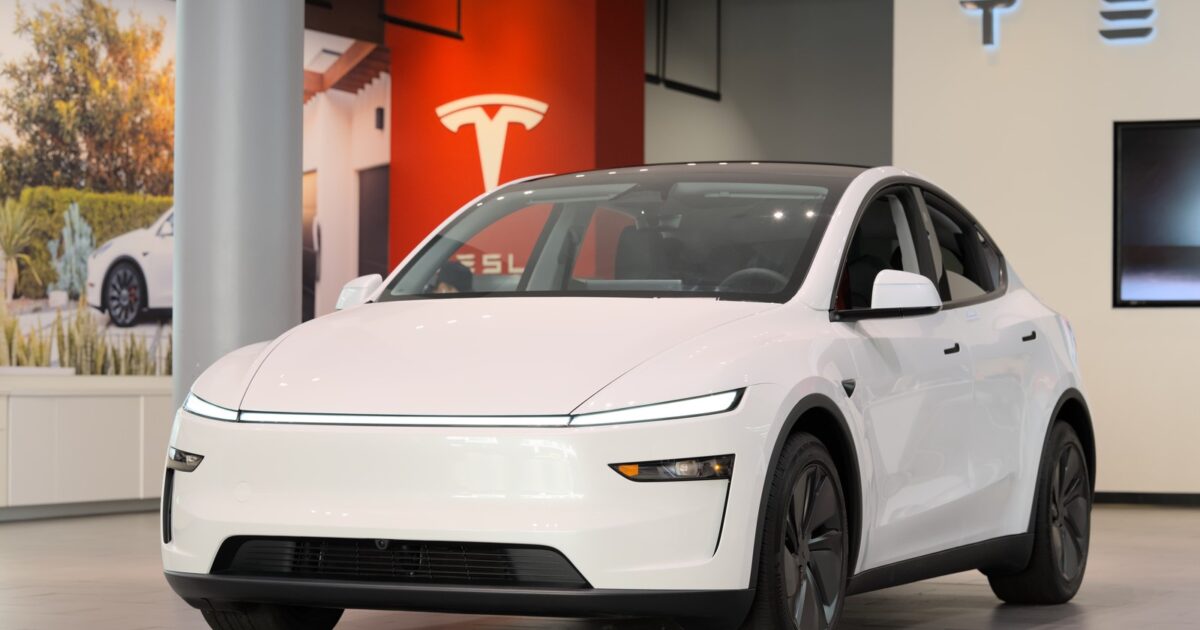
A meaningful new discount has started showing up for some California Tesla shoppers: $3,500 off an eligible new Model 3 or Model Y through the state’s MyFirstEV program.
The incentive is appearing on qualifying new-inventory vehicles for first-time buyers, according to a fresh look at Tesla’s shopping flow shared Monday evening. The reported eligibility language says the order must be placed on or after August 3, 2026, and delivery must happen while program funds are still available.
That makes this more than another incentive announcement waiting somewhere down the road. For eligible buyers, the savings are beginning to show up where they matter: during the purchase itself.
First-time electric vehicle buyers in California can now get $3,500 off eligible Model 3 and Model Y new inventory vehicle purchases.
To be eligible, you must place your order on or after August 3, 2026 and take delivery while funds are still available. The incentive applies to… pic.twitter.com/yuXF00XA50
— Sawyer Merritt (@SawyerMerritt) August 4, 2026
The timing is especially helpful for shoppers who assumed the end of the old federal EV tax credit meant there was no meaningful assistance left. MyFirstEV is a separate California program, and its structure is unusually simple: qualified savings are applied at the point of sale rather than claimed months later on a tax return.
The California governor’s office announced the program in July after reaching agreements with 13 automakers, including Tesla. A qualifying first-time buyer or lessee can receive $3,500 toward a new zero-emission vehicle priced at no more than $50,000.
Eligible used vehicles priced at no more than $25,000 can receive $1,750.
California committed $135 million to the effort, while participating automakers agreed to match that amount dollar for dollar. That creates a stated $270 million pool, with the California Air Resources Board overseeing the program.
The instant-rebate design is important: it lowers the amount due during the transaction instead of asking a buyer to carry the full cost and wait for reimbursement.
There are several conditions hiding behind the attractive headline number. KQED reported that the buyer must be a California resident and attest that they have never previously bought or leased a vehicle.
The outlet also explained that funding is divided among participating brands, which means one automaker’s allocation could be exhausted even while another still has money available.
KQED’s July 22 update said the program had not yet begun at that time and urged shoppers to verify both the vehicle and the manufacturer’s remaining funds. The new Tesla inventory language is the clearest sign yet that implementation has moved forward for at least some Model 3 and Model Y purchases.
But it still is not a blanket $3,500 price cut on every Tesla in California.
Vehicle eligibility offers another useful cross-check. The California Air Resources Board currently lists 2024 and 2025 Model 3 vehicles and 2024 through 2026 Model Y vehicles among battery-electric models eligible for CARB purchase-incentive programs. CARB also warns that each program has its own rules, so appearing on that list does not automatically guarantee that every trim, price, buyer, or transaction qualifies for MyFirstEV.
That distinction matters because the incentive has a $50,000 new-vehicle price ceiling. A buyer should confirm the exact inventory vehicle, final configured price, first-time-buyer requirement, order date, and available Tesla program funds before treating the discount as part of the deal.
Delivery timing matters too: placing an eligible order is not enough if the allocated money is gone before the car is delivered.
For a first-time buyer who clears those conditions, however, $3,500 at the point of sale is real money. It can cover a substantial portion of taxes and fees, reduce the amount financed, or make the step from a used gas car into a new Model 3 or Model Y considerably easier.
Tesla has spent years cutting friction out of the car-buying process. If MyFirstEV now appears cleanly on eligible inventory and survives through delivery, California shoppers are getting exactly the kind of incentive that works best: visible, immediate, and easy to understand before they commit.
Join the conversation!
Please share your thoughts about this article below. We value your opinions, and would love to see you add to the discussion!