
SpaceX and Tesla have finally put a pin on the map for Terafab, and the numbers are almost hard to process.
The companies say their giant semiconductor complex will be built in Grimes County, Texas. The first phase alone is expected to require about $16.8 billion in capital investment.
The foundations for an exciting future are being built in Texas. Next up: Terafab → https://t.co/jGg52Zhn5I pic.twitter.com/SNfSXNr2tb
— SpaceX (@SpaceX) August 6, 2026
SpaceX is describing a vertically integrated operation that would manufacture, package and test advanced logic and memory devices under one roof.
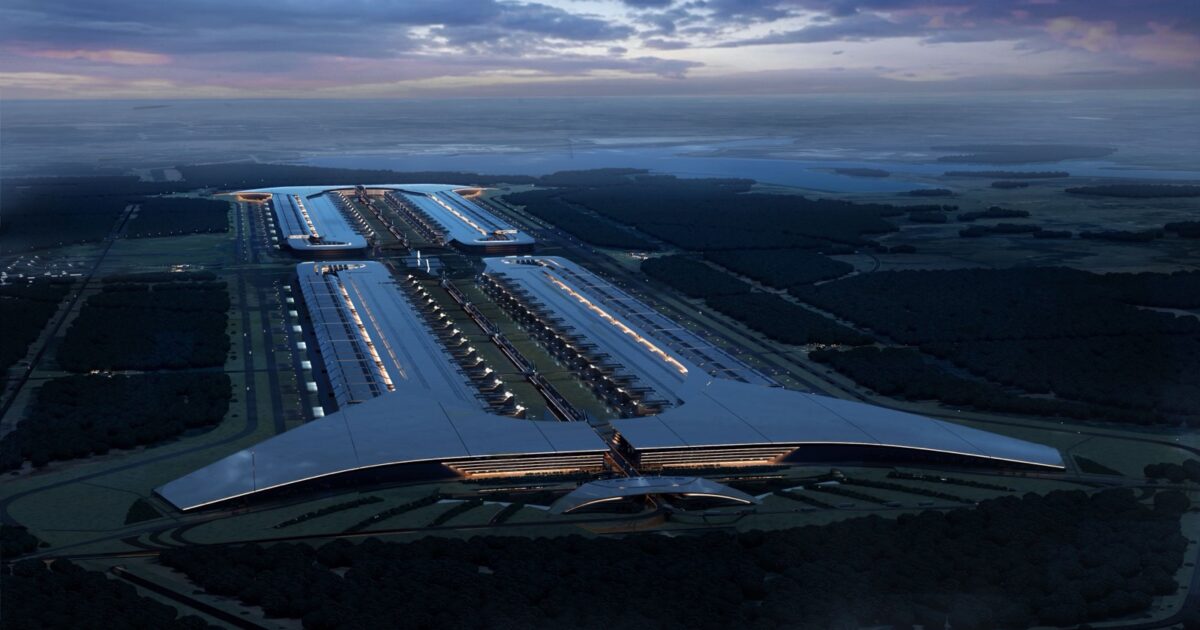
The planned manufacturing footprint is more than 100 million square feet. For perspective, Tesla’s entire Giga Texas complex is already enormous, yet the Terafab plan would operate on a completely different scale.
SpaceX says the facility is meant to close a chip-supply gap the company believes existing manufacturers cannot fill fast enough. SpaceX and Tesla expect their combined demand to exceed one terawatt of compute as Tesla scales autonomous vehicles and robots while SpaceX pursues orbital data centers.
The company says Terafab would build chips optimized for edge computing and inference in Tesla’s Optimus robots and self-driving Cybercabs. A separate class of high-power chips would be aimed at SpaceX’s planned space-based computing systems.
SpaceX estimates at least 3,000 people will work at the Grimes County site. It expects many of those jobs to be filled by people from Grimes and neighboring Brazos County, building on a Texas workforce already spread across Starbase, Bastrop and McGregor.
The August 6 announcement also includes some important environmental commitments. SpaceX says industrial operations will draw from Gibbons Creek Reservoir rather than local groundwater and that the site will include wastewater treatment, water reuse and conservation systems.
Those are plans and company commitments, not finished infrastructure. A project this large will still face years of construction, equipment installation and execution risk before wafers roll through a production line.
Tesla is already working on the smaller first step. The company says it broke ground in April on a research fab at the North Campus of Giga Texas, calling that operation the precursor to Terafab.
Terafab will be built in Grimes County, Texas
In April, we broke ground on our research fab on the North Campus of Giga Texas – the precursor to Terafab.
Both Tesla & SpaceX will need far more chips than current & future global production can supply.
This is why we're building… pic.twitter.com/je4jKXuQrY
— Tesla (@Tesla) August 6, 2026
That research line matters because chipmaking goes far beyond drawing a processor design and sending it to a supplier. Tesla wants to shorten the loop between designing AI hardware, producing early silicon, testing it in real machines and improving the next version.
Terafab is the attempt to carry that loop into mass production. Putting logic, memory, advanced packaging and testing at one site could let the companies adjust hardware around the actual needs of Cybercab, Optimus, Starlink and orbital compute instead of waiting on a fragmented global supply chain.
The location did not appear out of nowhere. Greater Brazos Partnership reported that Grimes County commissioners voted 4-1 on June 3 to approve a SpaceX reinvestment zone and property-tax abatement tied to the proposed Gibbons Creek Reservoir site.
The regional group described the land as a brownfield left behind by a closed steam-electric station. It projected new demand for skilled labor, suppliers, roads, schools and broadband, while acknowledging that infrastructure planning and workforce preparation still had to follow the county vote.
The vote followed a packed public hearing. Greater Brazos Partnership estimated that operations could support more than 2,000 regional jobs and contribute over $350 million in annual economic output by 2038, figures that exclude the much larger construction phase.
The tax arrangement drew scrutiny from residents over the project’s impact on a rural county. That local debate will not disappear simply because SpaceX has now made the location official.
A Texas Comptroller JETI application puts useful dates around the ambition. The filing projects construction beginning in 2026 and completion in 2028, with the requested school-tax incentive period beginning in 2029.
Those are application projections, not guaranteed delivery dates. Semiconductor plants are among the most complicated industrial facilities in the world, and Terafab would be attempting a level of vertical integration and output that has never been demonstrated at this scale.
Still, this week’s announcement changes the story. Terafab is no longer only a sweeping Musk vision, a collection of county filings or a line item in a long-range plan.
It has an official home, a defined first-phase investment and a stated workforce target. The concept image SpaceX released looks futuristic, but the real bet is brutally practical: Tesla and SpaceX believe their biggest AI plans will run out of chips unless they build the supply themselves.
Now comes the hard part—turning 100 million square feet of Texas ambition into working silicon.
Join the conversation!
Please share your thoughts about this article below. We value your opinions, and would love to see you add to the discussion!