

SpaceX put a long-delayed satellite mission in the rearview mirror Saturday night, sending Globalstar’s first set of replacement spacecraft skyward from Cape Canaveral.
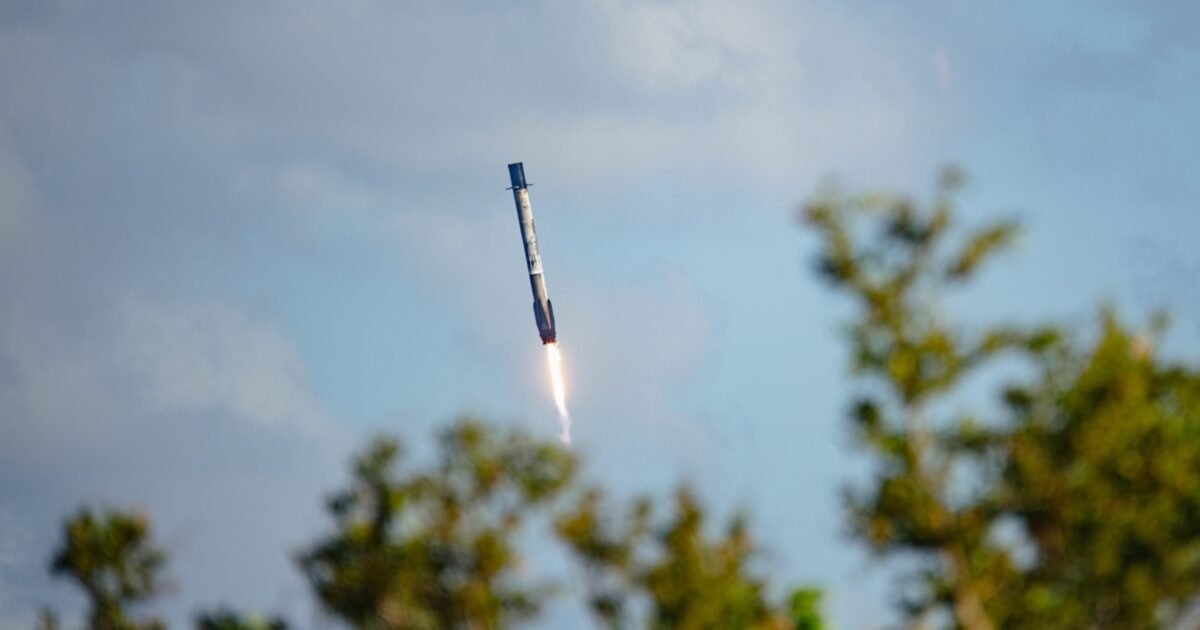
Falcon 9 lifted off from Space Launch Complex 40 at 9:12 p.m. Eastern, right at the opening of a tight 15-minute window. A little more than eight minutes later, the first stage settled onto Landing Zone 40 back on the Florida coast.
The launch looked gorgeous:
Liftoff! pic.twitter.com/8Mbybg8lcx
— SpaceX (@SpaceX) August 16, 2026
The mission had already waited three months for this moment. Globalstar originally planned to launch the replenishment satellites on May 17, then postponed the flight so its teams could spend more time preparing the spacecraft.
SpaceX laid out a two-burn mission for Falcon 9’s upper stage. The first burn carried the payload into an initial orbit, while a second burn was scheduled roughly 53 minutes after liftoff.
The deployment sequence was set to begin just past the one-hour mark.
The mission profile put fairing separation a little more than three minutes into flight and the booster’s entry burn at roughly six minutes, 40 seconds. SpaceX targeted the landing at eight minutes, 49 seconds—almost exactly where the live sequence put it.
Down below, the booster had a much shorter trip. It reversed course, flew back toward Cape Canaveral and touched down on land instead of heading for one of SpaceX’s drone ships.
That return gave spectators a second show—and gave SpaceX another flight-proven first stage to inspect, refurbish and put back into the rotation.
Falcon 9’s first stage has landed on Landing Zone 40 pic.twitter.com/VzQ793nPdJ
— SpaceX (@SpaceX) August 16, 2026
The payload is easy to overlook beside all that fire and motion, but this is an important network-maintenance flight.
Globalstar said earlier this month that the replacement satellites will reinforce its current low-Earth-orbit constellation. The company uses that network for satellite communications, asset tracking, emergency messaging and industrial connectivity, and it has described the new spacecraft as a way to preserve network resilience and service reliability.
The timing also puts this launch inside a much bigger corporate story. Amazon agreed in April to acquire Globalstar, and the transaction is still moving through regulatory review.
Globalstar said the U.S. antitrust waiting period expired in July, although FCC and international approvals remain outstanding. The companies still expect a 2027 closing.
If that deal clears, Globalstar’s satellites, spectrum and operating experience are expected to help Amazon Leo add direct-to-device service in future generations of its own network. In other words, SpaceX just launched hardware for a company that may soon become part of one of Starlink’s most serious long-term rivals.
Falcon 9’s customer list includes governments, researchers and commercial operators across the space industry. SpaceX will fly their payloads even when those customers compete with another part of Elon Musk’s empire.
Rocket Lab designed and manufactured 17 spacecraft buses for Globalstar’s replacement program at its Long Beach facility. Each bus weighs about 500 kilograms and is based on Rocket Lab’s Lightning platform.
MDA Space serves as the prime contractor, leading payload development and final assembly, integration and testing. The satellites are designed to work alongside Globalstar’s existing fleet, extending service continuity while the company develops a larger third-generation network.
Rocket Lab valued its initial spacecraft-bus contract at $143 million. The agreement also included options covering a satellite operations control center, launch dispensers, launch integration and as many as nine additional spacecraft, giving the program room to grow beyond the first 17.
All 17 buses are being built at Rocket Lab’s Long Beach production complex. The company says its vertically integrated operation supplies components and subsystems in house, while the contract leaves Globalstar flexibility over when to order any optional spacecraft.
Saturday night’s launch was therefore more than another entry on Falcon 9’s crowded manifest. It closed out a frustrating delay, refreshed an active communications network and added one more fascinating link between SpaceX, Amazon and the fast-changing satellite internet race.
And Falcon 9 did its part with the kind of clean launch-and-return sequence that still looks futuristic, no matter how often SpaceX pulls it off.
Join the conversation!
Please share your thoughts about this article below. We value your opinions, and would love to see you add to the discussion!