
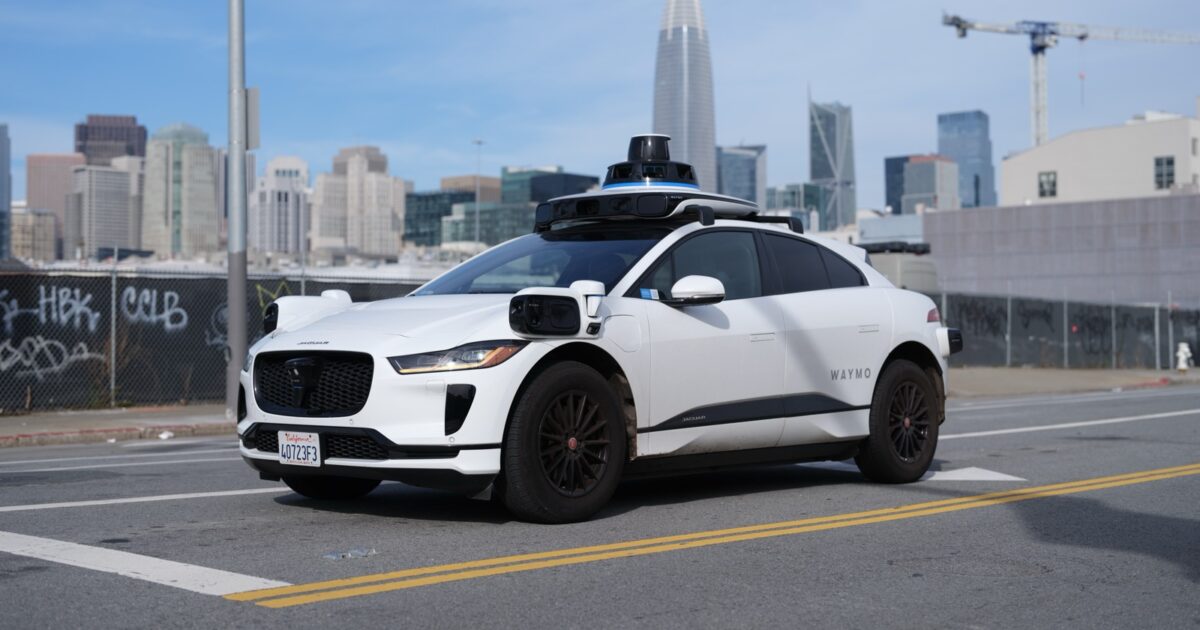
Waymo just put the central argument behind Tesla’s autonomy strategy directly under the microscope.
With Tesla’s Cybercab launch event two days away, Waymo says cameras alone are not enough for safe driverless operation at scale. It also says a pure end-to-end AI system needs an independent backstop before it can be trusted with real streets.
Waymo did not name Tesla in its technical paper. It did not have to.
Tesla is making the industry’s biggest camera-only bet, and Cybercab is the vehicle meant to prove that bet can become a business.
One prominent Tesla analyst answered immediately and bluntly:
Love it. Waymo getting defensive. Nothing makes me more bullish about Tesla. Arguments they bring forward are poor. Check👇 for details.
My read: Waymo built a driving gas plant that AI at scale makes irrelevant, and now falls into incumbent rhetoric. Innovator dilemma 101. pic.twitter.com/fSD5cR3vcR— Pierre Ferragu (@p_ferragu) August 28, 2026
That is the real divide. Waymo believes redundancy, specialized hardware and years of driverless mileage are the price of safety.
Tesla believes better vision models, enormous fleet data and lower hardware cost can make that stack look needlessly complicated.
Waymo built its case around more than 200 million fully autonomous miles. The company says cameras are excellent at reading signs, colors and visual context, but argues that lidar adds precise three-dimensional geometry while radar tracks speed and can see through rain, fog and dust.
Its engineering post goes beyond the sensor fight. Waymo warns that a pure end-to-end model, one that turns raw pixels directly into steering commands, can become a black box when engineers need to understand why it chose a path.
Waymo says its own Driver uses a separate AI-based validation layer to check every proposed trajectory against traffic laws and hard physical constraints. If the main system proposes a move that risks a collision or violates a limit, that second layer is designed to reject it.
The company also defends high-definition maps, closed-loop simulation and a purpose-built Level 4 system. In Waymo’s telling, supervised driver-assistance miles are not a substitute for the moments when the machine alone carries full responsibility.
Axios pressed Waymo vice president Srikanth Thirumalai on whether newer AI could provide a shortcut through that expensive architecture. His answer was no.
Thirumalai said Waymo had tried pure end-to-end tools and found they could not meet the company’s safety bar at its operating scale. He argued that even powerful AI cannot recover information a limited sensor package never captured in the first place.
He also framed the problem as physical AI, where a bad output cannot be fixed with a refresh button. Waymo’s position is that interpretability and independent safety checks become more important, not less, as a driverless fleet grows.
The interview also makes clear that Waymo sees its 15-year development history as an operating advantage. That experience strengthens its case, but it does not prove faster-moving AI systems cannot eventually close the gap with a different architecture.
Waymo’s public response leaned into that operating record:
How it feels to say your data and record of success leads you to believe driverless mileage, AI interpretability, and multiple sensor types are critical for safe, fully autonomous driving at scale pic.twitter.com/D4aXaUVDDg
— Ethan Teicher (@ethanteicher) August 29, 2026
TechCrunch connected the timing directly to Tesla. Its September 1 report noted that Waymo’s claims landed just before Tesla is expected to put the two-seat Cybercab into its Austin Robotaxi fleet.
The report describes a weekend fight between supporters of the two approaches. Tesla backers cast Waymo’s sensor-heavy system as an incumbent design that AI will eventually make obsolete; Waymo’s side points to its driverless mileage and commercial scale as evidence that the extra hardware is doing real work.
The stakes are larger than a technical argument. If Tesla can safely scale Cybercab with cameras and AI, it can field a purpose-built vehicle without the lidar, radar and mapping costs that Waymo treats as essential.
If it cannot, Waymo’s expensive redundancy starts to look less like overengineering and more like the admission price for Level 4 autonomy.
Tesla currently describes its Robotaxi service as operating with Model Y vehicles in Austin, Dallas and Houston, plus Miami, Orlando and Tampa. Its Robotaxi page says Cybercab will offer rides in the future, making the upcoming event the bridge between a modified consumer vehicle and Tesla’s purpose-built autonomous platform.
Tesla’s advantage is not a mature driverless-mile total comparable to Waymo’s. It is the possibility of a simpler system that can improve through data and deploy across vehicles built at automotive scale.
Cybercab strips that idea down to its purest form: no steering wheel, no pedals and no expensive sensor crown. The vehicle cannot fall back on a human driver, so Tesla’s software has to carry the entire promise.
Tesla Events lists the Cybercab gathering at the company’s Austin campus through September 3. Tesla invited top Robotaxi riders and sweepstakes winners to attend while preparing a public livestream.
The sweepstakes ran from August 17 through August 23 and included a no-purchase mail-in entry route. The event location is Tesla’s 1 Tesla Road campus, placing the launch beside the factory producing the dedicated vehicle.
The event does not need to settle the autonomy debate in one night. It does need to show that Cybercab is more than a lower-cost shell around familiar promises.
Waymo has chosen its moment to draw a hard line: cameras alone are not enough, black-box driving is not enough, and supervised experience is not enough.
Now Tesla gets the stage.
Join the conversation!
Please share your thoughts about this article below. We value your opinions, and would love to see you add to the discussion!