

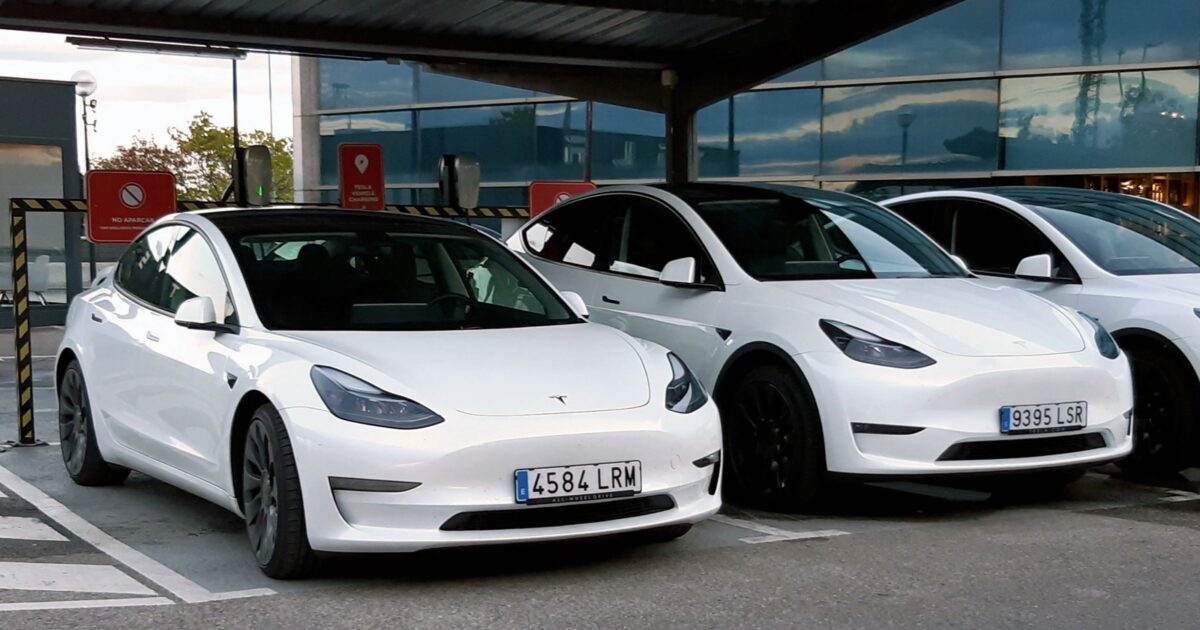
Tesla remains the center of gravity in America’s electric-vehicle market.
New first-half sales estimates show the company accounted for 52.3% of every EV sold in the United States through June. Tesla’s second-quarter share was 50.5%, which means it still sold more EVs than every other automaker combined.
The Model Y and Model 3 held the top two spots. Together, those two vehicles made up nearly half of the entire U.S. EV market in the first six months of 2026.
These are the top 10 best-selling EVs in the US so far in 2026 https://t.co/pF64ZKl1j3 by @EVPeteJohnson
— Electrek.co (@ElectrekCo) July 10, 2026
Fresh figures from Cox Automotive put total U.S. EV sales at 247,226 during the second quarter. That was a 14.7% improvement from a revised first quarter, although volume remained 20.5% below the same period last year and EVs represented 5.8% of all new-vehicle sales.
For the first half, Americans bought an estimated 462,892 EVs, a 23.8% year-over-year decline. The market is recovering from its early-2026 low, but the expiration of federal purchase incentives is still visible in the comparison with last year.
Tesla delivered an estimated 124,800 vehicles in the quarter and 242,100 through June. Its first-half volume fell 10.9% from 2025, yet that decline was far smaller than the contraction across the market as a whole and allowed Tesla to retain a majority share.
The Model Y led the way with 163,454 first-half sales, up 8.8% year over year, while Model 3 added 66,616 sales despite a 34.3% decline. Combined, they reached 230,070 vehicles, or roughly 49.7% of every EV sold nationwide during the period.
One out of every three EVs sold in America was a Model Y. Its 35.3% first-half share was larger than the total share of most competing automakers by an enormous margin.
Model 3’s 14.4% share gave Tesla another mass-market anchor. Cybertruck contributed 7,263 first-half sales, while Model S and Model X added 1,672 and 3,095, respectively.
A new model-by-model ranking from Electrek placed Model Y first and Model 3 second among all EVs sold in the United States through June. That order is familiar, but the scale of Tesla’s advantage remains remarkable in a market with dozens of battery-electric nameplates.
Model Y alone represented more than a third of the category. Add Model 3, and two vehicles from one automaker generated nearly half of all sales, giving Tesla that grip with a compact lineup.
The ranking also shows two very different results inside Tesla’s lineup. Model Y grew from its first-half 2025 result, while Model 3 gave back volume.
The crossover’s strength kept Tesla’s overall lead from shrinking as quickly as the broader EV market. Tesla’s smaller products remained well behind those two leaders.
Even so, the 242,100-vehicle company total exceeded the combined output of every rival brand, a position no competitor has managed to break.
After months of bad news, Q2 EV sales show that the post-tax-credit slump may finally be over. https://t.co/8r3hhx3MLW
— InsideEVs (@InsideEVs) July 10, 2026
The quarter-over-quarter recovery is encouraging for the whole EV sector. Buyers are still moving toward electric vehicles, and fresh models plus state-level incentives are helping the market find a new baseline after the federal tax-credit change.
There are weak spots in Tesla’s results. Model 3’s decline deserves attention, and total company volume remains below last year.
A majority share can narrow quickly when the field is adding capable vehicles every season.
But the first-half scorecard leaves no doubt about who remains in front. Tesla has the two best-selling EVs in America, Model Y is growing again, and the company still moves more electric vehicles than the rest of the industry put together.
For a brand that has spent years hearing that the competition was about to catch up, 52.3% is a very loud answer.
Join the conversation!
Please share your thoughts about this article below. We value your opinions, and would love to see you add to the discussion!