
Tesla’s German factory posted a result that looks backwards at first glance.
Giga Berlin earned €77.1 million in 2025, nearly 36 percent more than it made the year before.
It also built fewer cars, used less of its available capacity and brought in less revenue.
The factory’s newly filed annual report shows how those numbers fit together.
The first breakdown captures the shift in profit, revenue, output and manufacturing cost:
🚨 Giga Berlin improved profitability in 2025 despite lower vehicle output.
• Net profit rose to €77.1 million from €56.8 million the previous year.
• Revenue declined to €7.1 billion as production fell to 202,000vehicles.
• Manufacturing costs dropped by more than €500… pic.twitter.com/XtXvbS7iYN— Joe Hansen (@XCorpHub) July 20, 2026
The figures come from Tesla Manufacturing Brandenburg SE, the legal entity behind Giga Berlin. Its filing says net profit climbed from €56.8 million in 2024 to €77.1 million in 2025.
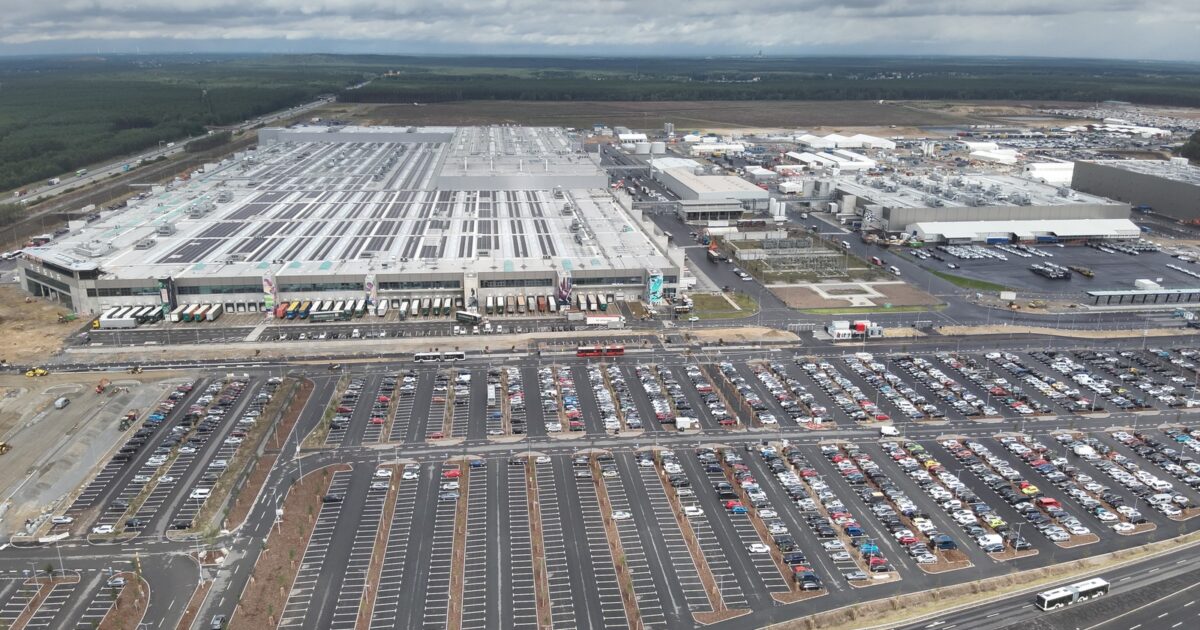
Production moved the other way. The plant built about 202,000 vehicles, down from roughly 211,000, while capacity utilization slipped from 56 percent to 54 percent.
Revenue fell from €7.675 billion to €7.123 billion. Manufacturing costs dropped even faster, falling by €509.7 million to €6.857 billion as the plant became more efficient while producing slightly fewer vehicles.
Interest expense also fell from €70.3 million to €45.6 million after a partial repayment of a loan from an affiliated company. Lower production and financing costs drove the stronger bottom line.
The German entity operates as a contract manufacturer. It builds Model Ys exclusively for Tesla Motors Netherlands, and the filing says its revenue is directly tied to production costs under that agreement.
The €77.1 million figure measures the German factory entity’s performance rather than Tesla’s retail results across Europe. It shows that Giga Berlin made more money after cutting manufacturing costs through a major vehicle changeover.
Drive Tesla reports that the lower output came as the factory integrated the redesigned Model Y, added the Model Y Performance and prepared an export version for Canada. Those changes brought temporary interruptions followed by a fresh production ramp.
The same report highlights the scale of the efficiency gain. Manufacturing costs fell by more than €500 million while the factory continued supplying over 30 markets.
Giga Berlin finished the year with 11,083 workers, including temporary employees. The factory handled a vehicle changeover, kept output close to the prior year and still produced a stronger net result.
Drive Tesla connects that leaner 2025 baseline to the expansion already underway. Tesla plans to increase weekly vehicle output by another 20 percent beginning in October, while the broader vehicle and battery buildout is expected to create roughly 3,500 jobs.
Tesla is already preparing to push the factory much harder in 2026:
NEWS: Tesla is ramping its German plant to 7,500 cars a week as European demand races up.
Giga Berlin in Grünheide is targeting up to 375,000 vehicles a year by October, up from about 202,000 built in 2025.
Tesla plans to add roughly 3,500 jobs across the expansion, on top of a… pic.twitter.com/UdQ1M7Su1h
— Muskonomy (@muskonomy) July 20, 2026
electrive reports that Tesla plans to raise Giga Berlin output gradually to 7,500 vehicles per week. Sustained across a full year, that pace would equal roughly 375,000 vehicles.
The expansion includes two hiring steps of roughly 1,000 vehicle-production workers each. A larger battery-cell program is expected to add about 1,500 more jobs.
Tesla now aims for 18 GWh of annual cell capacity at the site, with full production expected in 2027. That would give Giga Berlin a much larger role in both vehicles and batteries.
The battery expansion includes an additional $250 million investment and about 1,500 of the planned jobs. Geopolitical tension, supply-chain disruption and the economics of cell production remain risks Tesla will have to manage during the buildout.
The 2025 report gives Tesla a clear starting point. Giga Berlin was profitable and getting more efficient while running at just 54 percent of capacity.
Now the job is to fill much more of the factory without giving back the cost discipline that produced this result.
If Giga Berlin can hold the 7,500-per-week pace, €77.1 million may look like the foundation for a much bigger operation.
Join the conversation!
Please share your thoughts about this article below. We value your opinions, and would love to see you add to the discussion!