
SpaceX just turned August 4 into more than an earnings date.
The company will release its second-quarter financial and operational results after market close that Tuesday, then host an audio webcast at 3:30 p.m. Central.
But the IPO documents make what happens two trading days later nearly as important.
That is when SpaceX’s first early share-unlock window can open.
SpaceX confirmed the schedule directly:
We will post our Q2 2026 financial and operational results on August 4, 2026. We will host a live audio-only webcast at 3:30 p.m. CT the same day → https://t.co/6VXtOOai3L pic.twitter.com/ER84j615qc
— SpaceX (@SpaceX) July 20, 2026
SpaceX says it will post results for the three months ended June 30 after the market closes on August 4. Management’s live audio-only webcast begins at 3:30 p.m. Central, or 4:30 p.m. Eastern, that same afternoon.
The webcast and its replay will be available through the company’s investor site. Participants can register ahead of time, and SpaceX also plans to stream the event through its official X account.
SpaceX did not list the specific measures management will emphasize. The numbers, the operating discussion and any forward-looking guidance will arrive with the release itself.
This will be SpaceX’s first scheduled quarterly report since its June IPO. It turns an estimated reporting window into a fixed date and gives public shareholders their first full post-listing look at the company’s performance.
The SEC filing explains why the calendar matters beyond the earnings figures. For shares covered by SpaceX’s 180-day lockup, up to 20 percent may become transferable on or after the second full Nasdaq trading day following the public release of the June-quarter results.
The provision removes a transfer restriction; it does not force employees, early investors or other holders to sell. A newly eligible share is not an automatic sale.
An additional 10 percent can be released at the same point only if SPCX closes at least 30 percent above the $135 offering price for at least five of the ten consecutive trading days ending on the results date. That threshold works out to $175.50 per share.
Up to an additional seven percent may become transferable on or after each of the 70-, 90-, 105-, 120- and 135-day marks. Up to another 28 percent may become transferable on or after the second full Nasdaq trading day following the public release of third-quarter results.
All remaining transfer restrictions on shares in that 180-day group expire at the 180-day mark. Elon Musk’s shares are subject to a separate 366-day lockup.
August 4 starts two clocks. One is the quarterly scorecard; the other is the first meaningful expansion of SpaceX’s tradable share supply.
Axios reported that SpaceX closed at $131.11 on July 16, below its $135 IPO price after declining for the eighth time in nine sessions. That close was 42 percent below the stock’s June 16 intraday high of $225.64.
The outlet calculated that up to 1.37 billion shares could become eligible around the first earnings-triggered release. That total includes 911.5 million Class A shares plus another 455.8 million shares that depend on the stock-price condition in the filing.
For scale, the completed IPO involved roughly 639 million shares and raised about $86 billion after the over-allotment. A full first-window release would therefore be large compared with the stock initially sold to the public, although newly eligible shares are not the same thing as guaranteed selling.
The July 16 price is a dated snapshot, not a live quote for August 4. Still, it shows why the earnings report and the unlock mechanics will be watched together: SpaceX must make its quarterly case while the market prepares for the possibility of a much wider float.
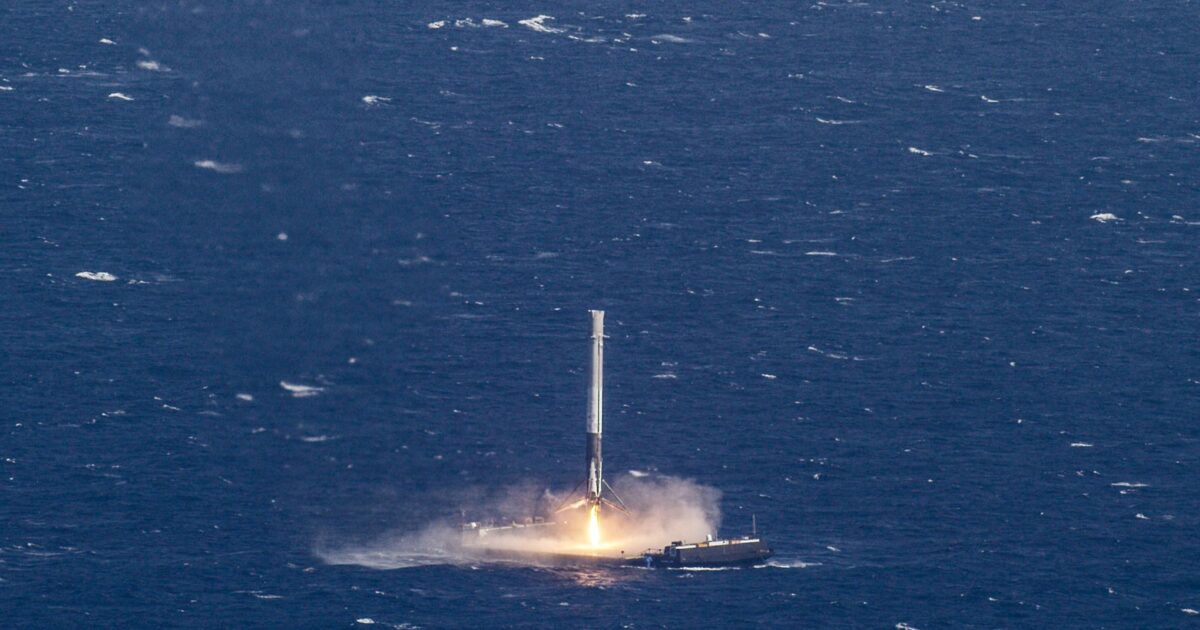
Meanwhile, the operating machine is still moving. Hours before the results-date announcement, SpaceX streamed a Falcon 9 mission carrying 24 Starlink satellites from California:
Watch Falcon 9 launch 24 @Starlink satellites to orbit from California https://t.co/9FTnIt7SHh
— SpaceX (@SpaceX) July 20, 2026
That mission belongs to the third quarter, not the period SpaceX will report on August 4. It does show the operating cadence investors are being asked to value: SpaceX was streaming another Falcon 9 and Starlink mission only hours before announcing the date of its first post-IPO quarterly report.
The results will put financial and operational figures against that pace. SpaceX has not promised a detailed agenda, so launch economics, Starlink growth, capital spending, AI infrastructure and Starship progress remain questions to watch rather than guaranteed discussion points.
SpaceX has spent years proving that reusable rockets can change the economics of getting to orbit. Now it has to make its case one quarter at a time.
August 4 will be the first real post-IPO exam. The results will test the business story, and the IPO fine print will test how the market handles a much larger pool of shares that may soon become eligible to trade.
Join the conversation!
Please share your thoughts about this article below. We value your opinions, and would love to see you add to the discussion!