

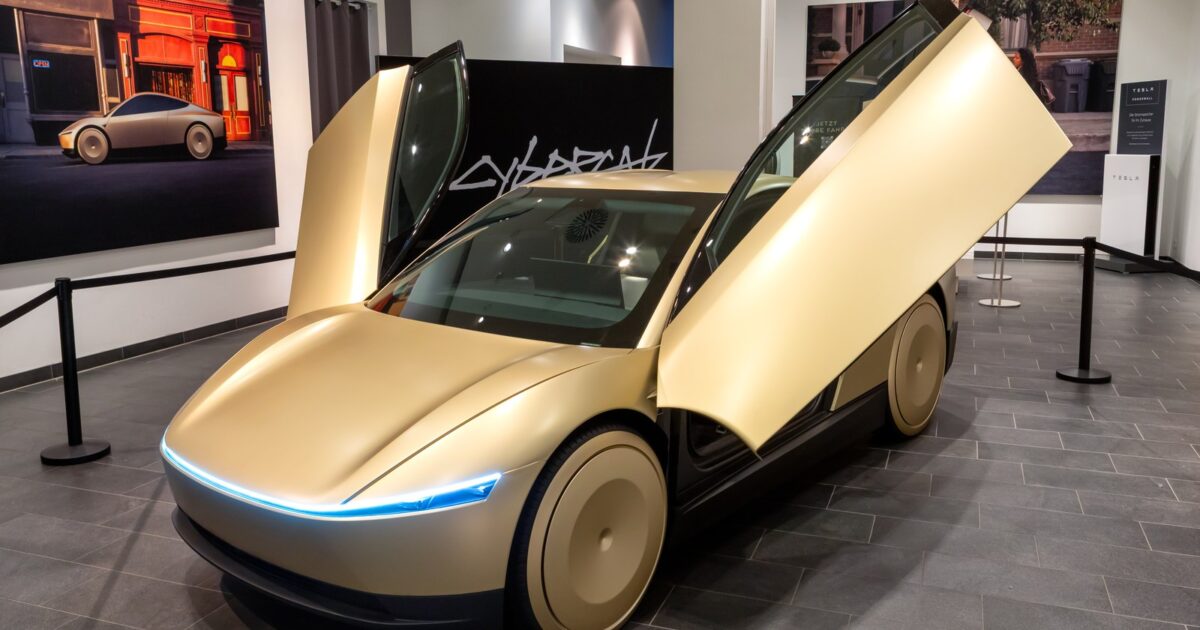
Tesla brought its Cybercab to the people who arguably need a self-driving car the most.
Tesla shared the July 6 look after bringing the vehicle to the National Federation of the Blind’s Annual Convention in Austin, giving blind and visually impaired attendees a hands-on feel for how the robotaxi is being built for them.
This is the group of riders that traditional cars simply leave behind. A car that drives itself changes what independence looks like for someone who has never been able to get behind the wheel.
Tesla laid out the specifics in its own post.
Cybercab at the National Federation of the Blind's Annual Convention in Austin for a hands-on experience of its accessibility features for blind or visually impaired customers⁰⁰For example:⁰- Braille lettering on physical controls
– Space for service animals & assistive… pic.twitter.com/8wrJcDHkw7— Tesla Robotaxi (@robotaxi) July 6, 2026
The features Tesla highlighted are practical, not cosmetic. Braille lettering on the physical controls lets a blind rider find and operate the vehicle by touch.
Dedicated space inside the cabin makes room for service animals and assistive equipment.
These are the details that decide whether a self-driving car is actually usable for someone who is blind, or just a nice idea on paper.
Teslarati reported that Tesla brought the Cybercab to the JW Marriott Austin for the National Federation of the Blind’s Annual Convention on July 3, giving attendees a physical look at the vehicle instead of a distant product rendering.
The report notes that attendees included people using white canes and people accompanied by service dogs, which is exactly why the cabin details matter. A steering-wheel-free ride only becomes useful if the passenger can find controls, enter comfortably, and bring the equipment or animal they rely on.
Teslarati also framed the larger mobility stake: blind riders often have to work around paratransit schedules, limited transit routes, ride availability, or someone else’s willingness to drive. A Cybercab that can be hailed on demand would turn autonomy from a technical milestone into a practical independence tool.
Putting the vehicle directly in front of the National Federation of the Blind’s members also gives Tesla feedback from the exact people who will judge whether the design works in real life.
Benzinga added a closer read of the official post, reporting that the Cybercab was shown with Braille-printed material, interior controls, and a passenger entering the vehicle with a white cane.
The report says the tactile markings appear on key cabin controls, including the hazard button that can function as an emergency stop, along with the interior door releases. Those details carry real weight because a blind rider needs clear physical fallbacks if the vehicle is operating without a human driver inside.
Benzinga’s details make the accessibility story more specific. The cabin removes the steering wheel and pedals, while still giving riders physical touchpoints that can be identified without sight.
An emergency-stop control and interior door releases are exactly the kind of basic, high-stakes controls blind passengers need to locate quickly if a ride does not go as expected. That is why the Austin demo matters: Tesla was showing the Cybercab to people who can immediately tell whether those design choices feel usable outside a product presentation.
Elon Musk tied the whole effort back to what the Cybercab is supposed to be.
Making sure Cybercab meets the needs of the blind https://t.co/gLjc84wdQz
— Elon Musk (@elonmusk) July 6, 2026
Musk’s point is short and clear. A robotaxi that claims to expand mobility has to work for the people who cannot drive at all, and that means designing for the blind from the start rather than bolting it on later.
That is the real test of a driverless car. Anyone can build a vehicle that impresses a crowd of enthusiasts.
Building one that gives a blind rider a way to go where they want, when they want, is a harder and more meaningful bar to clear.
Tesla walked into a room full of the toughest possible reviewers on this exact question. That is where the Cybercab either proves it belongs or it does not.
Join the conversation!
Please share your thoughts about this article below. We value your opinions, and would love to see you add to the discussion!