
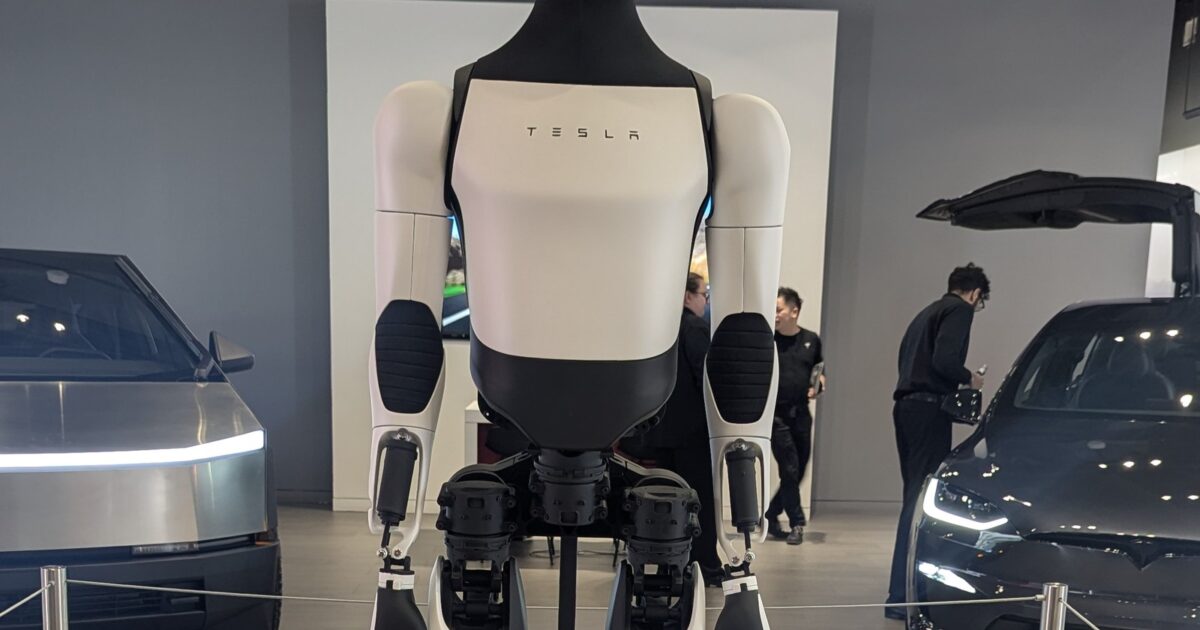
Tesla’s humanoid robot program just got physical.
First steel is up at the new Optimus factory construction site at Giga Texas, marking the moment the project stops being a render and starts being a building.
Drone observer Joe Tegtmeyer posted the milestone on May 27, with footage showing the first steel structure rising at the dedicated site.
This is the kind of update Tesla fans have been waiting for. Optimus has lived in lab demos and stage walks for a while now.
Steel in the ground changes the conversation.
Big news at the new Optimus 10m/y factory construction site today! The 1st steel structure has been erected & as expected the second phase of land reclamation is underway.
This will allow this new factory to grow to nearly the same length as the main Giga Texas factory,… pic.twitter.com/FidRLV6XpU
— Joe Tegtmeyer 🚀 🤠🛸😎 (@JoeTegtmeyer) May 27, 2026
The work is part of Tesla’s broader North Campus expansion at Giga Texas, a buildout expected to add more than 5.2 million square feet of industrial space around the existing factory.
That is a serious footprint for a product Elon Musk keeps describing as one of Tesla’s biggest future bets.
The fresh context from Teslarati adds the key production details:
Tesla’s Optimus story now has steel in the ground. Teslarati details drone footage from Giga Texas observer Joe Tegtmeyer showing the first steel structure erected at the new Optimus factory construction site.
The work is part of Tesla’s broader North Campus expansion, a massive buildout that is expected to add more than 5.2 million square feet of industrial space around Giga Texas.
The factory is central to Tesla’s long-term humanoid robot ambitions. Coverage describes the site as intended for very large Optimus production scale, with Musk repeatedly framing Optimus as one of Tesla’s biggest future products.
The near-term plan still starts smaller. Early robots are expected to work inside Tesla facilities first, where the company can collect real factory data and improve the process before any broader customer rollout.
The construction milestone matters because it turns the robot roadmap into visible industrial capacity.
The timing also helps explain why the Optimus story is shifting from software demos into manufacturing questions. A humanoid robot can only become a Tesla-scale product if the company can build it repeatedly, cheaply, and in huge numbers.
First steel does not prove that goal is achieved, but it shows the physical production base starting to take shape.
The long-term target is huge. Tesla has talked about an Optimus factory built to scale toward something near 10 million units per year.
Tegtmeyer’s footage points at exactly that ambition, noting the site could grow to nearly the same length as the main Giga Texas factory.
The near-term plan is more grounded. The first robots are expected to work inside Tesla’s own facilities, handling factory tasks while the company gathers real production data.
That is the smart way to do it. Prove the robot on your own floor before you ship it anywhere else.
A factory takes a roadmap and turns it into capacity you can see from a drone. That is what first steel really means here.
Optimus is no longer just a demo. It now has a building going up to match the promise.
Join the conversation!
Please share your thoughts about this article below. We value your opinions, and would love to see you add to the discussion!