
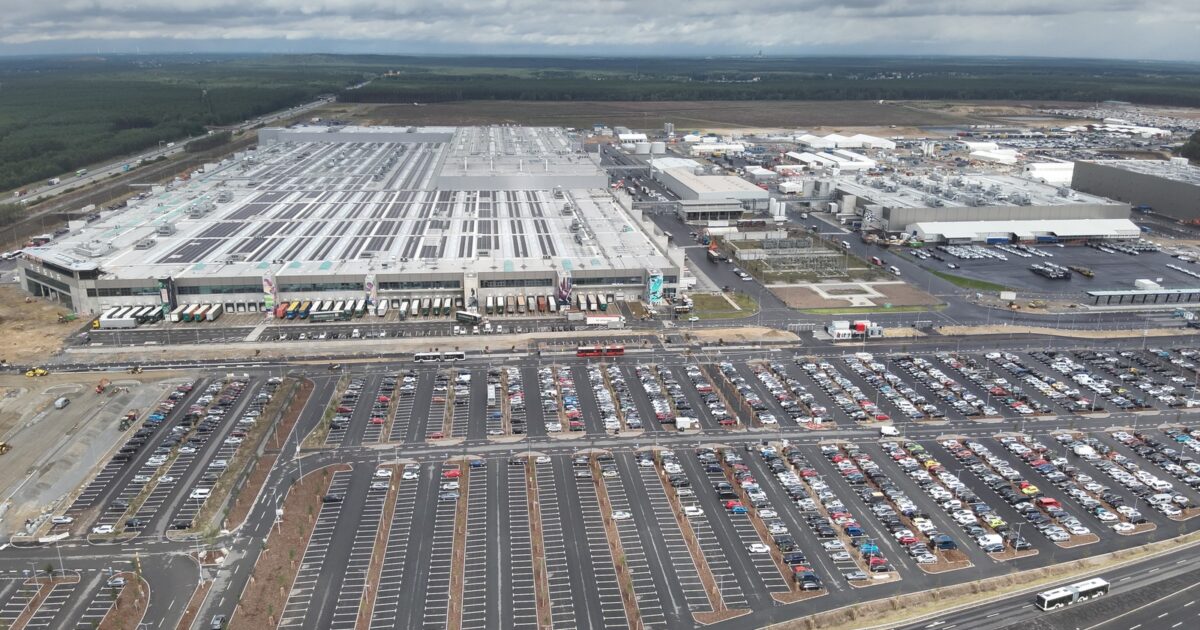
The Texas Comptroller has recommended approving all eight tax incentive applications tied to Terafab AI, LLC, the SpaceX-linked entity behind a proposed advanced semiconductor factory in Grimes County, Texas.
That is a meaningful step forward for one of the most ambitious chip projects ever filed in the state.
It is also not final approval. The agreements still have to clear the local school boards and the Governor before anything is locked in.
Here is what actually happened and why Tesla fans should care.
TERAFAB: The Acting Texas Comptroller of Public Accounts, Kelly Hancock, issued formal recommendations approving all 8 of the Anderson-Shiro CISD and Iola ISD JETI tax incentive applications for Terafab AI, LLC.
Deputy Comptroller Lisa Craven signed the letters after the office… https://t.co/u0I60IT8zI pic.twitter.com/lIIGwLzgss
— S.E. Robinson, Jr. (@SERobinsonJr) June 18, 2026
KBTX reported on June 18 that the Comptroller issued formal recommendations to approve all eight Terafab JETI applications connected to Iola ISD and Anderson-Shiro CISD.
The recommendation letters were signed by Deputy Comptroller Lisa Craven and dated June 15.
According to the report, the Comptroller review found the applications passed the program tests. That included eligibility as a semiconductor manufacturing project, a positive 20-year fiscal analysis, and a compelling-factor finding that the project could land in Arizona instead without the Texas incentive package.
KBTX also laid out why the recommendation matters procedurally: this is the state analysis that has to be in place before the local agreement votes can finish the JETI path, and it is the clearest public checkpoint so far for the project.
The caveat is the part to keep in front of you. Each application still needs sign-off from the relevant school board and the Governor.
KBTX said Anderson-Shiro has a July 13 meeting scheduled. Iola has hearings on July 6 and July 7, with a possible vote around July 13 or July 14.
So the calendar matters. The recommendations clear the state-analysis hurdle, but the local votes are where these deals become real.
The dollar figures are enormous and phased, not guaranteed. KBTX reported the Anderson-Shiro filings total roughly $73.5 billion across four phases, while the Iola filings total about $45.7 billion.
Combined, that is a maximum near $119 billion if every phase actually happens. None of it is promised up front, and the build runs in stages.
The original filings give the project its real scale. An earlier KBTX report described eight JETI applications filed through the newly formed TeraFab AI, LLC, tied to SpaceX, for a facility near Gibbons Creek Reservoir in Grimes County.
Four applications went to Anderson-Shiro CISD and four to Iola ISD.
That same report said the full concept spans more than 22,000 acres across the two districts and lists 4,234 direct jobs. Construction would run from 2026 through 2036, with incentive periods that could stretch from 2029 through 2046.
The incentive structure is the heart of the argument. Under the JETI program as KBTX described it, the school maintenance-and-operations taxable value would be limited for qualifying phases, while interest-and-sinking taxes would still apply at full value.
SpaceX argued that limitation would cut the effective school tax burden by roughly 48 percent. The company also argued Arizona could be more attractive without it.
That is the leverage. Texas wants the factory, and the incentive package is the tool to keep it from going west.
Now the Tesla angle, because this is where it gets interesting for our readers.
Drive Tesla Canada previously reported, back in May, that the proposed Terafab is a SpaceX and Tesla-linked semiconductor effort aimed at chips for data centers, humanoid robots, autonomous driving, and space hardware.
The site framed Terafab as a massive manufacturing swing, with an initial project figure in the tens of billions and a larger phased ceiling if the later buildout happens.
That May reporting is background for the Tesla angle, not the current approval step. The important thread is that the same project now has fresh Comptroller recommendations moving through the Texas incentive process.
The silicon-team trail is already visible, too. A same-day Terafab update pointed to Andrew Shinn, SpaceX’s senior director of silicon engineering, hiring for a Terafab silicon team in Austin.
TERAFAB: Andrew Shinn, SpaceX Sr. Director of Silicon Engineering, is hiring to build out a Terafab silicon team in the new downtown City of Austin Power Plant building; aka the Seaholm Power Plant where Elon announced Terafab.
He clarified ITAR requirements and that Starlink… https://t.co/u0I60IT8zI pic.twitter.com/gP9TNCRPYC
— S.E. Robinson, Jr. (@SERobinsonJr) June 18, 2026
A domestic chip pipeline feeds directly into the things that make Tesla Tesla right now. Autonomy needs compute, and Optimus needs compute.
Data centers training those systems need compute too.
Owning more of that supply chain means fewer choke points and less dependence on outside foundries.
That is the vertical-integration playbook Elon Musk has run for years on batteries, motors, and software, now pointed at the silicon underneath it all.
A factory of this scale, if it gets built out, would be the kind of long-term foundation that powers self-driving and robotics for a decade.
The honest read today is simple. The Comptroller recommendations are a real win and a real signal, but the school boards and the Governor still hold the pen.
Watch those July dates. That is when we find out whether Terafab starts turning dirt or stays a very large proposal.
Join the conversation!
Please share your thoughts about this article below. We value your opinions, and would love to see you add to the discussion!