

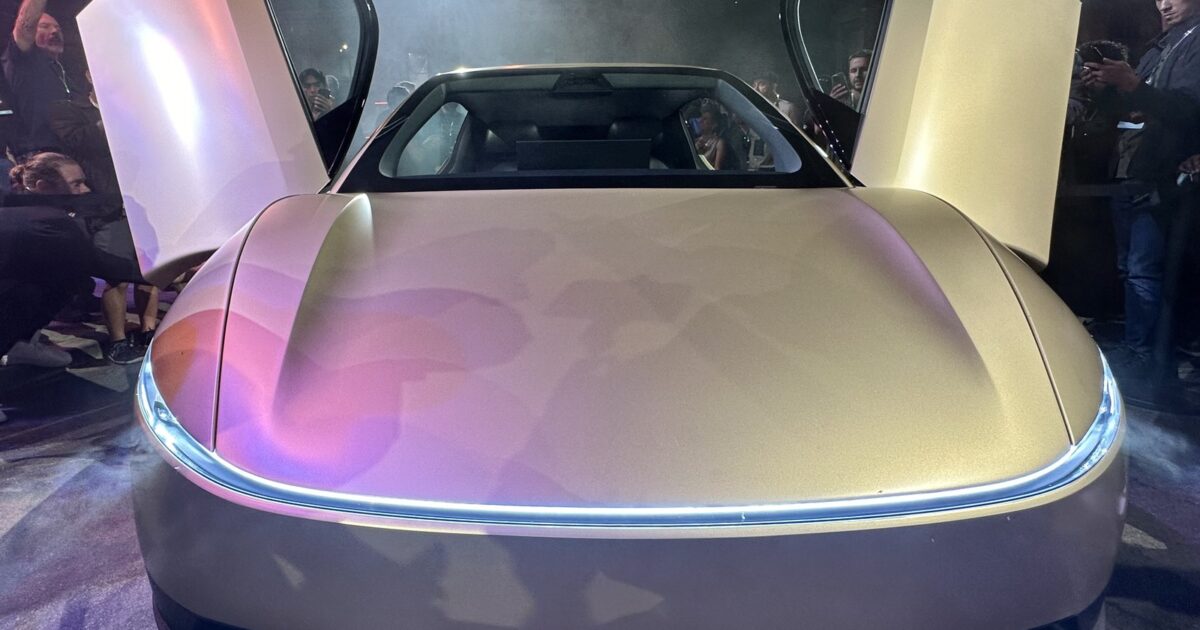
Tesla’s Cybercab accessibility pitch just received the kind of test that matters more than a carefully staged product demonstration.
Anthony Sanchez, a paraplegic rider who posts as Wheelchairpapii, documented his Cybercab experience in Austin and gave it a blunt verdict: 10/10.
Tesla’s official Robotaxi account amplified his account and identified one intentional part of the car’s design. Cybercab’s seats, the company said, are built at standard wheelchair height to make the transfer in and out easier.
Wheelchair user rides in Cybercab
Cybercab seats are built at standard wheelchair height, making ingress & egress easy https://t.co/ahc9CAhLXr
— Robotaxi (@robotaxi) September 5, 2026
The rider’s account answers a real question. A vehicle with no driver cannot rely on someone in the front seat to help a passenger close the gap between a mobility device and the cabin.
Sanchez moved from his wheelchair into the Cybercab, brought the chair inside and completed the ride. The result is specific to one rider and one trip, yet it puts the physical idea on public streets rather than leaving it with a mannequin in a design studio.
Tesla’s Cybercab FAQ describes bench-style seating positioned at wheelchair height for easier transfer and movement. The company also points to a cabin designed without a steering column, pedals or a traditional driver area, leaving the passenger space more open than a conventional two-seat car.
That layout does two jobs at once. The matched seat height reduces the vertical movement required during a transfer, while the open floor gives a rider more room to bring mobility equipment into the cabin.
The FAQ keeps the service boundary narrow: Cybercab rides are currently available only in limited areas of Austin. Tesla is demonstrating an accessibility concept inside a small live operation, not claiming that the design has already solved every use case at national scale.
Tesla followed the seat-height post with a second look at the cabin, emphasizing the room available for a wheelchair, service animal or other gear.
Built to accommodate every rider https://t.co/zunBuXSGYP
— Robotaxi (@robotaxi) September 5, 2026
Space is only part of accessibility, but it is an unusually important part in a two-seat robotaxi. Every control removed from the driver’s side becomes room that can be reassigned to the people and equipment Cybercab is supposed to carry.
Tesla’s Cybercab Rider Guide, published September 4, lays out the other side of the design. Passengers must ride in one of the installed seats and keep their seat belts fastened for the trip.
That means this early accessibility win is about transferring from a wheelchair into the car, not remaining seated in a wheelchair that is secured to the vehicle. Riders who cannot make that transfer still need a different solution, and Tesla has not presented Cybercab as a full replacement for a wheelchair-accessible van.
The distinction is important because broad promises can erase the people whose needs fall outside them. Cybercab may make independent travel easier for some wheelchair users while still being unusable for others.
Tesla North reports that the official seat-height message arrived minutes before Tesla highlighted the cabin’s room for a service dog, wheelchair or other equipment. The outlet connects those posts to Tesla’s earlier accessibility demonstrations, including Braille cabin cues and designs intended to support blind riders.
The report also preserves the limit of what Tesla has shown. The company has not published a complete wheelchair-accessible-vehicle specification or described an onboard wheelchair securement system in these posts.
That leaves the Sanchez ride as evidence of one specific success: a paraplegic rider could transfer into the Cybercab, bring his chair with him and complete the trip well enough to award it a 10/10.
The outlet also places the announcement inside Cybercab’s first public week in Austin. That timing turns an old design promise into an early operating result, while leaving the harder questions for riders with different transfer and equipment needs unanswered.
CyberCab.News adds that Sanchez documented the experience after Austin access opened, outside a controlled factory demonstration. Tesla’s response focused on the seat-height decision and let the rider’s own account carry the larger point.
The report notes that the vehicle’s missing steering wheel and pedals make this more than a cosmetic change. With no driver and no conventional front controls, Cybercab has to make entry, seating, communication and emergency actions work from the passenger’s side of the experience.
That is the standard Tesla is choosing for itself. If the car is supposed to deliver transportation without a human operator, it cannot treat accessibility as a feature someone else will handle at the curb.
There will be harder tests. Riders with larger power chairs, people who cannot transfer, passengers who need physical assistance and service-animal users will expose different strengths and gaps as access expands.
For now, Tesla has something more useful than another promise. It has a rider on camera, a design decision that clearly helped him, and a 10/10 review that came from the seat the company actually needs to get right.
Join the conversation!
Please share your thoughts about this article below. We value your opinions, and would love to see you add to the discussion!