

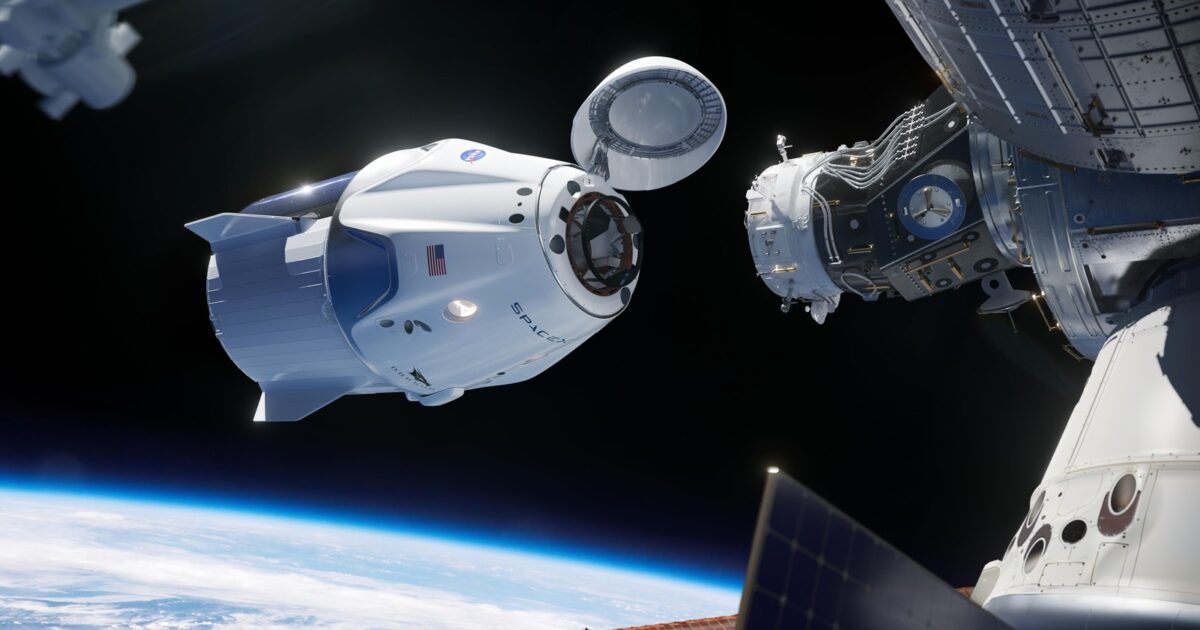
NASA is buying three more SpaceX crew flights to the International Space Station in a contract expansion worth $946 million.
The new order covers Crew-15, Crew-16 and Crew-17. It raises SpaceX’s total under NASA’s Commercial Crew Transportation Capability contract to 17 missions and pushes the agreement’s value to $5.92 billion.
The price covers far more than liftoff. NASA is paying for work on the ground, operations in orbit, cargo, return and recovery, plus Dragon’s role as an emergency lifeboat while it is docked to the station.
NASA says the three added flights carry mission-readiness dates in 2027 and 2028, while the contract’s period of performance runs through 2030. The agency announced the award as a firm fixed-price modification after issuing notice in May that it intended to buy more missions.
The number is large, but the operational commitment is bigger than the headline figure. NASA is reserving three complete round trips for astronauts and critical cargo, including the months of spacecraft availability needed while each Dragon remains attached to the station.
An inflation-adjusted comparison of NASA’s four Crew Dragon purchase rounds puts the latest award at roughly $315.3 million per flight—between the earlier extensions rather than outside their established range.
All NASA Crew Dragon buys in Cost per Flight Inflation adjusted to 2026:
Original Contract: $311.3 M
1st extension: $305.4 M
2nd Extension: $325.7 M
3rd Extension $315.3 M https://t.co/YdxwGqdunK— Ken Kirtland IV (@KenKirtland17) September 18, 2026
The award also makes clear how deeply Crew Dragon is now built into NASA’s station plan.
NASA’s Commercial Crew Program was designed to restore American astronaut launches from U.S. soil through private transportation systems, while NASA continued to certify the vehicles and oversee mission safety. SpaceX received certification in November 2020 and has since turned Falcon 9 and Dragon into the program’s routinely flying system.
NASA says the currently flying Crew-12 mission is SpaceX’s twelfth operational crew rotation for the agency. Each mission can carry as many as four astronauts along with cargo, and the spacecraft stays attached to the ISS so it can bring the crew home in normal operations or an emergency.
The new contract keeps NASA’s stated two-provider strategy intact on paper. The agency says this sole-source modification does not prevent it from purchasing additional transportation services later, and it still describes independent access through two commercial partners as a program goal.
But the schedule tells its own story. SpaceX now has three more named rotations on the books, while NASA has been working through additional testing and data review for the next immediate crew handoff.
NASA Space Operations says Crew-12 remains aboard the station and that Crew-13 has moved to no earlier than early October. NASA has kept the current crew working through a normal station schedule while engineers finish preflight tests and review data for the replacement mission.
That near-term delay is separate from the Crew-15-to-17 award. It still underlines what these contracts secure: a spacecraft, rocket, ground team, recovery operation and docked escape capability that all have to be ready together before NASA can rotate another crew.
For SpaceX, the $946 million modification is another long runway of government human-spaceflight work. For NASA, it is a decision to keep buying the transportation system that is already carrying its crews.
Crew-15 through Crew-17 now extend that reliance toward the end of the station’s planned operating life—and put three more Dragon flights firmly on the manifest.
Join the conversation!
Please share your thoughts about this article below. We value your opinions, and would love to see you add to the discussion!