
If you’ve ever looked up at Mars and wondered whether something used to live there, you’re not alone — and you just got a very interesting ally.
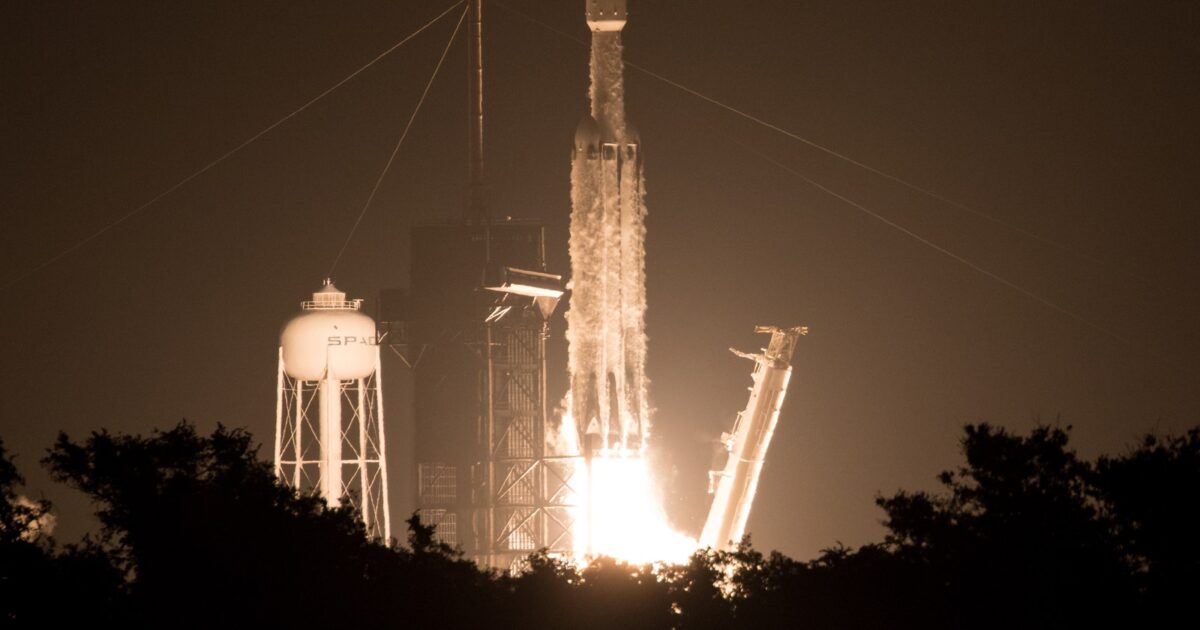
NASA made it official today: the agency has approved implementation of the Rosalind Franklin Support and Augmentation project, which is the green light to start actually building out the U.S. side of Europe’s life-hunting Mars rover mission. And when that rover finally heads for the Red Planet, it’s going to ride there on a SpaceX Falcon Heavy, launching from Kennedy Space Center’s historic Launch Complex 39A no earlier than late 2028.
In other words, the next mission that could credibly find signs of past or present life on Mars is going to be lifted off this planet by an Elon Musk rocket.
SpaceX wasted no time sharing the news:
Falcon Heavy will launch the Rosalind Franklin rover to Mars in late 2028 https://t.co/Dis4Y11v5U pic.twitter.com/ekR2r8uAJr
— SpaceX (@SpaceX) April 17, 2026
Short, confident, and very much on-brand for the company that keeps getting handed the most ambitious missions NASA has.
What NASA Actually Approved Today
According to the announcement from NASA’s Mars ROSA blog, the agency has formally moved its contribution to the Rosalind Franklin mission out of the planning phase and into full implementation. That’s the step where the checks start flowing and the hardware starts getting built.
NASA has given approval for the agency’s Rosalind Franklin Support and Augmentation (ROSA) project to begin implementation, underscoring the agency’s continued partnership with ESA’s (European Space Agency) Rosalind Franklin mission… NASA has selected SpaceX’s Falcon Heavy rocket to launch the Rosalind Franklin mission from Launch Complex 39A at NASA’s Kennedy Space Center in Florida. The mission is targeting opportunities to launch no earlier than late 2028.
That is a meaningful sentence. Launch Complex 39A is the same pad that sent Apollo astronauts to the Moon, and the same pad that has become effectively SpaceX’s home turf for the heaviest American rocket launches. Now it’s on deck to send a life-hunting rover to Mars.
NASA also put the mission’s significance in very plain language: Rosalind Franklin will be the first Mars rover to dig more than a few centimeters into the Martian surface in search of biosignatures. Previous rovers like Curiosity and Perseverance have been scouting the terrain. Rosalind Franklin actually drills — up to two meters down — looking for chemistry that only life could have left behind.
NASA Mars itself echoed the decision on X:
NASA has given approval to begin implementing its project to support @ESA's Rosalind Franklin mission. Scheduled to launch in 2028, this Mars rover will be the first to search for signs of past or present life under the Red Planet’s surface. https://t.co/Q7w0Lmvtnf pic.twitter.com/SXrLGrJoLz
— NASA Mars (@NASAMars) April 16, 2026
Why Falcon Heavy, and Why This Matters for SpaceX
The Rosalind Franklin rover has had one of the more frustrating stories in modern spaceflight. It was originally a joint ESA–Russia mission, scheduled to launch in 2022 on a Russian Proton rocket. When the European Space Agency cut ties with Roscosmos in the wake of the invasion of Ukraine, the rover lost its ride, its landing platform, and its launch window all at once. It’s been sitting in a clean room for years while Europe searched for a new partner.
NASA stepping in — with Falcon Heavy as the ride — fixes the biggest piece of that puzzle. As Italian space outlet Astrospace broke it down, the new launch path gives ESA exactly the heavy-lift capability it needs to send the rover on the right Mars transfer orbit.
NASA has approved the go-ahead for the ROSA (Rosalind Franklin Support and Augmentation) project, confirming its commitment alongside the European Space Agency on the Rosalind Franklin mission. The launch is slated for no earlier than late 2028 aboard a SpaceX Falcon Heavy rocket, departing from Launch Complex 39A at the Kennedy Space Center in Florida.
For SpaceX, this is another one of those quiet wins that tells you everything about where the company sits in the global launch market. Falcon Heavy is already flying NASA’s Europa Clipper, the Gateway lunar station modules, and national security payloads that used to go exclusively on United Launch Alliance rockets. Now it’s picking up one of the most scientifically important missions ESA has ever flown — a mission to dig into Mars and see if anything ever lived there.
Put differently: when the world needs to move something heavy and precious across the solar system, the phone number they call increasingly has Elon Musk on the other end.
A Good Reminder of Where This Is All Going
Musk has been talking about Mars for more than two decades at this point. Starship is the vehicle he’s building to take humans there. But before any of that, there’s going to be a quieter precursor — a European rover with a drill, riding on an American rocket, looking for the first credible fingerprints of life beyond Earth.
If Rosalind Franklin finds even a whisper of a biosignature in 2029 or 2030, the political and cultural case for getting humans to Mars goes from “ambitious” to “obvious” overnight. And the company that put that rover on the launch pad will be exactly the one positioned to finish the job.
Late 2028 can’t come fast enough.
Join the conversation!
Please share your thoughts about this article below. We value your opinions, and would love to see you add to the discussion!