
Elon Musk has spent years taking incoming fire over Tesla’s decision to skip LiDAR and build Full Self-Driving around cameras instead. The critics have been loud. The conviction hasn’t wavered.
Overnight, Musk dropped a single sentence that reframes the entire debate.
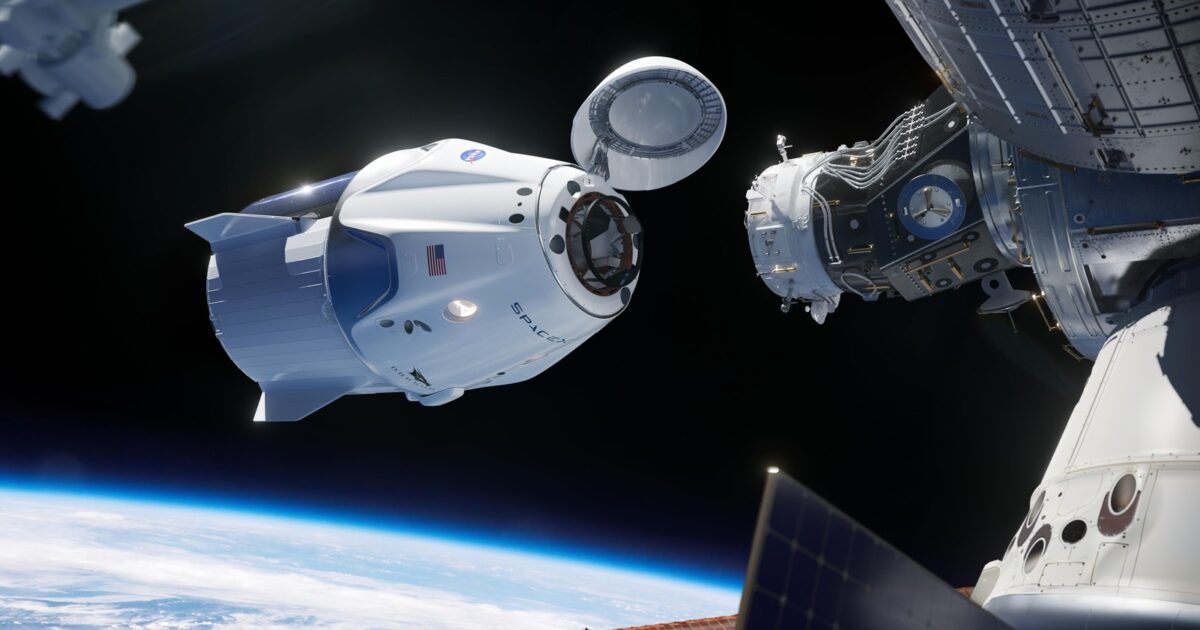
Because it turns out the guy who chose not to put LiDAR on Tesla’s FSD cars is the same guy who personally oversaw the LiDAR system SpaceX uses to dock Dragon with the International Space Station.
For years, the anti-FSD crowd has treated Tesla’s vision-only architecture like a product of ignorance — as if Musk and the Autopilot team just didn’t grasp what LiDAR could do. Musk wasn’t having it.
Here’s what he said:
People oddly assumed that I didn’t understand LiDAR, even though I oversaw the custom LiDAR development that Dragon uses to dock with the Space Station https://t.co/K9QXzyWTtk
— Elon Musk (@elonmusk) April 17, 2026
That’s not a guess. That’s the founder of SpaceX reminding everyone he’s been inside the LiDAR stack at the hardest possible level — precision rendezvous in orbit, where your sensor has to lock onto a space station moving 17,500 miles per hour.
If anyone on Earth has the standing to pick between cameras and LiDAR for autonomous driving, it’s the man who greenlit both approaches in different Musk companies. Dragon gets LiDAR because space docking is a clean, controlled rendezvous problem that benefits from laser-measured distance. Tesla gets cameras because driving a car means reading stop signs, brake lights, pedestrians, construction cones, and the intentions of the humans around you — a problem a fleet of cameras and a giant neural net is uniquely built to solve.
Not a Tesla App just reported that Tesla’s vision-only FSD is already rolling out free trials in Europe after Dutch regulators gave it the green light:
Free trials are a pivotal tool for Tesla. They allow anyone with a compatible vehicle to test the system’s capabilities on their local roads before committing to a monthly subscription.
The launch of FSD and accompanying free trials in the Netherlands is likely the first step in a much larger European expansion.
Translation: Tesla doesn’t need regulators to approve a LiDAR-equipped car. It just needs them to approve the vision-only approach — and Europe is starting to say yes.
Meanwhile, actual Tesla owners keep posting the real-world receipts. Here’s what FSD v14.3.1 is doing on the road right now:
FSD v14.3.1 drives me 45 minutes through LA rush hour with zero interventions. pic.twitter.com/qFGH1TBT8h
— Zack (@BLKMDL3) April 17, 2026
Forty-five minutes through Los Angeles rush hour. Zero interventions. That’s not a Musk tweet — that’s a Tesla driver recording his screen through one of the most notoriously awful commutes in America and showing the car handled every merge, every light, every lane change without a hand on the wheel.
Teslarati laid out the bigger strategic picture earlier today:
Tesla’s vision-only, fleet-scale approach is more ambitious — and harder to certify globally.
The company’s capital-efficient path keeps existing cars relevant while pouring future compute into robots.
That last line is the tell. Every Tesla on the road today is quietly getting smarter with every firmware push — no new hardware, no LiDAR retrofits, no billion-dollar sensor stacks to bolt on. And the same neural-net compute that makes FSD work is about to power Optimus.
Musk’s critics wanted a gotcha. He handed them a SpaceX credential instead.
Join the conversation!
Please share your thoughts about this article below. We value your opinions, and would love to see you add to the discussion!