

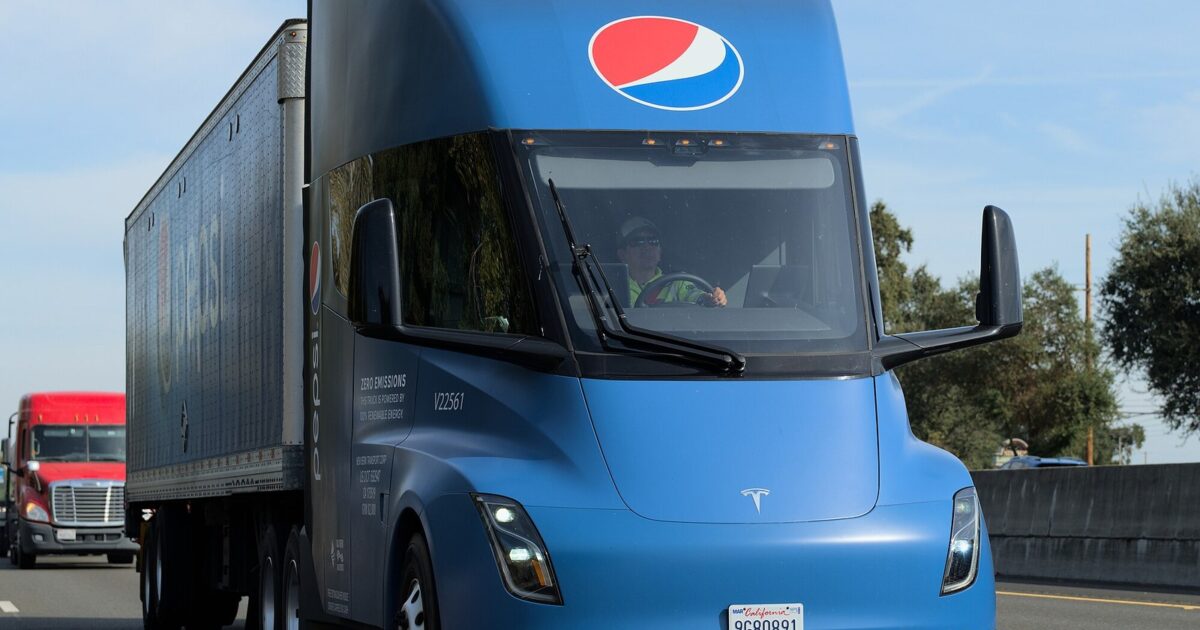
It finally happened. On April 29, 2026, the first Tesla Semi rolled off a brand-new high-volume production line in Sparks, Nevada, and it marks a full-scale manufacturing milestone. Tesla is targeting roughly 50,000 units per year from a dedicated 1.7-million-square-foot factory sitting right next to Gigafactory Nevada.
After years of delays, prototype teases, and skeptics asking whether the truck would ever ship at scale, the Semi has crossed the line from promise to production reality. Two trim levels are confirmed: a 325-mile Standard Range at approximately $260,000 and a 500-mile Long Range at approximately $290,000, both rated at 82,000 pounds gross combination weight.
For anyone who has been following the Semi saga since the 2017 reveal, this is the payoff moment.
Elon is mulling giving Bill Gates a Tesla Semi. A few years back Gates said it would never exist.
— TESLARATI (@Teslarati) April 30, 2026
Now it does. I say Tesla gives Gates a Semi and Elon tries to bury the ax. https://t.co/Ojmr84GMuP
The charging story is just as important as the truck itself. Tesla’s Semi supports 1.2-megawatt Megacharger speeds, which can restore about 60 percent of range in roughly 30 minutes. For fleet operators running tight schedules, that kind of turnaround starts to look competitive with a diesel fill-up, especially when you factor in the lower per-mile energy cost.
Teslarati framed the launch as a direct challenge to diesel incumbents, adding these production and economics details:
Tesla has launched Semi production with an eventual target of roughly 50,000 trucks per year. The truck is being built in Sparks, Nevada, beside Gigafactory Nevada, at a dedicated facility designed to move the program beyond limited pilot builds and into scaled manufacturing for Class 8 electric freight.
The milestone follows years of delays after the 2017 unveiling, when high-volume deliveries were originally expected much earlier. The new Nevada setup is meant to address the battery and production bottlenecks that kept the Semi behind Tesla’s passenger-vehicle priorities. With truck and battery work localized near the same complex, Tesla gains a cleaner path on cost control, quality control, supply logistics, and output growth.
The economics are where the Semi starts to pressure diesel. Electricity can be cheaper per mile than diesel, and the electric drivetrain has fewer moving parts, which can lower maintenance demands over the life of the truck. Pilot deployments with customers including PepsiCo have helped validate those advantages in real freight use, and the Nevada ramp is the step that turns that proof point into a larger fleet question.
That 50,000-unit annual target is ambitious, but demand signals suggest Tesla has the interest to back it up. Fleets are beyond curious. They are putting money on the table.
Electrek laid out why the dedicated line changes the equation for Tesla’s freight ambitions:
The first Semi from the high-volume line marks a real change from the earlier hand-built pilot units. The dedicated factory next to Gigafactory Nevada spans about 1.7 million square feet, and the production version now has two confirmed trims: a Standard Range model rated for 325 miles and a Long Range model rated for 500 miles at the full 82,000-pound gross combination weight.
The price positioning matters too. The Long Range version is quoted around $290,000, with the Standard Range around $260,000, putting Tesla in an aggressive position against other battery-electric Class 8 tractors. Both versions use an 800-kW tri-motor drivetrain, and the Semi supports 1.2-MW Megacharger speeds that can restore about 60 percent of range in roughly 30 minutes.
The demand signal in California is hard to ignore. In the state’s Clean Truck and Bus Voucher program, Tesla Semi applications accounted for 965 of 1,067 battery-electric Class 8 applications from January 2025 through February 2026, while Daimler, PACCAR, and Volvo combined were under 100. The surrounding ecosystem is also starting to build out, including freight pilots, Megacharger locations, and service models meant to lower the capital barrier for fleets.
PepsiCo’s pilot deployment gave the Semi its most visible real-world proving ground, and Tesla has used that data to refine the production truck. Now, with a purpose-built factory humming, the question shifts from “can Tesla build it” to “how fast can Tesla scale it.”
Speaking of doubters, Tesla fans are having a field day with one particular callback. Bill Gates famously questioned whether electric semis would ever be viable. Now the community is buzzing about Elon potentially sending Gates a Semi as an olive branch, or maybe a victory lap. Either way, it is a fun subplot.
Yes Billy G needs a Semi https://t.co/LTBlLxIu2v pic.twitter.com/c87D154XpW
— Tesla Owners Silicon Valley (@teslaownersSV) April 30, 2026
The bigger picture here is not about putting anyone down. It is about what this truck means for the freight industry. A 500-mile range Class 8 electric truck with fast charging, lower fuel costs, and lower maintenance costs is exactly what fleet operators have been waiting to see at scale. Tesla just proved it can build the thing. Now we get to watch it hit the highways.
Join the conversation!
Please share your thoughts about this article below. We value your opinions, and would love to see you add to the discussion!