
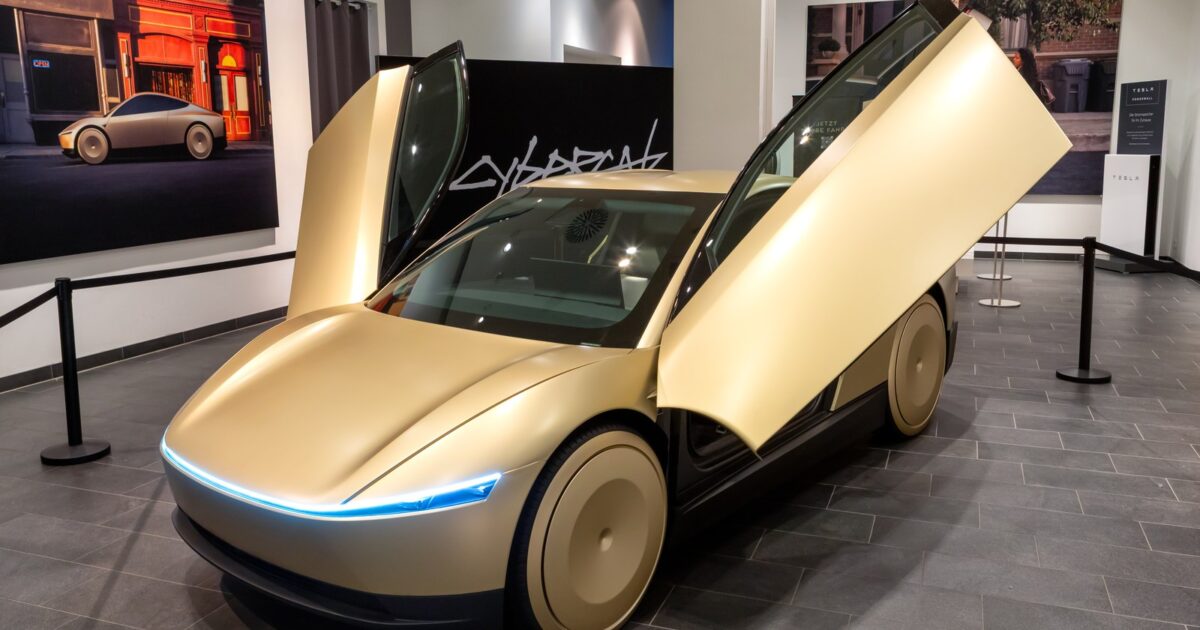
The Cybercab gets all the spotlight. The practical question behind any autonomous ride-hailing fleet is simpler: who washes, fixes, charges, and parks driverless cars every day?
Tesla appears to be answering that question right now, with facility filings surfacing in both Las Vegas and Irving, Texas that point to purpose-built Cybercab support hubs.
A Clark County, Nevada permit filed on May 12 describes a project called “Tesla Center Mohawk Cybercab Phase 2 Car Wash” at 6170 Mohawk St. in Las Vegas.
The filing was first discovered by Supercharger tracker MarcoRP on X, and Sawyer Merritt amplified the permit details with the basic project scope.
Tesla has reportedly submitted plans for a carwash dedicated for Robotaxis in Las Vegas. The permit, filed with Clark County on May 12th, describes "Tesla Center Cybercab Phase 2 Car Wash."
According to the project description, the work involves interior and exterior… pic.twitter.com/BayBYP7kSv
— Sawyer Merritt (@SawyerMerritt) May 14, 2026
Not a Tesla App broke down the permit scope and reviewed satellite imagery of the existing building.
The Clark County filing is tied to 6170 Mohawk St. in Las Vegas and describes the project as Tesla Center Mohawk Cybercab Phase 2 Car Wash. The work is listed as improvements to an existing facility, with an interior wall and ceiling enclosure for an indoor car wash, utility connections to the car-wash equipment, tire racks and tire-service equipment relocation, new power raceways, and air-cord reels for cleaning bays.
The plans also call for removing four fleet stalls that were described as non-required and extending an accessible door landing. That detail points to a site being reworked around fleet movement, cleaning access, and service flow rather than around normal customer drop-offs.
Recent satellite imagery of the property showed a large already-standing building, estimated at about 36,000 square feet, with roughly 55 parking spots, two car-wash bays, and six regular service bays. The visible site layout reads like a fleet-support depot rather than a showroom or a standard consumer service stop.
It also gives Tesla room to separate cleaning, tire work, staging, and vehicle movement inside one controlled operating footprint.
That is a serious footprint for the quiet work that keeps a ride-hailing fleet moving.
Teslarati framed the Las Vegas filing as a clue about how Tesla is preparing to operate Cybercab at scale.
The Las Vegas project centers on an existing 36,000-square-foot facility that Tesla would renovate for Cybercab fleet operations. The reported scope includes interior and exterior upgrades, a car-wash enclosure, relocated tire-service equipment, and power raceways that would support vehicle cleaning and maintenance workflows.
The bigger point is fleet uptime. A driverless ride-hailing network needs repeatable cleaning, service, and support infrastructure so vehicles can cycle from rider to rider without relying on a human driver to handle basic upkeep.
Clean cameras, working tires, quick inspections, charging access, and overnight storage become part of the product. The filing places those everyday operating needs beside the more exciting Cybercab story, where software autonomy and vehicle design usually get all the attention.
The permit also connects the site to Tesla ride-hailing operations rather than ordinary retail service. The building appears designed around fleet throughput, with cleaning and service functions that can support many autonomous vehicles moving in and out on a regular cadence.
That practical layer is easy to overlook, but it is central to making robotaxi rides feel consistent for passengers.
For investors and Tesla fans, the boring infrastructure may be the signal.
A Cybercab sitting dirty, waiting for a tire check, or parked in the wrong place is a revenue asset sitting idle. A dedicated hub is how Tesla turns the vehicle into an operating network.
The Las Vegas filing also appears to fit a wider pattern.
Tesla may or may not be planning another such facility somewhere in Texas.
— MarcoRP (@MarcoRPi1) May 14, 2026
Drive Tesla Canada reported that separate zoning documents in Irving, Texas reference storage, service, and repair of an autonomous vehicle fleet.
The Texas documents widen the story beyond one Nevada building. The Irving site is described as a separate facility expected to span 35,049 square feet and serve storage, service, and repair needs for an autonomous vehicle fleet.
The site plan includes 212 spaces, another 64 surrounding stalls, and 16 EV charging spaces. That is enough room for a sizable operating base, not merely a small test garage.
Taken alongside the Las Vegas filing, the Texas paperwork points to regional hubs that can clean, repair, store, charge, and manage autonomous vehicles around the clock. Those details are important because robotaxi scale depends on the whole operating layer as much as the vehicle.
Tesla needs places where Cybercabs can return between rides, get cleaned, receive basic service, charge, and be staged for the next demand window. The documents show the kind of physical preparation required before a large autonomous fleet can work like a reliable transportation service.
Tesla’s own investor materials give that facility work useful context.
Tesla told investors in its Q1 2026 update that Cybercab remains part of the near-term production plan and that Robotaxi expansion requires permitting and testing work in more U.S. metros.
Tesla said Cybercab, Tesla Semi, and Megapack 3 were on schedule for volume production starting in 2026. The same update said deliveries and deployments may be affected by allocation decisions between vehicles sold to customers and vehicles used in Tesla owned and operated fleets.
Tesla also wrote that hardware-related profits should be joined over time by faster growth in AI, software, and fleet-based profits. In the Robotaxi section, the company reported cumulative paid Robotaxi miles and said it continued laying the groundwork for expansion to additional major U.S. metros through testing and permitting.
Tesla said Cybercab is expected to begin replacing the existing Model Y fleet after production starts and eventually become the largest-volume vehicle in the fleet. That official language does not identify Las Vegas or Irving as launch markets.
It does make the facility filings easier to understand: a company planning fleet-based profits needs fleet infrastructure before those profits can scale.
The filings are permits and zoning documents, so they should be read as preparation rather than a formal Tesla launch announcement.
Still, this is the kind of essential work that separates a concept from a business. An autonomous taxi network needs vehicles, software, charging, cleaning, repairs, staging, and a repeatable way to keep all of that moving when riders are asleep.
Tesla appears to be building that layer now, one 35,000-square-foot hub at a time.
Join the conversation!
Please share your thoughts about this article below. We value your opinions, and would love to see you add to the discussion!