

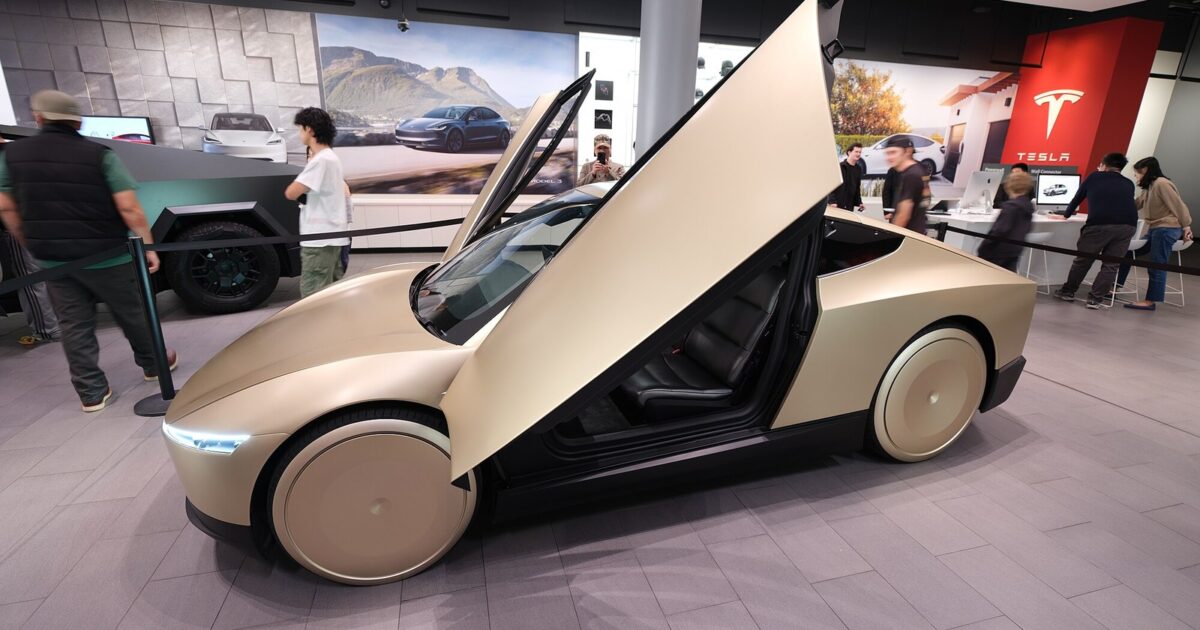
Federal regulators have opened a rulemaking that could clear one of the more obvious hardware obstacles facing purpose-built robotaxis.
On June 25, the National Highway Traffic Safety Administration proposed updating its brake-control standards so that a manual brake pedal would no longer be required on vehicles designed to be operated exclusively by automated driving systems.
This is a proposal, not a finished rule. NHTSA has commenced the process and is asking for public input before anything takes effect.
For Tesla, the implication is hard to miss. The Cybercab was designed with no steering wheel and no pedals, which means the rules written around human drivers were always going to be a question mark.
The NHTSA has just officially announced that they are getting rid of the manual brake pedal mandate for vehicles designed to be driven exclusively by automated driving systems.
"The move builds on the agency’s effort to safely unleash American innovation and rethink the types of… pic.twitter.com/yqvKCKosJK
— Sawyer Merritt (@SawyerMerritt) June 25, 2026
The NHTSA framed the change as part of a broader effort to update Federal Motor Vehicle Safety Standards for a generation of vehicles that may not include traditional driver controls at all.
The proposal targets FMVSS No. 135, which governs braking systems, and would adjust the brake-control scope so a foot-operated pedal is not mandatory on cars built without a human driver in mind.
Importantly, the agency is not throwing out braking safety. NHTSA says the stopping-distance requirements remain in place, so a qualifying vehicle still has to actually stop the way the standard demands.
The agency also pointed to separate, ongoing work on real-world performance of automated driving systems, plus its standing authority over recalls and defects. The hardware rule is one piece of a larger oversight picture, not the whole thing.
Why this matters to Tesla owners and watchers comes down to deployment math.
Teslarati tied the rulemaking directly to the Cybercab’s basic architecture. Tesla has shown the Cybercab as a two-seat robotaxi with no steering wheel and no pedals, which means a federal brake standard written around a foot-operated control is a real certification issue for this vehicle.
The report points to FMVSS No. 135 as the specific standard at issue and highlights the same guardrails NHTSA listed: the change is aimed at vehicles never meant to be driven by a human, existing rules stay in place for automated vehicles that keep manual controls, and stopping-distance performance still has to be proven through alternative testing.
That distinction matters because a Cybercab built to Tesla’s intended design cannot be treated like a normal car with autonomy software added. Updating the brake-control language would address that specific mismatch, though it does not make the Cybercab road-legal everywhere or complete the larger approval picture just because a proposal exists.
Trump admin proposes axing brake pedal requirement for AVs in a boost for Tesla https://t.co/cqBJ6FLOIv
— TechCrunch (@TechCrunch) June 25, 2026
The regulatory mechanics are where the deployment story gets practical.
TechCrunch reported that the proposal carries a 30-day public comment period, the standard window for the public and industry to weigh in before NHTSA decides how to proceed.
The report also explained why this rule has mattered so much. Companies building vehicles that lack federally required controls have leaned on exemptions to operate, and those exemptions come with limits and friction.
Tesla and Zoox both fall into the group affected by a pedal mandate, since they are building cars meant to run without a person at the wheel. Retrofitted vehicles that keep manual controls have always traveled a different, easier regulatory path.
Removing the pedal requirement for ground-up automated vehicles would replace some of that exemption-by-exemption maneuvering with a clearer standard.
None of this is settled. The comment period is open, the rule is proposed, and the stopping-distance criteria and defect oversight still apply.
What it does signal is momentum. The federal standard is being rewritten to fit vehicles built without a driver, and the brake pedal is one of the important hardware questions inside that much larger approval picture.
Join the conversation!
Please share your thoughts about this article below. We value your opinions, and would love to see you add to the discussion!