
Three companies say they can hand the grid a small power plant’s worth of capacity without building a single new power plant.
On June 24, Sunrun, Renew Home, and Tesla announced a partnership to pool home batteries and smart thermostats into one of the largest distributed energy resources in the country.
The combined figure they are putting forward is more than 16 gigawatts, or 16.8 GW, of fast, flexible energy capacity that already exists inside millions of American homes.
The pitch is simple. That capacity is sitting idle, and the grid suddenly needs every bit of flexibility it can find.
We are teaming up with Renew Home and Tesla to create one of the largest distributed energy resources in the country — a combined 16.8 gigawatts of fast, flexible energy capacity that’s already in millions of homes across America, waiting to be put to work.
As three of the… pic.twitter.com/Mgh72gWQNh
— Sunrun (@Sunrun) June 24, 2026
Here is the part worth slowing down on. The 16.8 GW number is aggregate flexible capacity, not 16.8 GW of firm, around-the-clock generation.
It is the total that can be shifted, shaved, or dispatched across a huge fleet of devices when the grid is under stress, not a steady wall of power running all day.
The piece that is actually ready to go right now is far smaller and more concrete.
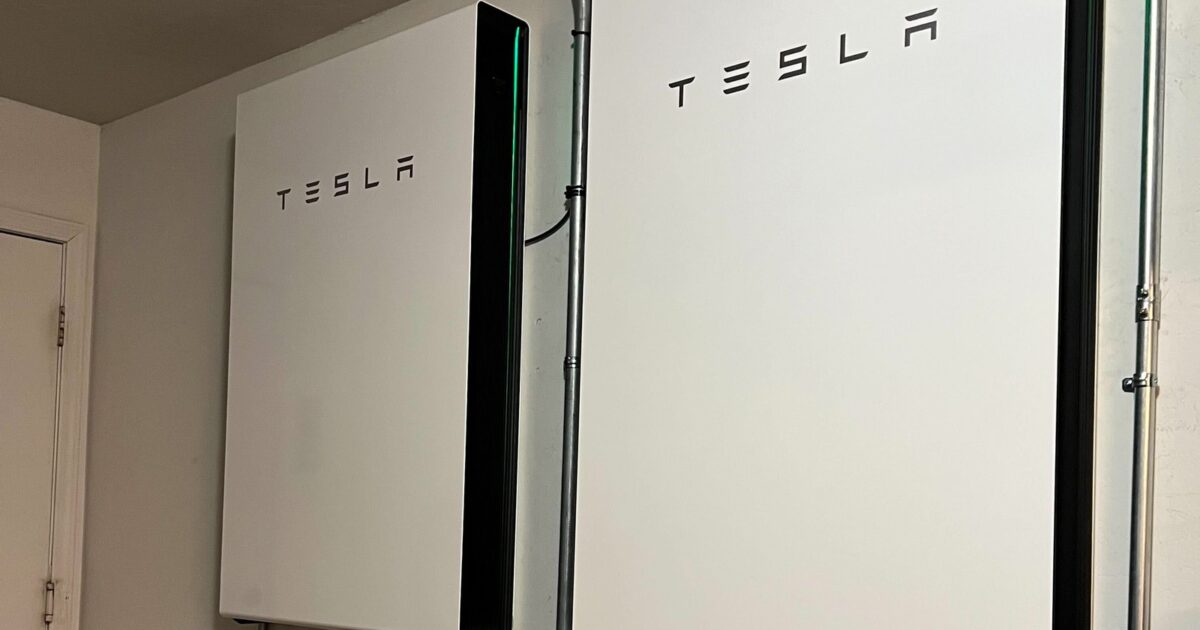
Sunrun laid out the framework behind the announcement. Sunrun and Tesla are bringing the battery side of the resource, including residential Powerwall systems, while Renew Home is handling the smart thermostats and connected home devices that can reduce or shift demand when the grid is under pressure.
The first near-term deployment is in Virginia, where the companies say more than 300 MW is ready for immediate use. Their 2030 target is at least 500 MW in that state as more batteries and devices come online.
They also say capacity has been committed to PJM’s proposed Reliability Backstop Process, which could unlock more than 1 GW today if accepted by the grid operator.
The official release frames the appeal in very practical terms for utilities and large loads. The companies say the resource can use devices already installed in homes, without new hardware, new interconnection work, new land, or water consumption for the offtaker.
They also cite a Brattle Group analysis arguing that better use of existing grid assets could lower U.S. electricity bills by $110 billion to $170 billion over the next decade and speed data-center interconnection by several years.
Why Virginia, and why now. Electrek explained that the new customer in this story is the data center.
Virginia is home to Data Center Alley, where AI and cloud demand is piling onto an already congested power-delivery system, and that makes flexible capacity more valuable than a normal residential energy program tied only to household bills.
Electrek also put the 16-plus-GW number in the right box. That figure is the combined flexible capacity the partners say they can orchestrate across home batteries, thermostats, and other connected devices.
It should not be read as 16 GW of conventional power that is available every hour like a gas plant, nuclear unit, or utility-scale battery site; the stronger claim is fast response when peaks hit.
That caveat actually makes the story more interesting. If data-center developers and utilities can pay for fast, dispatchable flexibility while conventional projects wait years for generation and transmission, Tesla Energy and its partners have a way to turn residential hardware into grid infrastructure at software speed.
It also keeps the story grounded for Tesla fans: the near-term win is measured in hundreds of megawatts in Virginia, while the national upside depends on enrollment, market rules, and grid operators actually accepting the resource.
Sunrun, Tesla and Renew Home say they have 16 gigawatts of home battery and smart thermostat-enabled "flexible energy capacity" for utilities and data center developers trying to contain rising costs of delivering power across congested U.S. power grids:https://t.co/f1dbSRGIJD
— Jeff St. John (@jeffsaintjohn) June 24, 2026
For Tesla, this fits a footprint that has quietly grown well past selling vehicles.
Not a Tesla App placed the deal inside Tesla Energy’s broader push. Powerwalls and other home batteries are already used in software-managed grid programs, while Tesla’s Megapack business handles larger commercial and utility-scale storage needs.
The Sunrun and Renew Home agreement sits between those worlds, using residential assets for a very commercial problem: reliable power for big new loads, especially when utilities need flexible capacity faster than they can build traditional infrastructure.
That is the part Tesla readers should watch. The value is more than the battery hardware on the wall; it is also the software and market access that can turn scattered home equipment into a paid grid resource.
It is the control layer that knows when to charge, when to discharge, and when to shift demand across thousands or millions of devices without making the homeowner think about the grid every afternoon.
That is why the deal matters beyond one press release. It points toward Tesla Energy earning money from orchestration and grid services as much as from the original Powerwall sale.
None of this is a finished grid solution, and the partners are not claiming it is.
What they are claiming is leverage. The hardware is already paid for and already plugged in, and the demand from AI buildouts is not slowing down.
If the model works in Virginia, the next question is how fast the rest of that 16.8 GW gets put to work.
Join the conversation!
Please share your thoughts about this article below. We value your opinions, and would love to see you add to the discussion!