
SpaceX is joining the Nasdaq-100 Index, and the date is locked.
The change takes effect prior to the market open on July 7, 2026, putting Elon Musk’s rocket and satellite company in the same index as the largest non-financial names trading on the Nasdaq.
For a company that spent two decades landing boosters and rebuilding how America reaches orbit, this is a real public-market milestone.
$SPCX: SpaceX will join the Nasdaq-100 Index effective prior to the market open on July 7, 2026.
— Briefing.com (@Briefingcom) June 29, 2026
The official word came straight from the exchange.
Nasdaq Investor Relations confirmed that Space Exploration Technologies Corporation, trading under ticker SPCX, will become a component of the Nasdaq-100 Index before market open on Tuesday, July 7, 2026.
That makes the timing official instead of market chatter around a newly public stock. Nasdaq’s release names the company by its formal corporate name, ties the change to the index provider’s own schedule, and sets the effective moment before the July 7 opening bell.
Nasdaq describes the Nasdaq-100 as a benchmark for 100 of the largest Nasdaq-listed non-financial companies. For index funds and products built to mirror that benchmark, the practical point is simple: the stock has to be represented in portfolios that track the index.
Nasdaq also says the index is tracked by more than 200 investment products with over $800 billion in assets under management globally. For SpaceX, that turns a public-market debut into a much wider index-fund presence almost immediately.
CNBC added the market mechanics around the move. Its report said index funds and product sponsors would begin buying shares after the market closes on July 6, with SpaceX officially entering the Nasdaq-100 before trading opens the next morning.
CNBC also reported that SpaceX is expected to enter with a weighting of less than 1%. That keeps the move in perspective: it is a big milestone, but it does not make SpaceX one of the heaviest names in the index on day one.
The bigger point is speed. CNBC framed SpaceX as one of the first major beneficiaries of Nasdaq’s newer fast-track inclusion framework, which helps explain how the company moved from public debut to Nasdaq-100 membership so quickly.
The market reaction was already showing up in real time:
SPACEX $SPCX TO JOIN THE NASDAQ 100 INDEX ON JULY 7, SHARES GAIN PREMARKET pic.twitter.com/ai78w9LvVx
— Investing.com (@Investingcom) June 29, 2026
MarketBeat had SpaceX’s live market profile around this run showing a market capitalization near $2.15 trillion, with the stock’s 52-week range listed from $147.11 to $225.64.
The same profile listed recent volume near 80.99 million shares against average volume around 172.34 million shares, along with a Moderate Buy consensus rating and a $212.67 average price target. Those numbers will move, but they show how quickly SPCX has become a major public-market name.
None of this is a forecast about where the stock goes next. Index inclusion is a structural event, not a promise.
What it does signal is recognition. SpaceX has gone from a scrappy launch startup to a company the market now treats as core infrastructure.
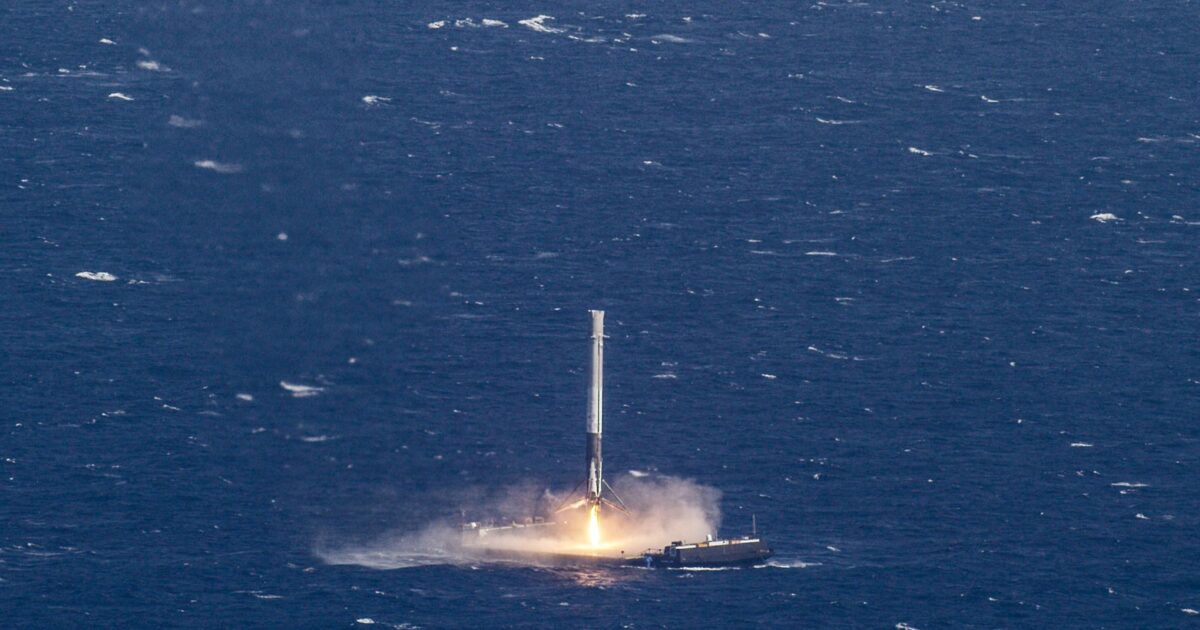
The reusable Falcon boosters, the Starlink constellation, and the steady cadence of launches built the reputation. The Nasdaq-100 entry is the market putting that reputation on paper.
July 7 is the day it becomes official. After that, SpaceX sits inside one of the most-followed indexes in the world, right where a company that helped reopen American spaceflight belongs.
Join the conversation!
Please share your thoughts about this article below. We value your opinions, and would love to see you add to the discussion!