

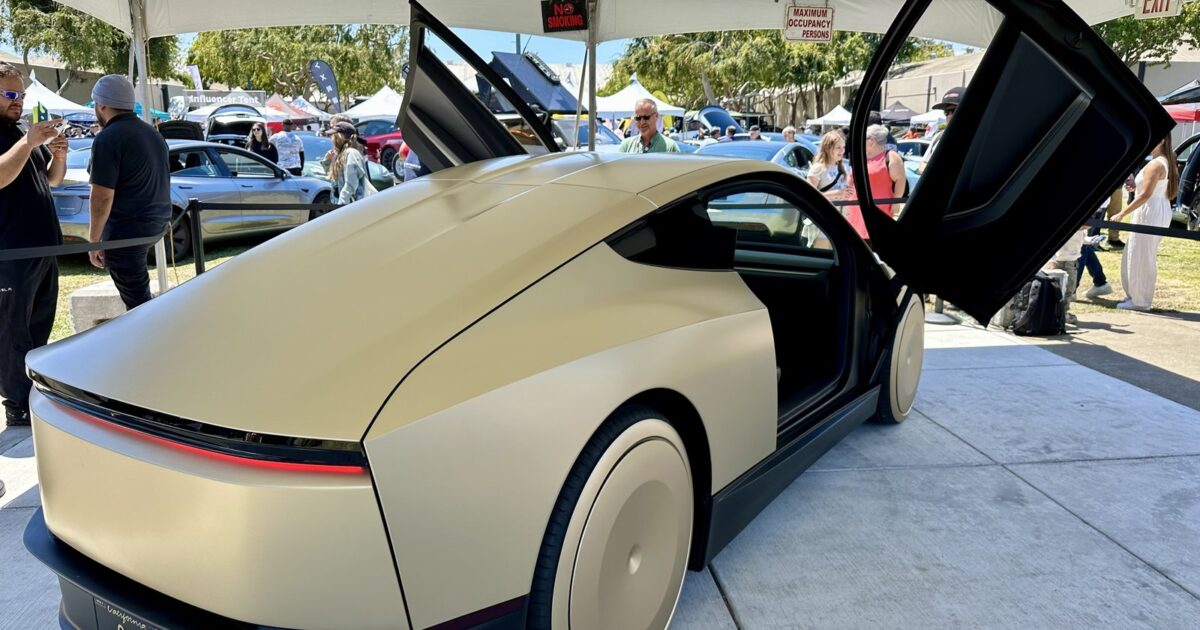
Tesla has started engineering tests of the first production Cybercab, and the company confirmed it on June 30, 2026.
The testing is happening in Austin, where Tesla has been building out its autonomy program for the past year.
This is the purpose-built two-seater, not a retrofitted Model Y or Model 3. It was designed from the start to run without a driver.
Tesla announced the milestone directly.
Engineering tests of the first production Cybercab have begun in Austin pic.twitter.com/fk3KQvcE8a
— Tesla (@Tesla) June 30, 2026
Elon Musk followed with something that catches the eye even faster. He posted video of the Cybercab moving through Austin with no steering wheel and no pedals inside.
That is the whole point of the design. There is no place for a human to grab the wheel because there is no wheel.
Cybercab with no steering wheel or pedals driving around Austin pic.twitter.com/Oo7uPoOjhp
— Elon Musk (@elonmusk) June 30, 2026
Teslarati framed the road test as a step beyond prototype work because the vehicle shown is a production Cybercab, not a temporary mule dressed up for a demo.
The report points back to Tesla’s 2024 reveal, where the Cybercab was shown as a two-seat robotaxi with no steering wheel, no pedals, and butterfly-style doors.
That matters because Tesla has already been operating robotaxi service with modified Model Y vehicles. The Cybercab is the cheaper, purpose-built machine Tesla wants to put into the fleet at much larger scale.
Putting that design on Austin roads moves the story out of the studio and into the city where Tesla has been building its autonomy program. It is still testing, but it is testing of the vehicle Tesla actually intends to scale.
Electric Vehicles added the road-test details that keep the milestone grounded. Its report says the footage was filmed from inside the two-seat vehicle, with the empty dashboard visible where normal driver controls would be.
The same report says the central screen showed a mapped route and that a safety monitor was present in the engineering vehicle during the test. That is the right frame: real public-road validation, but still a controlled engineering phase.
The report also ties the test back to Gigafactory Texas production. Tesla has already used modified Model Y vehicles for robotaxi service in Austin, while these Cybercab units are the purpose-built cars meant to take over that job over time.
It also separates this moment from older engineering vehicles that carried temporary steering wheels and pedals. Those cars helped validate the program, but the Cybercab shown in this run reflects the intended production design with manual controls removed entirely.
A few things are worth keeping straight so the excitement stays honest.
Paid Cybercab passenger rides have not launched from this test alone. This is engineering testing of the production vehicle.
It also does not mean regulators everywhere have signed off on driverless commercial operation. Approval is a market-by-market road, and this is one company running its own tests.
Still, the substance is hard to miss. Tesla built a car with no steering wheel and no pedals, put the production version of it on a public street, and let the footage speak.
That is the machine Musk has been describing for years, now moving under its own control in the city where the fleet is meant to grow.
Join the conversation!
Please share your thoughts about this article below. We value your opinions, and would love to see you add to the discussion!