

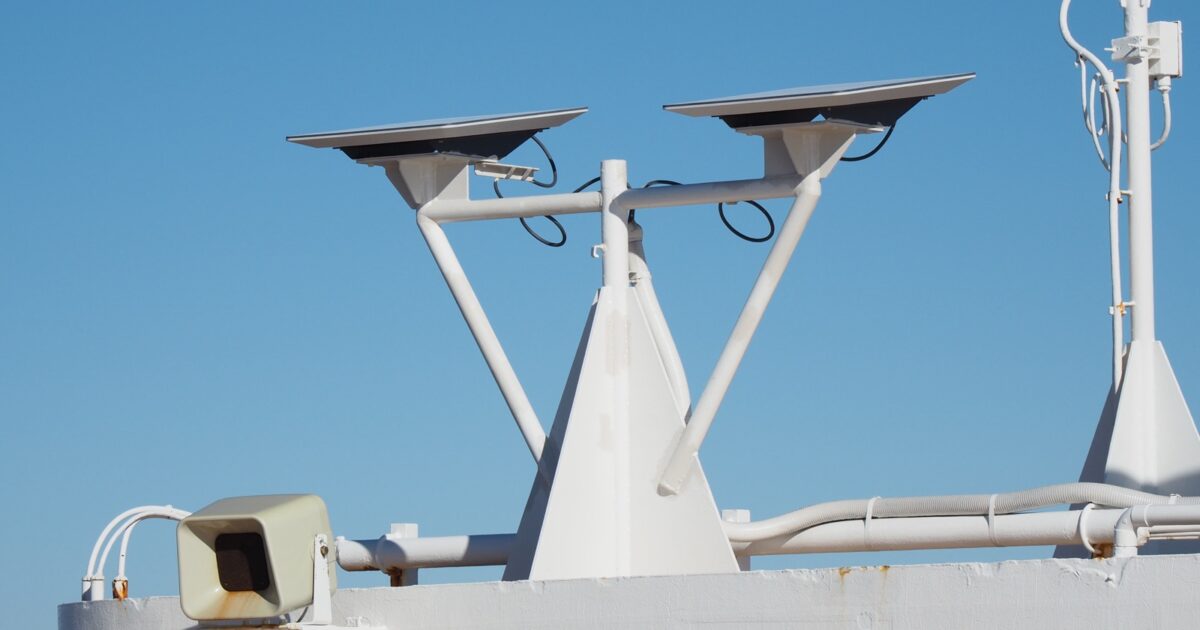
Starlink just made its standard home terminal a whole lot easier to live with.
The newly announced Starlink V5 is smaller, lighter and more power-efficient than the V4 hardware it follows. It still carries an advertised speed ceiling north of 375 Mbps.
The redesign puts less hardware between a customer and fast satellite internet without giving up the performance expected from a full home kit.
Starlink introduced the next-generation kit Tuesday afternoon with three practical promises: a smaller footprint, less weight and better power efficiency. Those changes matter well beyond how tidy the box looks on a doorstep.
A lighter terminal is easier to carry and mount, while lower power draw makes the system friendlier to backup batteries, off-grid setups and locations where every watt counts.
The company is advertising speeds of 375+ Mbps. Real-world results will still depend on the plan, location, network demand and a clear view of the sky, but that headline number puts V5 comfortably in the territory of demanding home use.
Multiple video streams, large downloads, remote work and connected households should not require an oversized piece of equipment on the roof.
Starlink’s launch video also makes the design change immediately obvious. V5 looks like a product that has been through several generations of hard lessons: less bulk, fewer wasted materials and a package built around what customers actually need.
The next generation Starlink Kit is designed to deliver reliable, high-speed home internet. Starlink V5 has a smaller form factor and lightweight design with greater power efficiency than the Starlink V4.
— Starlink (@Starlink) July 14, 2026
With speeds up to 375+ Mbps, Starlink V5 delivers seamless connectivity… pic.twitter.com/0dorU6n0oD
The numbers make the redesign even more interesting.
Tesla North compared the newly posted V5 specifications with the outgoing V4 kit. Its walkthrough puts the new terminal at 384 by 306 by 34 millimeters and 1.1 kilograms.
V4 is listed at 2.9 kilograms, which means the dish itself has shed well over half its weight. The complete V5 package is also reported at 3.8 kilograms, down from 6.45 kilograms for the V4 kit.
The power reduction may be the biggest everyday win. V5 is reported to average 35 to 50 watts, compared with 75 to 100 watts for V4.
That can translate into less energy use around the clock, longer runtime on a battery system and less strain for mobile or remote installations. The smaller power supply is lighter too, trimming another piece of the kit that customers have to store, route and protect.
SpaceX did not get there by emptying the box. The package reportedly includes the terminal, kickstand, Router Mini with stand, a pipe adapter, a 15-meter Starlink cable, an AC cable and a two-meter Ethernet cable.
Including the pipe adapter is a thoughtful upgrade for permanent installations, because buyers no longer have to solve that basic mounting connection separately.
The durability figures are equally striking. Tesla North reports an operational wind rating of up to 265 kilometers per hour for the mounted V5 terminal, along with the same 110-degree field of view and IP67 Type 4 environmental rating associated with the current setup.
The kit still uses the Wi-Fi 6 Router Mini, with two built-in gigabit Ethernet ports and support for a large connected-device load. Initial availability is limited to selected areas, with a wider rollout expected as production grows.
There is one spec-sheet wrinkle: V4 can show a higher theoretical 400+ Mbps ceiling on a Residential Max plan. That does not make V5 a step backward.
A theoretical maximum is only one part of the experience, and the new terminal trades a little top-end paper number for dramatic gains in size, weight, power use and ruggedness. For most homes, that is an easy trade to understand.
Michael Nicolls added another piece of the story later Tuesday night. He said V5 was built around performance, reliability and scalability, using lessons learned from Starlink’s earlier products.
He also said the new terminal was designed and manufactured in the United States.
Congrats to the @Starlink team on the release of the new Starlink V5 terminal, designed with high performance, reliability, and scalability in mind based on the learnings of our previous products. Also, designed and manufactured in the USA. https://t.co/73ir6t6gvc
— Michael Nicolls (@michaelnicollsx) July 15, 2026
That last word—scalability—is the quiet heart of this release.
A terminal that uses fewer materials, ships in a lighter package and pulls less power should be easier to manufacture and deploy at scale. It can lower friction for the customer at the same time it lowers friction for Starlink.
That is exactly the kind of product improvement that compounds as a network moves from millions of users toward many millions more.
V5 does not need a wild new shape or a flashy name to be a meaningful upgrade. It is smaller where smaller helps, tougher where tougher matters and still fast enough to replace conventional broadband for plenty of households.
Sometimes the smartest next-generation hardware is simply the version that asks less from the person installing it.
Join the conversation!
Please share your thoughts about this article below. We value your opinions, and would love to see you add to the discussion!